

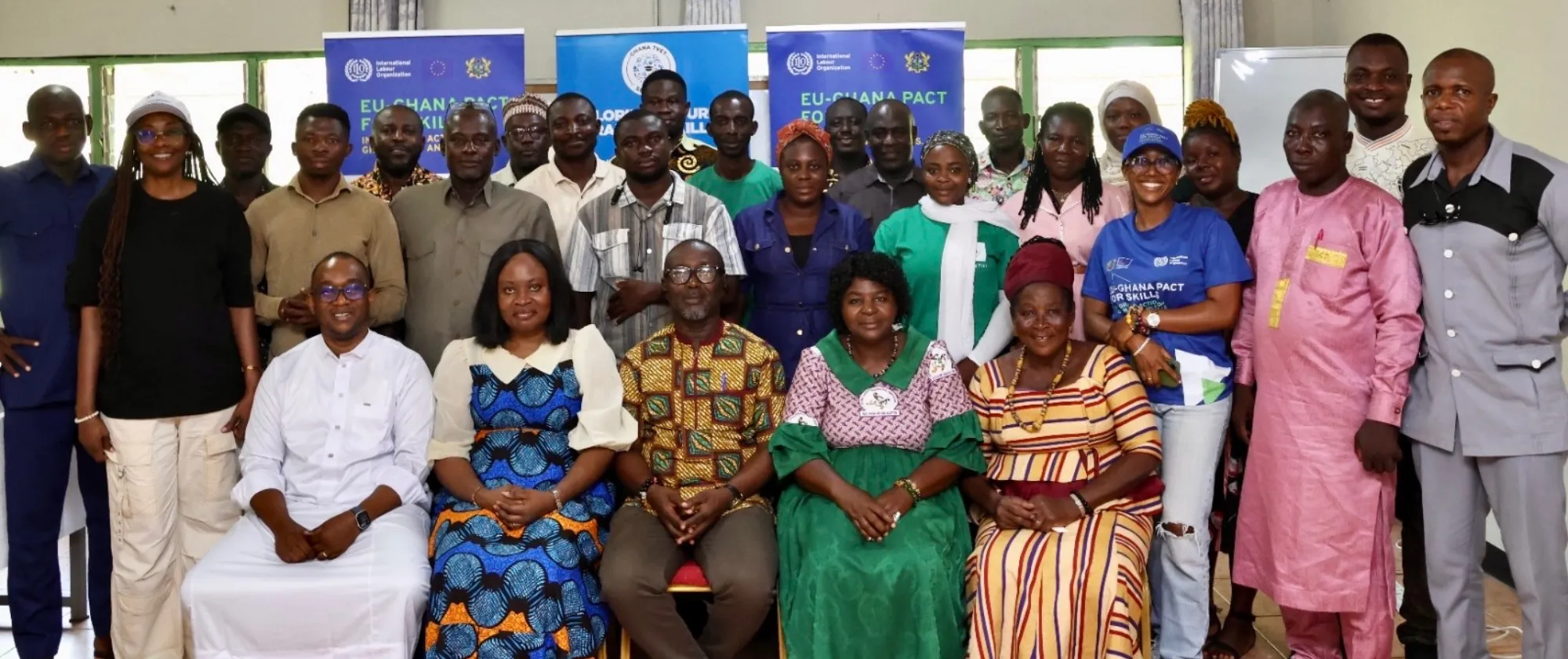
Capacity of TVET stakeholders in Ghana strengthened to drive green skills and sustainable development
Over 60 TVET leaders and facilitators trained to integrate green skills and sustainable practices into technical education, helping prepare Ghana’s workforce for emerging green jobs and a sustainable future.
12 May 2026
The International Labour Organization (ILO), through its EU-Ghana Pact for Skills: Integrated Action on Green Jobs and Skills Project, in collaboration with the Ghana TVET Service (GTVETS), has organized two capacity-building workshops to strengthen the integration of green skills and sustainable practices into Technical and Vocational Education and Training (TVET) delivery in Ghana.
Held from 11–14 May 2026 in the Upper West and Savannah Regions, the workshops brought together Principals, Facilitators, Regional TVET Officers, and representatives from GTVETS and the ILO. The training forms part of ongoing efforts to prepare Ghana’s workforce for the transition to a green economy and the future of work.
Opening the workshops, the Director for Training, Assessment and Quality Assurance (TAQA) of GTVETS, Mr. Samuel Debrah, speaking on behalf of the Director-General of GTVETS, stressed the growing importance of Green TVET in workforce development. “Climate change is reshaping industries and transforming the labour market. TVET institutions must lead the transition to a sustainable future or risk preparing students for a world that no longer exists,” he said.
Speaking on behalf of the ILO Country Director for Nigeria, Ghana, Liberia, Sierra Leone and Liaison Office for ECOWAS, the National Project Coordinator, Mr. Gideon Mankralo, highlighted the impact of climate change on livelihoods and employment and underscored the need for skilling, reskilling, and upskilling workers for the green economy. He noted that TVET institutions have a critical role to play in ensuring a just and inclusive transition by equipping learners with relevant green skills. He reaffirmed the ILO’s commitment to supporting stakeholders within Ghana’s TVET ecosystem to promote sustainable and inclusive economic growth.
Facilitated by Dr. Violet Makuku, a Green TVET and Quality Assurance Specialist, the workshops equipped more than 60 participants with practical knowledge, pedagogical approaches, and implementation strategies to integrate sustainability into teaching and institutional management.
The training covered key thematic areas including green skills and the green economy, climate change, and sustainability in TVET, green skills for the future of work, and opportunities for greening various trades. Participants also explored low-cost sustainability practices that institutions can adopt to improve environmental management and resource efficiency.
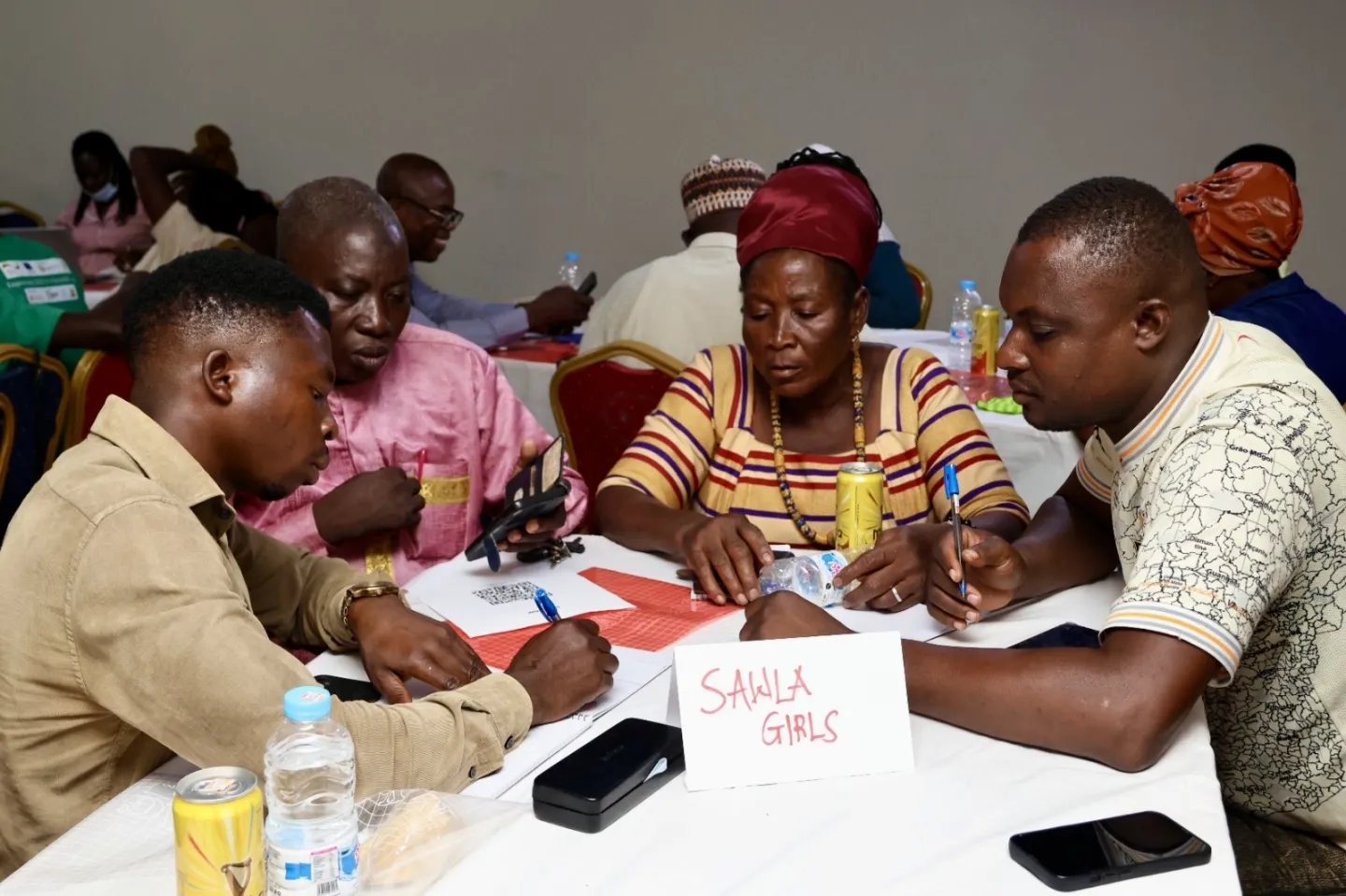
Practical sessions focused on behavioural change for Green TVET, institutional leadership for sustainability, development of Green Action Plans, and greening lesson plans. At the end of the workshops, each participating institution developed an Action Plan to guide the implementation of sustainable practices and strengthen green skills delivery.
Participants described the workshops as timely and impactful. Madam Aada Marcella Belaar, Principal of Sawla Girls Technical Institute in the Savannah Region, said the training deepened her understanding of the relationship between climate change, the environment, and the world of work. She pledged to lead sustainability initiatives within her institution, including planting at least 50 trees and ornamental flowers to promote a greener campus.
Mr. Gyamena Frederick, Principal of Issa Technical Institute in the Upper West Region, announced plans to establish a Green Club made up of students and facilitators to champion sustainability initiatives within the school and surrounding communities. He also indicated plans to pilot a rainwater harvesting programme to encourage responsible water use.
As part of the broader project implementation, selected TVET institutes in the two regions will receive digital learning tools, internet connectivity, and equipment to support Solar PV training delivery. The workshops therefore also strengthened facilitators’ readiness to effectively utilize these resources.
Closing the workshops, the Savannah Regional Director of GTVETS, Madam Esther D. Jatuat, commended the ILO for supporting the initiative and encouraged participants to fully implement their institutional action plans to ensure lasting impact.
The EU-Ghana Pact for Skills: Integrated Action on Green Jobs and Skills Project is a four-year initiative funded by the European Union and implemented by the ILO to support skills development for Ghana’s green and digital economy transition.