


ILO/China Partnership Programme
Cambodia advances stronger public–private partnerships for skills development
With the support of ILO-China partnership project on Skills Development, Cambodia is advancing efforts to better align skills development with labour market demand through strengthened collaboration between public institutions and private sectors.
21 April 2026
Phnom Penh (ILO News) – Skills mapping and public–private partnerships are helping Cambodia translate labour market evidence into policy actions that support employability and decent work.
More than 100 participants from government agencies, TVET institutions, private sector, workers’ and employers’ organizations, and development partners came together at an ILO-supported workshop on skills mapping and Public–Private Partnerships, held in Phnom Penh on 21 April 2026.
“Skills mapping is emerging as a critical policy and planning tool to identify current and future skills needs across key economic sectors in Cambodia”, said Tian Feng, ILO-China Partnership Project Manager.
“By generating evidence on skills demand, occupational trends, and regional labour market dynamics, skills mapping helps inform TVET policy reform, guide investment priorities, and support the development of industry-relevant curricula. It also enables training providers and policymakers to better anticipate skills shortages, improve job matching, and design targeted upskilling and reskilling programmes, particularly in priority sectors aligned with national development strategies,” added Mr Tian Feng.
Organized by the Directorate General of Technical and Vocational Education and Training (DGTVET) of the Ministry of Labour and Vocational Training, in collaboration with the ILO, the event shared findings from a recent skills mapping report, highlighting priority sectors and persistent gaps between training supply and industry demand.
Participants discussed practical approaches to strengthening collaboration, including work-based learning, apprenticeships, curriculum co-development, and industry engagement in training delivery and assessment.
The discussions emphasized that stronger partnerships with employers are critical to ensuring that skills development systems are responsive, inclusive, and aligned with labour market needs.
The participants also highlighted the importance of expanding access to skills development for women, youth from vulnerable backgrounds, persons with disabilities, and returnee migrant workers, including through the promotion of Recognition of Prior Learning (RPL) to certify existing skills and support labour market reintegration.
Xiaoyan Qian, ILO Country Director for Thailand, Cambodia and Lao People’s Democratic Republic emphasized that, “In the context of Cambodia, skills mapping plays a strategic role in supporting the implementation of national development priorities and ongoing TVET reforms. Strengthening Public–Private Partnerships is not just important, but it is essential for skills development in the current context.”
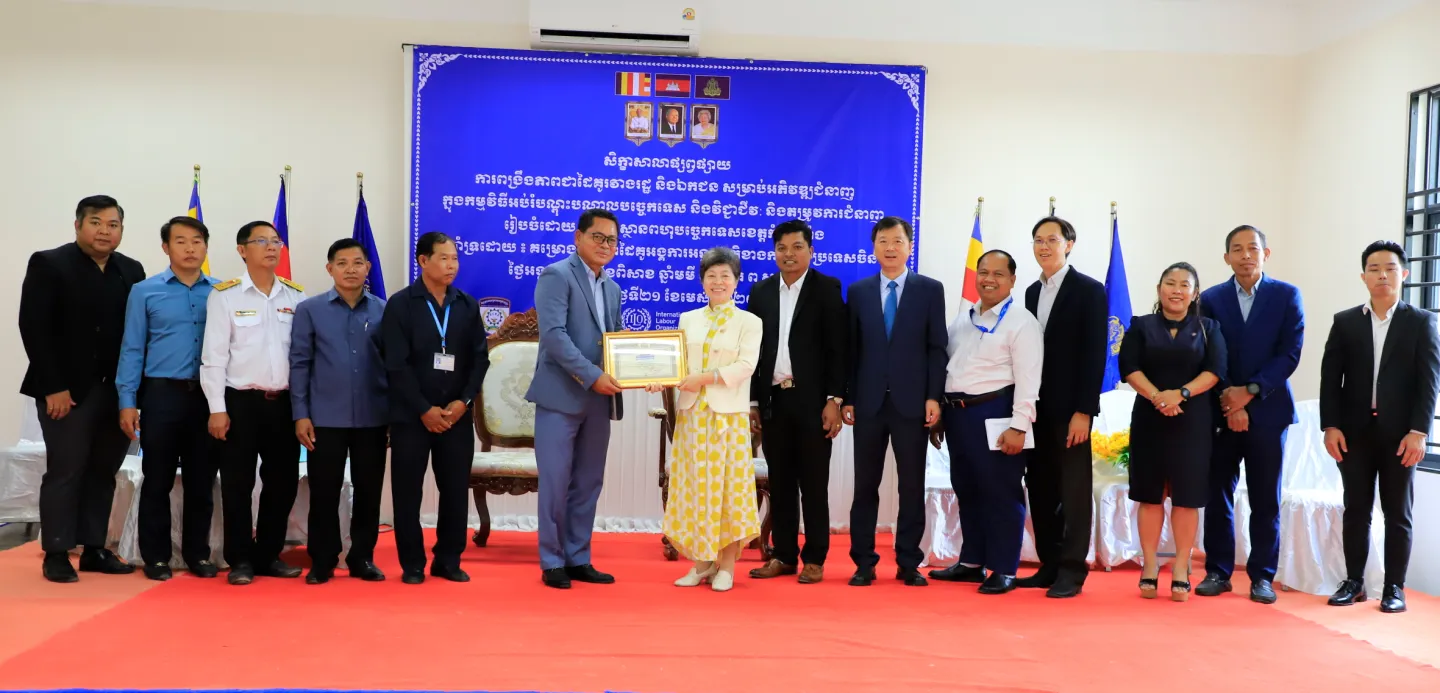
Participants identified concrete opportunities for collaboration between TVET institutions and companies. Several partnership initiatives are expected to be developed through Memoranda of Understanding (MoU) to support reskilling, upskilling, internships, and job placement.
The event was supported under the ILO–China Partnership Programme on Strengthening Skills Development through South–South and Triangular Cooperation, which aims to enhance skills systems, promote inclusive labour market participation, and strengthen institutional capacity in Cambodia and the region.
Related content

Skills development
ILO/China Partnership Programme on Strengthening Skills Development in Cambodia, Lao People's Democratic Republic and Myanmar through...
Relevant projects
Skills development
ILO/China Partnership Programme on Strengthening Skills Development in Cambodia, Lao People's Democratic Republic and Myanmar through...