

Cooperative development
Building a sustainable future for Guyana’s fisherfolk
This collaborative Project brings together the ILO and FAO through FISH4ACP to strengthen fishing cooperatives, enhance livelihoods, and promote better working conditions, with particular attention on the empowerment of women in the seafood value chain.
3 April 2025
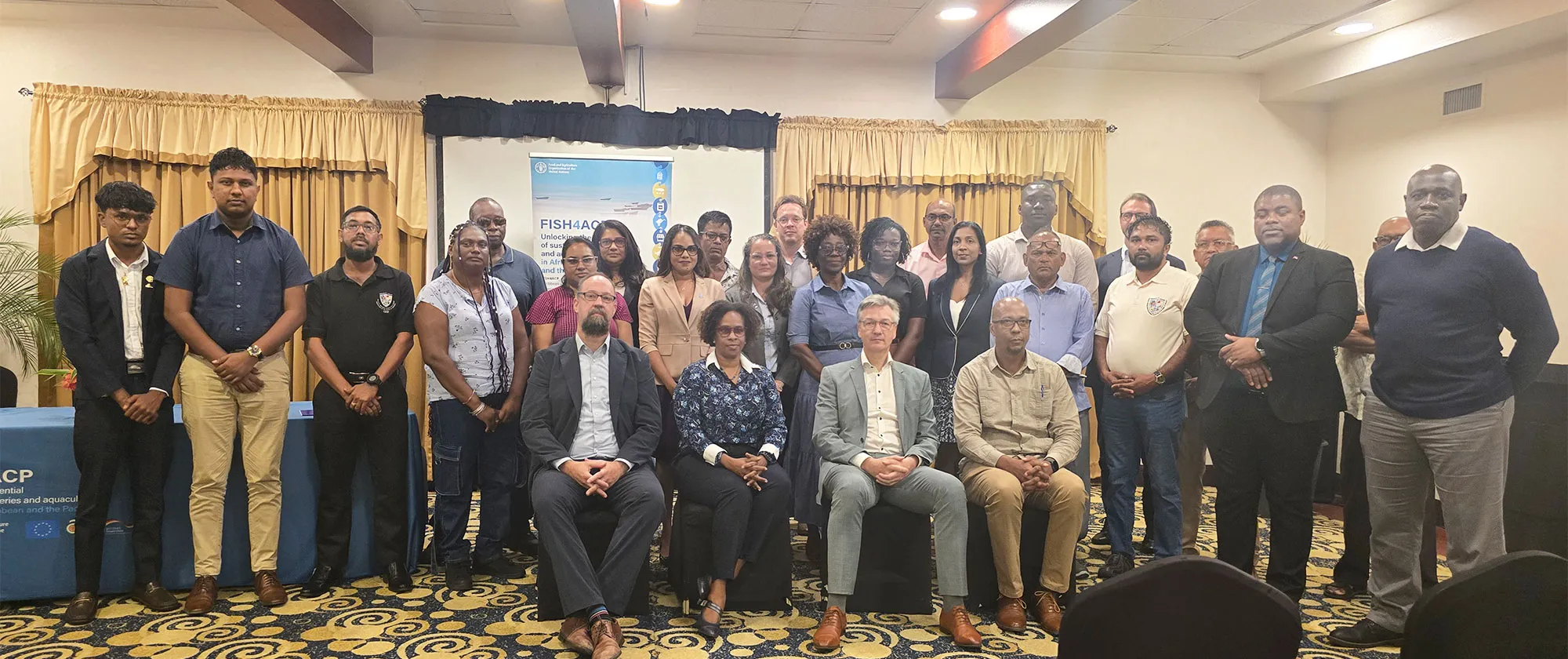
GEORGETOWN, Guyana (ILO News) - On 27 March, key stakeholders gathered in Georgetown to officially launch the ILO-FAO collaboration under the FISH4ACP Project, which supports Guyana’s small-scale fisheries sector. This initiative aims to strengthen fishing cooperatives, improve livelihoods, and promote better working conditions, with a particular focus on empowering women in the seafood value chain. The programme is funded by the European Union, Germany’s Federal Ministry for Economic Cooperation and Development (BMZ), and the Organisation of African, Caribbean and Pacific States (OACPS).
The collaboration brings together the International Labour Organization (ILO), the Food and Agriculture Organization (FAO), the EU, BMZ, OACPS, and local partners, including Guyana’s Ministries of Labour and Agriculture who will work towards developing a more inclusive and sustainable fisheries sector.
Mr. John Bliek, ILO Specialist in Sustainable Enterprise Development and Job Creation, emphasized the crucial role of cooperatives: “Stronger cooperatives can enhance market access for fishers, encourage sustainable practices, and improve working conditions. By working together, fishers can have a stronger voice and benefit from economies of scale.”
Through FISH4ACP, the ILO brings its human-centered approach to Guyana’s fisheries, ensuring that people - not just profits - drive sustainable progress. By integrating decent work principles such as fair pay, safer workplaces, and stronger social safety nets, this collaboration aims to transform the lives of fishing communities while protecting the waters and marine life that they depend on.
The EU’s Ambassador to Guyana, René van Nes, highlighted the EU’s commitment to sustainability and inclusion: “The EU has a long-standing commitment to supporting sustainable fisheries and the livelihoods of local communities while ensuring that development is inclusive, equitable, and environmentally responsible. That is why we are working alongside FAO and ILO, the Government of Guyana, and local stakeholders to improve the livelihoods of small informal fishermen and to strengthen the seabob value chain.”
For local fish processors, this initiative represents a major shift in opportunities for empowerment and economic stability. Ms. Renita Joseph, an artisanal fish processor, expressed optimism about the programme’s impact: “This agreement marks a turning point for us. For women like me working in the cottage industry, it means access to training, essential resources, and the opportunity to build sustainable cooperatives.”
Recognizing the vital role of women in fisheries, Mr. Richard A. Blair, Advisor to the Minister of Agriculture on the CARICOM Agri-Food System, emphasized gender equity: “We are committed to ensuring the fair and equitable representation of women throughout the fisheries sector and seafood markets. We support FISH4ACP’s efforts to ensure that women work at the center of our cooperatives.”
Gillian Smith, FAO Representative for Guyana, Suriname, and Trinidad and Tobago, underscored the importance of resilience and collaboration: “It is not an easy road we are traveling, but it is necessary for a sustainable fishing sector that will enhance livelihoods for everyone.” She reaffirmed FAO’s unwavering support for all partners and organizations involved and the value they bring to this new partnership.
As Guyana’s fisheries sector faces economic and environmental challenges, the FISH4ACP initiative provides a strategic framework to boost productivity, fairness, and resilience. This partnership ensures that small-scale fishers and processors are at the heart of sustainable development, creating a future where the blue economy is both prosperous and inclusive.
Related content

ILO-FAO Project
Support to the cooperative movement in the artisanal fisheries subsector in the Co-operative Republic of Guyana to promote decent work and...