


Building Skills for Tomorrow: ILO, GIZ, and CTVET Unite to Strengthen Ghana’s Workforce
The International Labour Organization (ILO) has commended Ghana for its progress in operationalizing Sector Skills Bodies (SSBs) and pledged continued support to make technical and vocational education and training (TVET) more responsive to industry needs.
17 November 2025
Accra, Ghana: Ghana is taking bold steps to prepare its workforce for the future—and global partners are standing firmly behind this vision. The International Labour Organization (ILO), in partnership with Deutsche Gesellschaft für Internationale Zusammenarbeit (GIZ) and the Commission for Technical and Vocational Education and Training (CTVET), recently hosted a two-day workshop in Peduase, Eastern Region, to develop a Labour Market Intelligence (LMI) Framework for the country’s 16 Sector Skills Bodies (SSBs).
This framework will help Ghana anticipate skills needs, close gaps, and ensure that training programs match the realities of the job market. It’s a game-changer for industries and workers alike.
Since 2018, Ghana has been working to make its skills development system more demand driven. The ILO’s Global Skills Programme has supported this journey every step of the way—helping establish SSBs, organize Skills for Trade and Economic Diversification (STED) workshops, and develop strategies for 10 priority sectors. The new LMI Framework is the next big leap forward.
Developing a skilled workforce is critical for economic growth. We are proud to support Ghana in building systems that respond to real market needs.
Dr. Vanessa Phala - ILO Country Director for Nigeria, Ghana, Liberia, Sierra Leone, and liaison Office for ECOWAS
CTVET’s Deputy Director, Mr. Theophilus Zogblah, echoed this sentiment, emphasizing the government’s dedication to creating sustainable jobs and boosting productivity. He thanked ILO and NORAD for their continued support through the Global Skills Programme.
The workshop wasn’t just about frameworks—it was about people. Samuel Amegayibor, Chairperson of the SSBs and CEO of the Ghana Real Estate Development Association (GREDA), shared how the session will transform his sector: “For real estate and construction, knowing the exact skills we need means we can train professionals who meet industry standards. This is how we build quality and trust.”
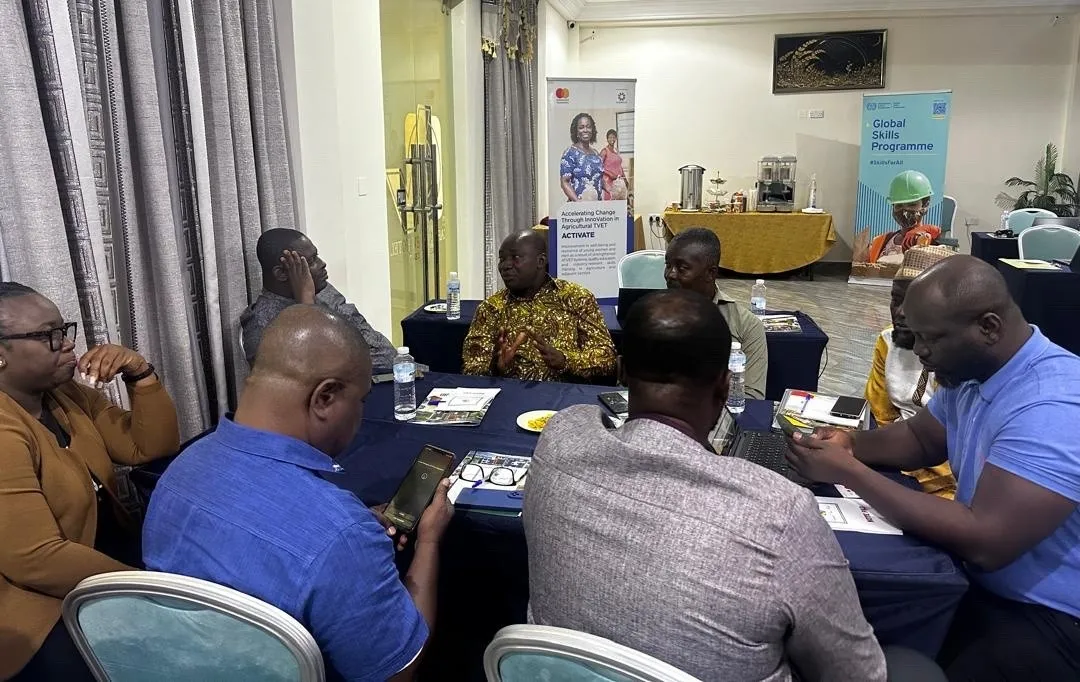
For Emelia Naah, a member of the Tourism and Hospitality SSB, the benefits are equally clear:
“Tourism is evolving fast. With this framework, we can anticipate trends and design training that makes our workforce globally competitive.”
The LMI Framework is expected to directly benefit 16 sectors and indirectly impact over 10 million people by reducing skills mismatches and creating pathways to decent work. Experts from ILO, GIZ, and CTVET, alongside seasoned consultants, guided participants through practical steps to make this vision a reality.
Funded by the Norwegian Agency for Development Cooperation (NORAD), the Global Skills Programme – Ghana Component is part of a wider effort to strengthen skills systems across Africa, including Ethiopia, Tanzania, Malawi, and Senegal.
Contact:
Frank Kwasi Adetor
National Project Coordinator – Global Skills Programme (Ghana)
Email: [email protected]