

Skills assessment
Bridging skills gap key to job creation and economic development in Chittagong-Cox’s Bazar region
The ILO and the Cox's Bazar Chamber of Commerce and Industry undertook a study to better understand the skills demand and supply in the Chattogram-Cox's Bazar economic corridor, which has the potential of becoming a hub for decent jobs.
26 June 2024
Economic growth in the Chattogram – Cox's Bazar region is facing significant challenges due to pervasive skills gaps and systemic issues within the workforce development framework, a study by ILO has found.
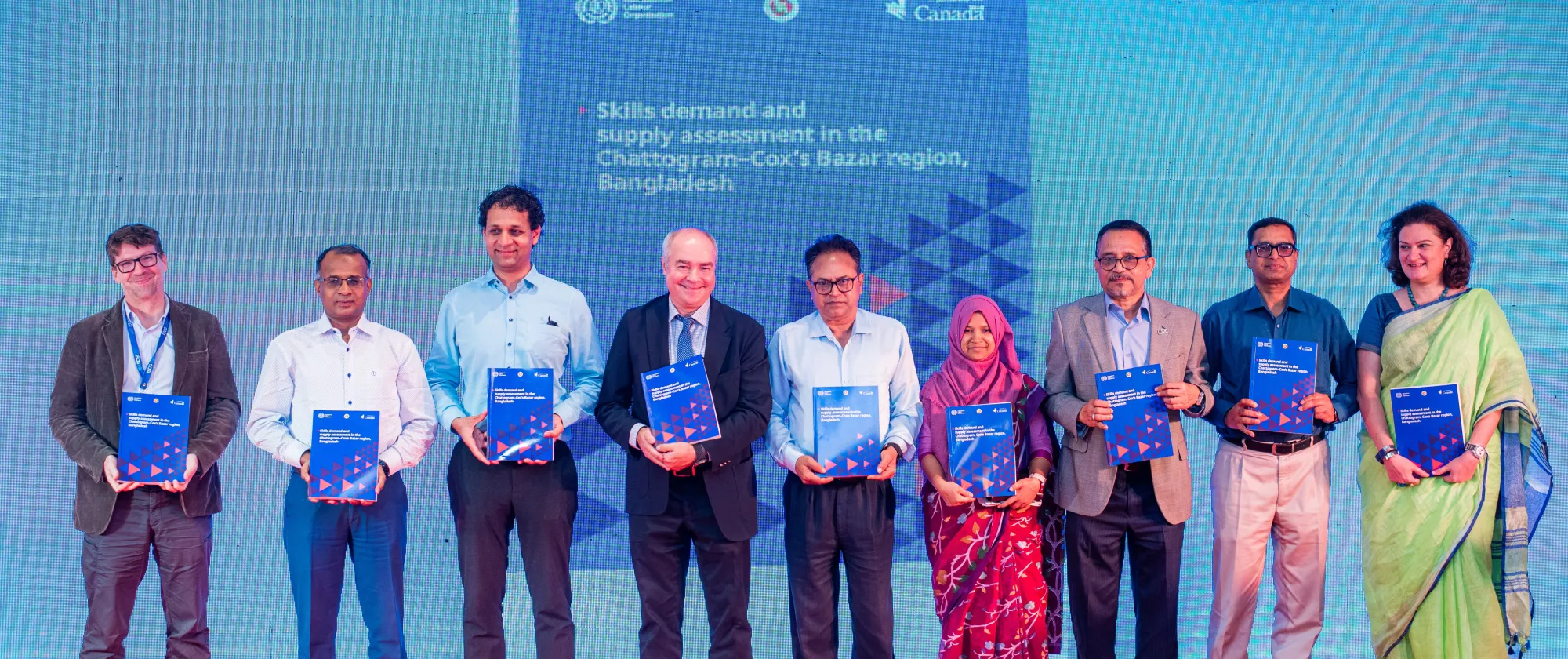
The study titled “Skills demand and supply Assessment in the Chattogram-Cox's Bazar region” highlights several critical factors contributing to the region’s economic stagnation, including a notable deficiency in skilled workers as per employers’ requirements for improving their productivity, efficiency, and innovation in order to remain competitive.
Launching the study, chief guest, Dr. Gazi Md. Saifuzzaman, Director General (Grade I), Department of Youth Development (DYD), Ministry of Youth & Sports stated: “It is a commendable step towards bridging the skills gap for job creation in the Chittagong-Cox’s Bazar economic corridor."
"I am certain that the outcomes of the study will guide the Government, private sector, development partners and other stakeholders to design and deliver harmonized market-driven skills development programmes for youth not in education, training or employment, and women, that are aligned to the National Skills Development Framework.”
Lack of collaboration
The study highlighted the lack of collaboration between public and private training institutions, which undermines development of a workforce ready for the job market. Lack of collaboration also hinders development of effective work-based learning programs such as apprentices, and employment support services.
As a result of this disconnection, employers are reluctant to hire graduates from technical education and vocational training institutes, worsening unemployment rates among trained individuals and discouraging new students from enrolling in the programs, the report says.
“The Cox’s Bazar and Chattogram Economic Corridor has significant economic potential with its comparative advantages, government mega-projects, and increasing private investments in high-potential sectors,” said ILO Country Director for Bangladesh, Tuomo Poutiainen.
“However, we must jointly build human and institutional capabilities, enhance private sector connectivity, and promote partnerships for decent work opportunities. The skills anticipation study is a major step in the right direction. It has identified systemic and sector-specific skills needs, and 49 hard-to-fill occupations that have high growth and employment potential in the region.”
Shortage of female trainers
The study also revealed that the region faces a critical shortage of qualified and certified trainers, especially female trainers, which limits the quality, reach and inclusivity of the training programs.
Enrolment of women in training programs across five key employment sectors - construction, tourism and hospitality, transport, manufacturing and agri-food, remains significantly low, stunting overall economic growth.
Reiterating the need for collaboration, UN Resident Coordinator for Bangladesh, Gwyn Lewis said: “The private sector, Government, UN agencies and NGOs all have a role to play in training young people. Through this new report, forty-nine hard to fill professions have been identified and we need to work together to prepare young people for them. The inclusion of women and youth is a high priority, particularly to advance women’s participation in skills development and the job market.”
By improving collaboration and aligning training programs with industry needs, Chattogram-Cox's Bazar can unlock its full economic potential and drive sustainable growth. It is also necessary to raise community awareness to increase female enrolment in technical training programmes, and to provide gender-sensitive career guidance. Strategies for recruiting female trainers and make learning environments more inclusive are also crucial.
Modern jobs
The study also calls for educating employers and TVET trainers about the impact of harassment and discrimination against women and their critical role in increasing women's participation in male-dominated jobs.
Vivek Prakash, Counsellor and Head of Cooperation, Rohingya and Host Communities Program, Global Affairs Canada said: “When I speak with young people in the Cox's Bazar region, they tell me they dream of building their skills for modern jobs such as graphic design. That's why we are proud to support this comprehensive evaluation of required skills and accessible training. Using regional economic investments as our driving force, we can forge a path to inclusive employment, spanning soft skills to industry-specific expertise, so that we leave no one behind.”