

Cooperatives
Better Together: Caribbean peer learning strengthens fisheries cooperatives
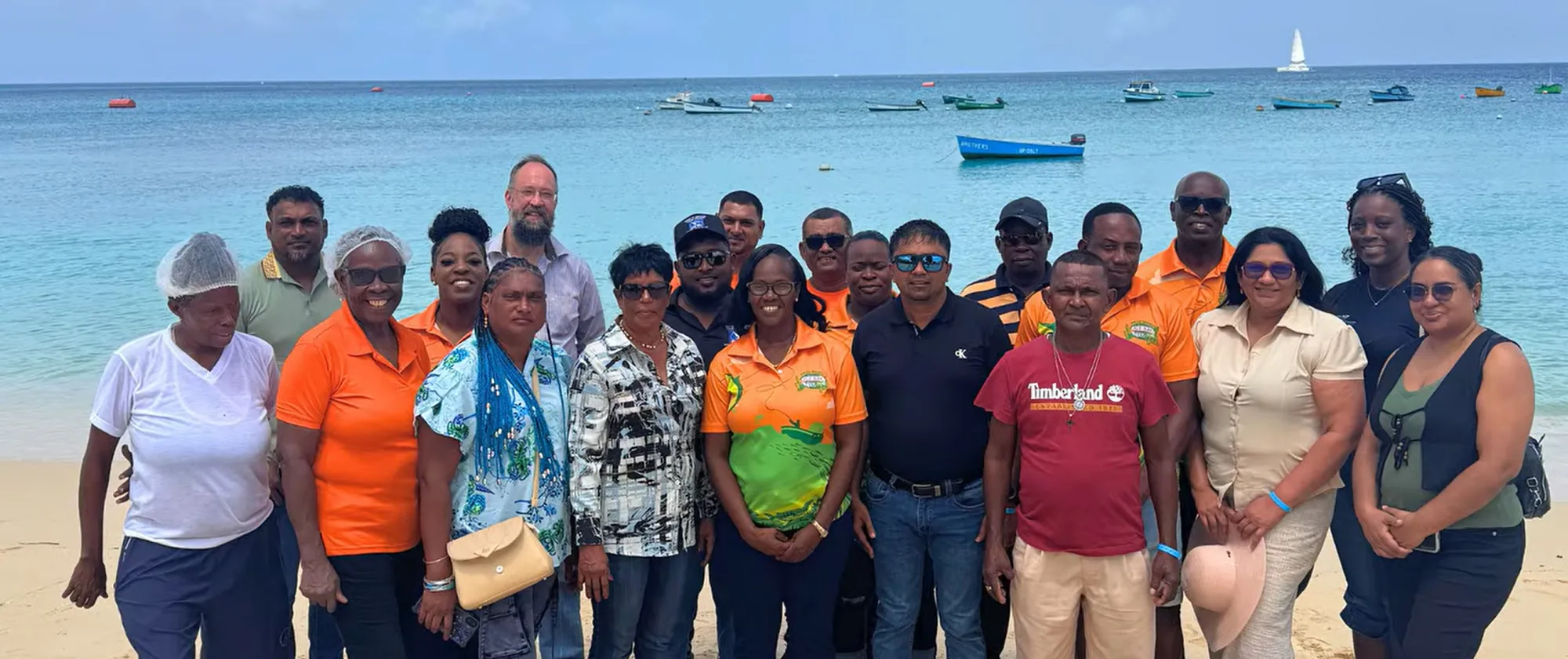
Within the framework of the ILO-FAO FISH4ACP Project, fisherfolk from Guyana participated in a study tour and learning exchange with peers in Barbados, strengthening cooperatives and regional collaboration.
31 July 2026
BRIDGETOWN, Barbados (ILO News) – Representatives of fisheries cooperatives and fisherfolk groups from Guyana travelled to Barbados from 28 to 31 July 2026 to learn directly from organizations and institutions working across the fisheries value chain.
The exchange was organized by the International Labour Organization (ILO), with support from the Food and Agriculture Organization of the United Nations (FAO) in Guyana, the Barbados National Union of Fisherfolk Organisations (BARNUFO), the Barbados Fisheries Division and the Cooperative Department of Barbados. The activity formed part of the ILO–FAO project, Support to the cooperative movement in the artisanal fisheries subsector in the Co-operative Republic of Guyana to promote decent work and food security, within the FISH4ACP programme, and focused on strengthening governance, financial management, enterprise development, market access and organizational resilience. Barbados was selected for this initiative because of its strong reputation in sustainable fisheries management, value added seafood production and effective collaboration between fishers, cooperatives and government institutions.
The visiting delegation brought together representatives from cooperatives and landing sites spanning several regions of Guyana, reflecting the breadth of the artisanal fisheries subsector nationally. Participants travelled from the Wakenaam Landing Site, the Three Door Koker Fisherman’s Cooperative in D’Edward Village, Berbice, alongside the Rosignol Fisherman Cooperative, the Sheet Anchor Fisherman Cooperative and the Anna Regina Fisherman’s Cooperative. The delegation also included representation from the Meadow Bank Greater Georgetown Fisherman Cooperative and the Guyana National Fisherfolk Organization, whose participation underscored the exchange's relevance to both localised landing-site operations and national-level cooperative coordination.
Small-scale fisheries provide employment, livelihoods and food security in Guyana. Cooperatives and other fisherfolk organizations can help members combine production, improve bargaining power, reach markets and respond collectively to challenges. However, participating cooperatives and informal groups in Guyana have identified persistent gaps in governance, financial management, value addition, market links and the representation of women in leadership.
Learning by seeing and doing
The learning exchange was designed to build on training previously delivered through the project. By meeting their Barbados counterparts in-person and observing their facilities and management systems at work directly, the participants from Guyana were given the opportunity to move beyond theory. They were able to ask detailed questions and discuss which practices could realistically be adapted in Guyana.
“Sitting in a seminar and learning this cannot equal the ‘seeing is believing’. I’m overwhelmed with knowledge, and I’m ready to go back and implement some of what I’ve learned.” Renita Joseph, Meadow Bank Greater Georgetown Fisherman Cooperative.
Participants visited the Pile Bay Fisherfolk Organization, Bridgetown Fisherfolk Association and Oistins Fisherfolk Association. Discussions covered leadership, democratic decision-making, member participation, financial accountability, collective marketing and strategies for organizational sustainability.
Meetings with Barbados’ Fisheries Division and Cooperatives Department also allowed participants and officials to compare approaches to licensing, monitoring, cooperative oversight, member engagement and institutional support. “This technical exchange shows us where we are in Guyana compared to where another country is. We’re here to have a firsthand understanding of this vast comparison, and the knowledge that we gain here can tell us where we stand and where we need to be.” Hardat Malchan, Chairman, Rosignol Fisherman’s Cooperative
The exchange then followed fish further along the value chain. At the Bridgetown Fisheries Complex, participants examined landing facilities, handling, storage and interaction among fishers, vendors and other market actors. A visit to Shorelinez Inc., a fresh fish and seafood supplier, provided practical exposure to processing, quality control, packaging, market access and opportunities to add value to fisheries products.
“What stood out to me was the cohesiveness among fisherfolk in Barbados, their commitment to their work and the modern technology they are using to strengthen the sector. It also reinforced for me how important it is for us to get our cooperatives up and running in Guyana so that we are better able to access support and improve the way we work.” Jeanette Harrylall - Wakenaam Fisherfolks GroupBenefits across the region
The exchange was not a one-way transfer of knowledge. Barbadian host organizations had an opportunity to reflect on their own experience, showcase effective practices and hear how fisherfolk in Guyana are responding to similar challenges. The interactions laid the foundation for stronger relationships among fisherfolk organizations, public institutions and technical partners across the Caribbean.
It is expected that on return to Guyana, the participating representatives will draw on the lessons from the exchange to complete or update their Cooperative Assessment Tool exercises. This tool will inform their cooperative development plans and assist them to identify priority actions for implementation. In this way, the process is designed to ensure that the exchange leads not only to new knowledge, but to practical organizational change.
By linking structured training with in-person peer learning and follow-up action, the ILO- FAO FISH4ACP project is helping fisheries organizations in Guyana translate cooperative principles into stronger day-to-day management. It also provides a model for longer-term regional cooperation on decent work, food security, sustainable fisheries and inclusive economic development.
Relevant projects

ILO-FAO Project
Support to the cooperative movement in the artisanal fisheries subsector in the Co-operative Republic of Guyana to promote decent work and...