


News
Bangladesh builds its own RBC community of professionals: The story of country’s first and only responsible Business Conduct School
Doing business responsibly by respecting workers' rights, managing risks, and going beyond minimum compliance, is no longer a niche concern. As mandatory Human Rights Due Diligence (HRDD) policies continue to emerge and shape ways of global trade, businesses across all tiers of supply chains are increasingly expected to respect and protect human rights at all nodes of their supply chain operations. For Bangladesh, this is of strong relevance as the country continues its journey towards exploring international markets for sustainable economic growth and greater integration with global markets in several export sectors.
1 June 2026
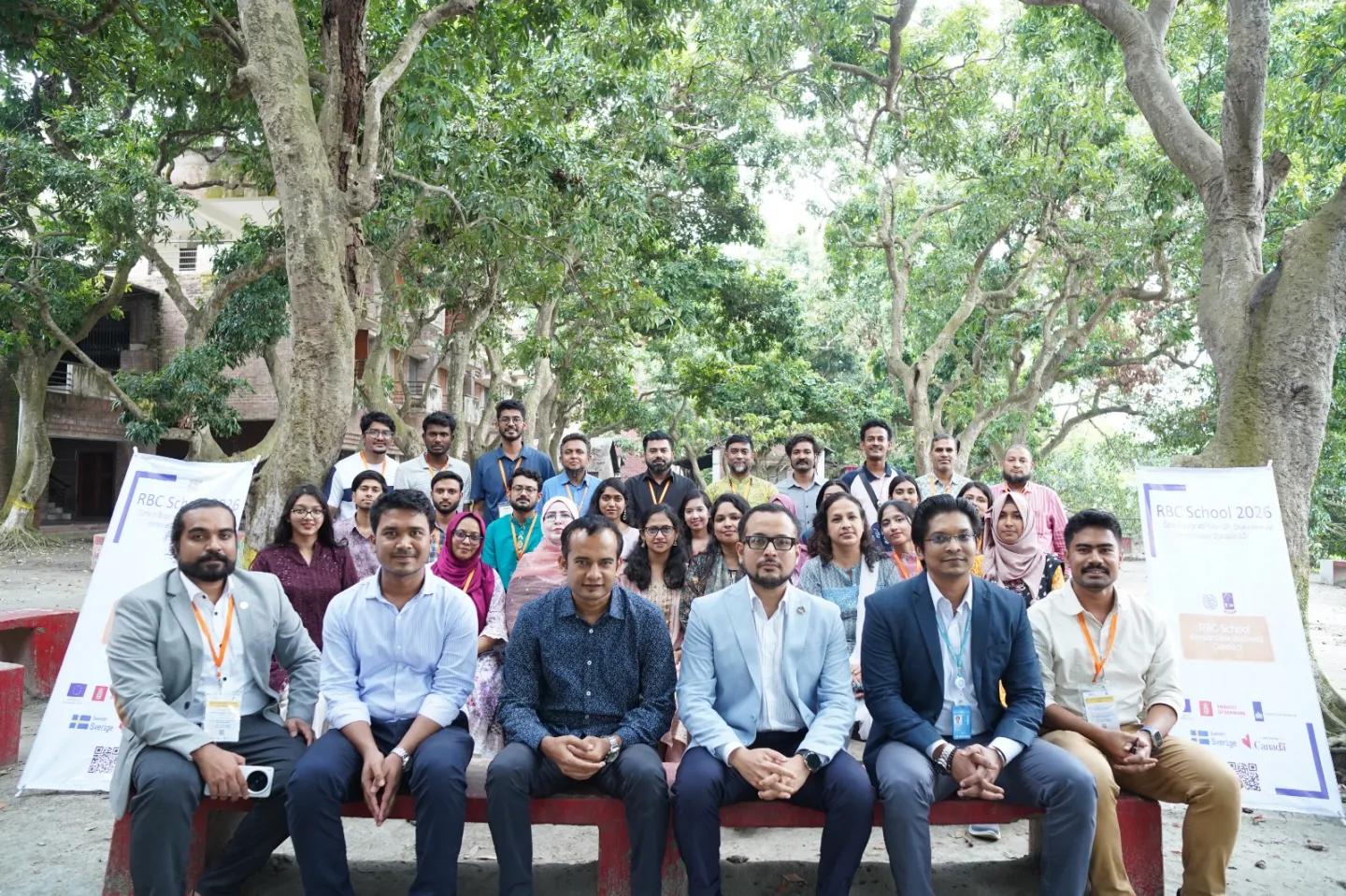
DHAKA (ILO NEWS) - Md. Quamrul Islam, Lead Consultant and Lead Auditor at Pollution Solution Ltd., was surprised to find more than ten university students among his fellow participants at a residential programme on Responsible Business Conduct (RBC). He was appreciative of the idea of a new generation entering their professional lives readily acquainted with the principles of RBC. This initiative, he believed, will contribute towards shaping the future business climate of Bangladesh. Mr. Islam was one of the twenty-nine participants who attended the RBC School’s Khulna cohort this year

What is RBC School 2026?
The Responsible Business Conduct (RBC) School 2026 is an initiative by Dhaka University's Centre on Budget and Policy (CBP) and the International Labour Organization (ILO), and co-funded by the European Union, the Embassy of Denmark, the Kingdom of the Netherlands, Sweden, and Canada to train the next generation of leaders, professionals and academics in their respective fields so that they can contribute meaningfully to the country's industry development. The initiative was intentionally designed to address the growing relevance of HRDD for businesses and their ecosystem to be aligned with such emerging compliance requirements. The RBC School 2026 was built on the foundation of the Spring School on RBC, which was jointly organized by the CBP and the ILO at Cumilla in 2025.
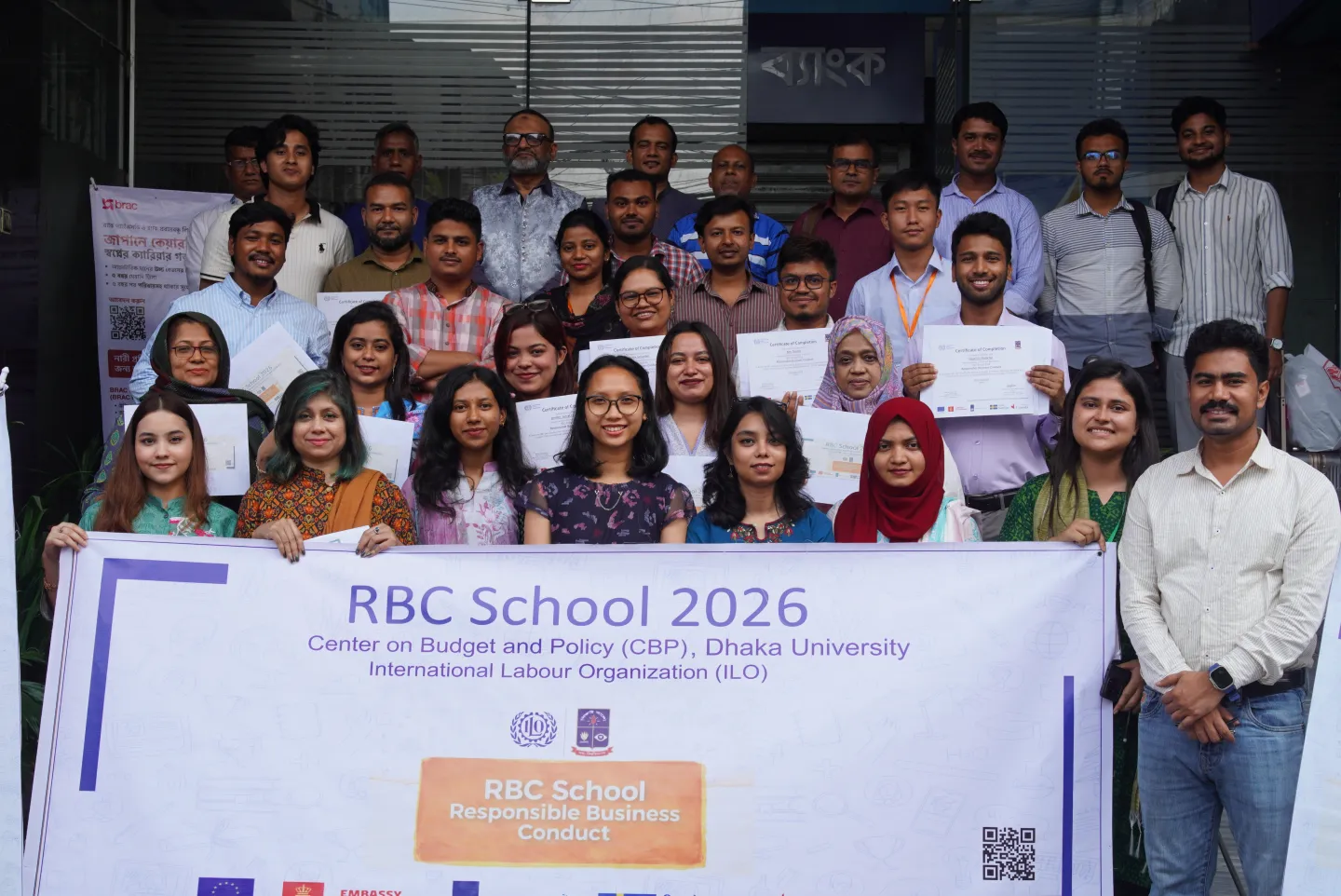
The RBC School 2026 was hosted in Khulna, Narayanganj and Chattogram, where a total of ninety participants in three cohorts from diverse academic and professional backgrounds came together to learn about concepts such as sustainability, human rights due diligence, and responsible business practices from experts in human rights, enterprises, national laws and International Labour Standards.
Md. Ataur Rahman, Head of Production at Samuda Chemical Complex Ltd., shared his experience from the Narayanganj cohort, reflecting on what he learned about better management of worker-employer relations. He noted that the sessions made him more mindful about how he engages with the colleagues and workers at his own workplace. He believed that all employees of the organization - top-level, mid-level and frontline employees - should be accountable to maintain a safe, clean, and productive working environment. Everyone must avoid any action that could disrupt operations or negatively affect the workplace. Every employee is responsible for protecting and preserving a positive and efficient work environment.
Ms. Ananya Majumder, an Assistant Manager from a renowned enterprise, attended the Chattogram cohort without much prior exposure to the concepts of RBC. She appreciated the initiative of taking these discourses outside of the capital. Following the workshop, she identified a clear pathway to redesign her organisation's existing compliance and sustainability mechanisms and is eager to share her insights through the company's knowledge management system. She also plans to conduct an internal meeting, or perhaps a training, on RBC and International Labour Standards (ILS) for her colleagues. She noted that while companies have largely focused on meeting national legislation and buyer requirements, the knowledge gained from RBC School will help her integrate ILS into the company standards.
The interest received by the RBC School 2026 shows that the demand for this kind of knowledge exchange is high and relevant. Professionals are increasingly seeking ways to understand how to meet buyer expectations, identify risks in advance and meet compliance requirements, all while placing the protection of human rights first. With this new knowledge, the participants shared that they feel more confident to promote RBC through their roles at their respective workplaces.