

ILO Conventions ratification
Bangladesh becomes first Asian country to ratify all 11 ILO fundamental instruments and first in South Asia to ratify ILO Convention No. 190
The International Labour Organization (ILO) today commended the Government of Bangladesh for the landmark ratification of three key ILO Conventions, including two fundamental ILO Conventions on occupational safety and health, reflecting the country’s strong commitment to promoting safer workplaces and ensuring dignity and respect for all workers.
20 November 2025
Dhaka (ILO News) – The International Labour Organization (ILO) today commended the Government of Bangladesh for the landmark ratification of three key ILO Conventions, including two fundamental ILO Conventions on occupational safety and health, reflecting the country’s strong commitment to promoting safer workplaces and ensuring dignity and respect for all workers.
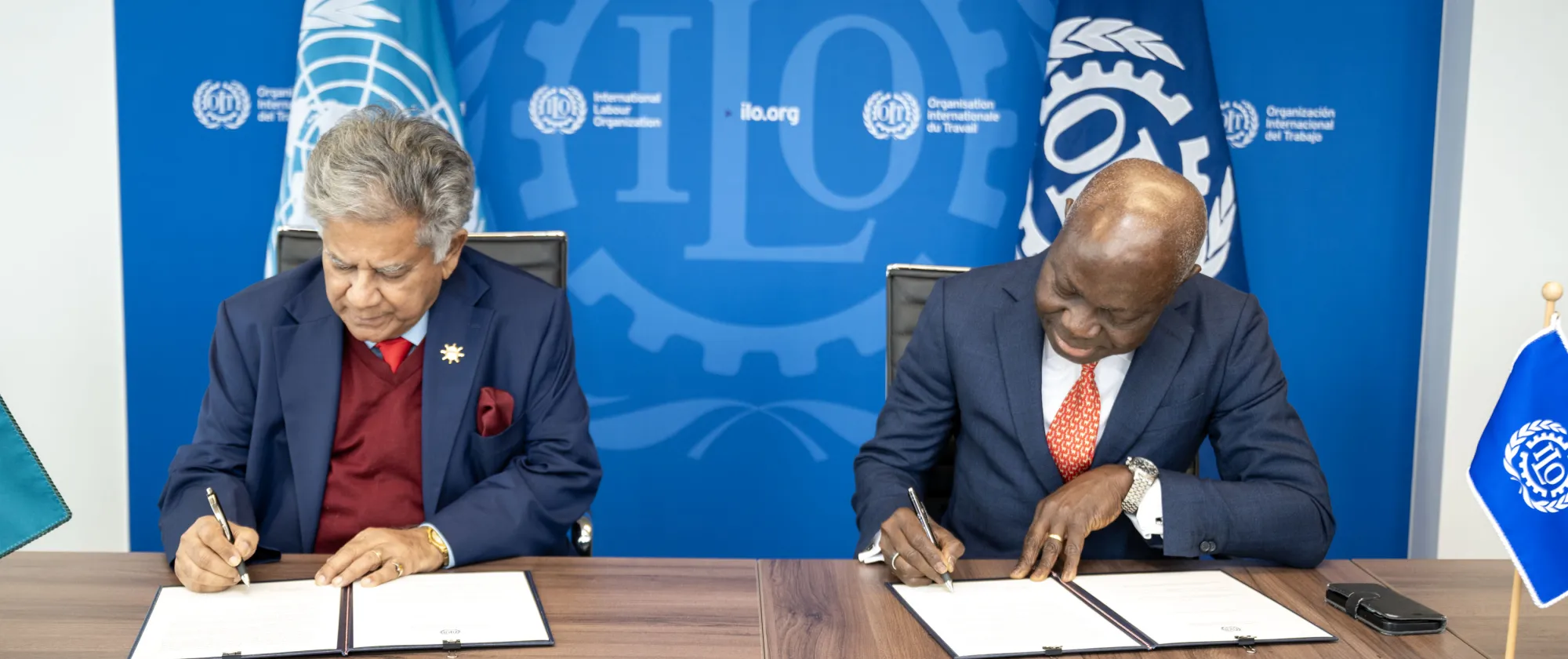
At the ILO headquarters in Geneva, Brigadier General (R) Dr. M. Sakhawat Hussain, Honourable Advisor to the Ministry of Labour and Employment (MoLE) and Ministry of Shipping, met with Mr. Gilbert F. Houngbo, the ILO Director-General, and deposited the instruments of ratification for the Occupational Safety and Health Convention, 1981 (No. 155), the Promotional Framework for Occupational Safety and Health Convention, 2006 (No. 187), and the Violence and Harassment Convention, 2019 (No. 190) . With these ratifications, Bangladesh becomes the second country in Asia-Pacific region to ratify all ILO fundamental Conventions, and the first country in South Asia to ratify Convention No.190.
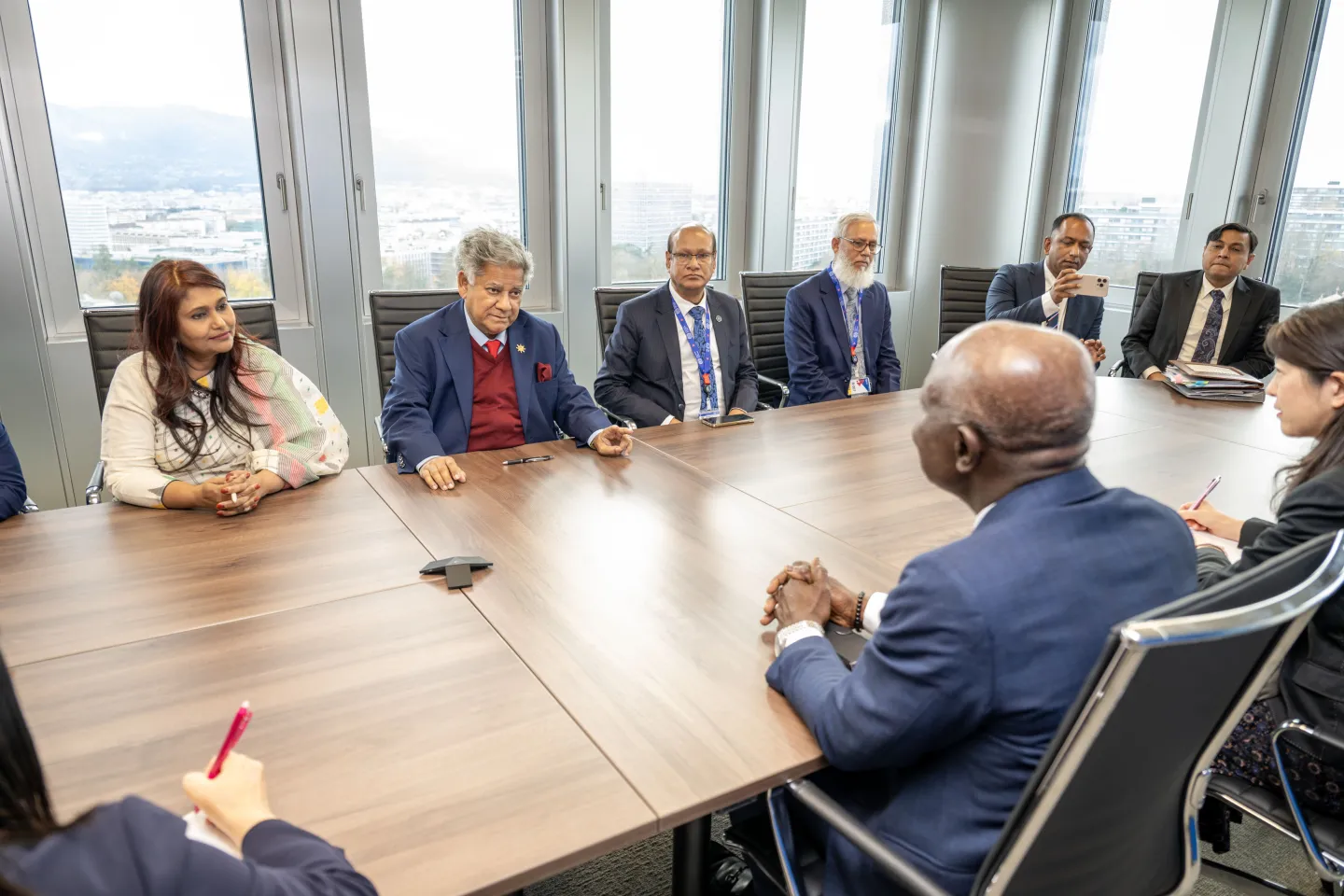
These ratifications follow the recent adoption of the Bangladesh Labour (Amendment) Ordinance, 2025 on 17 November 2025, which brings national legislation into closer alignment with international standards. The Ordinance reinforces critical protections by prohibiting discrimination, violence, and harassment at work, while affirming workers’ rights to remove themselves from situations of imminent risk without retaliation.
" The ILO commends the Government of Bangladesh for advancing the decent work agenda with the ratification of these critical conventions. The application of these ratifications will lead to safe and healthy workplaces for millions of workers and tackling violence and harassment will increase women's participation in the labour force. These commitments will strengthen Bangladesh’s global competitiveness as a responsible trading partner and investment destination. ," - Max Tuñón , the Country Director of the ILO Office in Bangladesh.
The ratifications send a strong signal of Bangladesh’s commitment to building a world of work based on dignity and respect. In addition, International Labour Standards (ILS), as minimum standards, increasingly form part of the requirements for trade agreements, and demonstrating compliance with human rights due diligence laws.
About the ratified conventions
ILO Conventions Nos 155 and 187 establish a comprehensive framework for fostering a preventive occupational safety and health culture, promoting a systems-based approach to OSH management that engages government, employers, and workers. ILO Convention No. 190, the first international treaty recognizing the right to a world of work free from violence and harassment—including gender-based violence—extends protection to all workers, regardless of their contractual status, and applies both to formal and informal sectors.
Implementation and reporting
Once registered, the Conventions will enter into force 12 months thereafter. The government will take steps to apply the Conventions in law and practice, with compliance achieved progressively. Bangladesh must submit its first report on implementation to the ILO Committee on the Application of Conventions and Recommendations (CEACR) two years after ratification. Subsequent reports follow a three-year cycle for Conventions Nos 155 and 187 and a six-year cycle for Convention No. 190. The CEACR provides impartial technical evaluations, incorporating inputs from workers’ and employers’ organizations.
To ensure effective implementation, MoLE has institutionalized a tripartite ILS committee to discuss reports, address issues raised by ILO supervisory bodies and take actions to continuously improve the application of ratified Conventions. This mechanism, in turn, ensures that any issues regarding the application of the Conventions are resolved at national level. The ILO remains fully committed to supporting the government, employers, and workers in translating ratified commitments into meaningful law and practice through studies, legislation, policy development, and training.
Past and present support
Bangladesh has made substantial progress in implementing OSH measures. Since 2013, the ILO has collaborated with the government through multiple programs, including the Improving Working Conditions in the Readymade Garment Sector Programme (RMGP), funded by Canada, the Netherlands, and the UK. Following the Rana Plaza tragedy, the program supported amendments to the Bangladesh Labour Act, adoption of a National OSH Policy (2013), development of the National Plan of Action on OSH (2021–2030), and capacity building for the Department of Inspection for Factories and Establishments (DIFE), including the creation of the Labour Inspection Management Application (LIMA) and the Industrial Safety Unit (ISU). The recently established National Occupational Health and Safety Training and Research Institute (NOHSTRI) in Rajshahi further demonstrates the government’s commitment to OSH.
On violence and harassment, the project supported studies, awareness campaigns, and capacity building related to Convention No. 190, as well as advocacy for its ratification. Notable achievements include the Gender Road Map (GRM) 2020–2030 adopted by DIFE and training of over 800 trade union and safety committee members in 125 factories by BGMEA and BKMEA Master Trainers. Better Work Bangladesh also strengthened factory-level understanding of Convention No. 190 through its Gender-Based Violence prevention platform.
Through the Trade for Decent Work Project, funded by the European Union, and the Advancing Decent Work in Bangladesh project, co-funded by the Team Europe Initiative, Denmark, the Netherlands, Sweden, and Canada, the ILO continues to provide technical assistance. This includes alignment of Bangladesh Labour Act and Sexual Harassment Bill with ILO Conventions, rolling out strategic compliance planning, and organizing annual OSH research and awareness conferences. The ILO is also supporting the development of a five-year plan for NOHSTRI and upgrades to LIMA.