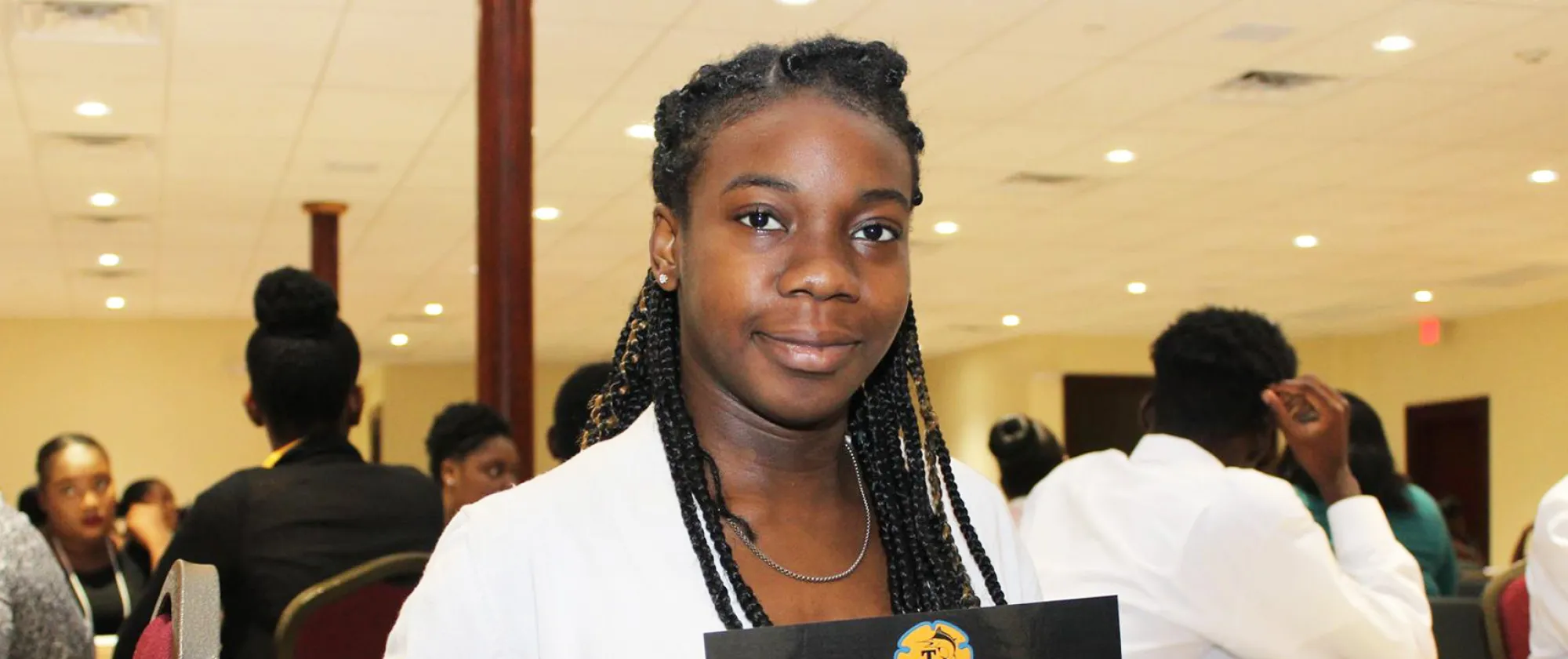
As labour markets in The Bahamas continue to recover from the ongoing effects of multiple crises including Hurricane Dorian and the COVID-19 pandemic, strengthening the employability of persons has emerged as a key national priority.
In direct response to the issue, tripartite partners (the Government of The Bahamas, employers’ organizations and trade unions) worked together in collaboration with the ILO to develop and introduce a new National Apprenticeship Policy (NAP) that will enhance local skills development to meet the needs of the economy and promote decent employment.
The Policy is structured around eight focus areas: Governance, Stakeholder Roles and Responsibilities, Regulatory Framework, Equitable Financing, Labour Market Aligned Programme Development, Programme Implementation, Social Inclusion and Monitoring and Evaluation. It advanced to a validation phase on 15 September 2023 during a meeting led by a NAP taskforce where tripartite partners, civil society organizations and non-governmental organizations discussed its framework.
“The taskforce has been at the foundation of this process. Their involvement is a result of a directive by the Prime Minister and Cabinet to ensure that there will be an inclusive and sustainable quality apprenticeship programme for The Bahamas,” said Ms. Sharon Martin, Chair of the National Tripartite Council of The Bahamas, who also sits on the NAP taskforce.
Apprenticeships are central to the second Decent Work Country Programme (DWCP) for The Bahamas, which is being implemented between 2021 and 2026. The first priority of the DWCP, Jobs and Skills, focuses on equipping the workforce with skills that respond to constantly evolving labour market needs. It seeks to enhance labour force development and enterprise sustainability to improve prospects for decent employment, increase productivity, and support inclusive economic growth. It gives special attention to marginalized groups including youth, women, and Family Islanders.
“This is a very important agenda item not only for our Government, but it also perfectly aligns with the goals and objectives of the Decent Work Country Programme. This is a big win as we complete and validate this Policy to take it to Parliament,” said the Honourable Pia Glover-Rolle, Minister of Labour and the Public Service for The Bahamas as she commended the NAP taskforce on its work to advance the process towards finalization.
The Policy also resonates with the new ILO Recommendation on Quality Apprenticeships 208, which was adopted globally in June 2023 during the 111th Session of the International Labour Conference.
“The new labour standard provides a clear definition of quality apprenticeships, including the rights and protections of apprentices. It also supports opportunities for people of all ages to continuously skill, reskill and upskill,” explained Ms. Ilca Webster, Specialist on Skills and Lifelong Learning for the ILO Decent Work Team and Office for the Caribbean, who is leading coordination of the ILO’s support.
The validation session was facilitated by Ms. Sharon Martin, Chair of the National Tripartite Council of The Bahamas, who also sits on the NAP taskforce, with support from Mr. Stefano Merante, Programme Officer for Skills Development / Technical and Vocational Education and Training (TVET) at the ITCILO who highlighted governance and equitable financing as notable aspects of the new Policy.
“The regulatory framework of the NAP will be enforced by a National Apprenticeship Board (NAP) which will serve as a multistakeholder decision-making body. It will be supported by the National Apprenticeship Unit (NAU), an operational arm comprised of government officials with appropriate competencies to carry out several functions,” Mr. Merante explained. “Another key achievement of this Policy is that it will be innovatively co-financed through public and private funding.”