

ILO News
The Bahamas marks 50 years with the ILO: advancing decent work and social justice for all
From celebrating a half-century of membership in the International Labour Organisation (ILO) to advancing new labour reforms, the Bahamas is strengthening tripartite dialogue to chart its next chapter in decent work.
30 March 2026
NASSAU, the Bahamas (ILO News) – Fifty years after joining the International Labour Organization (ILO), the Bahamas is reaffirming its commitment to social justice through a renewed push on labour standards, social protection and tripartite cooperation.
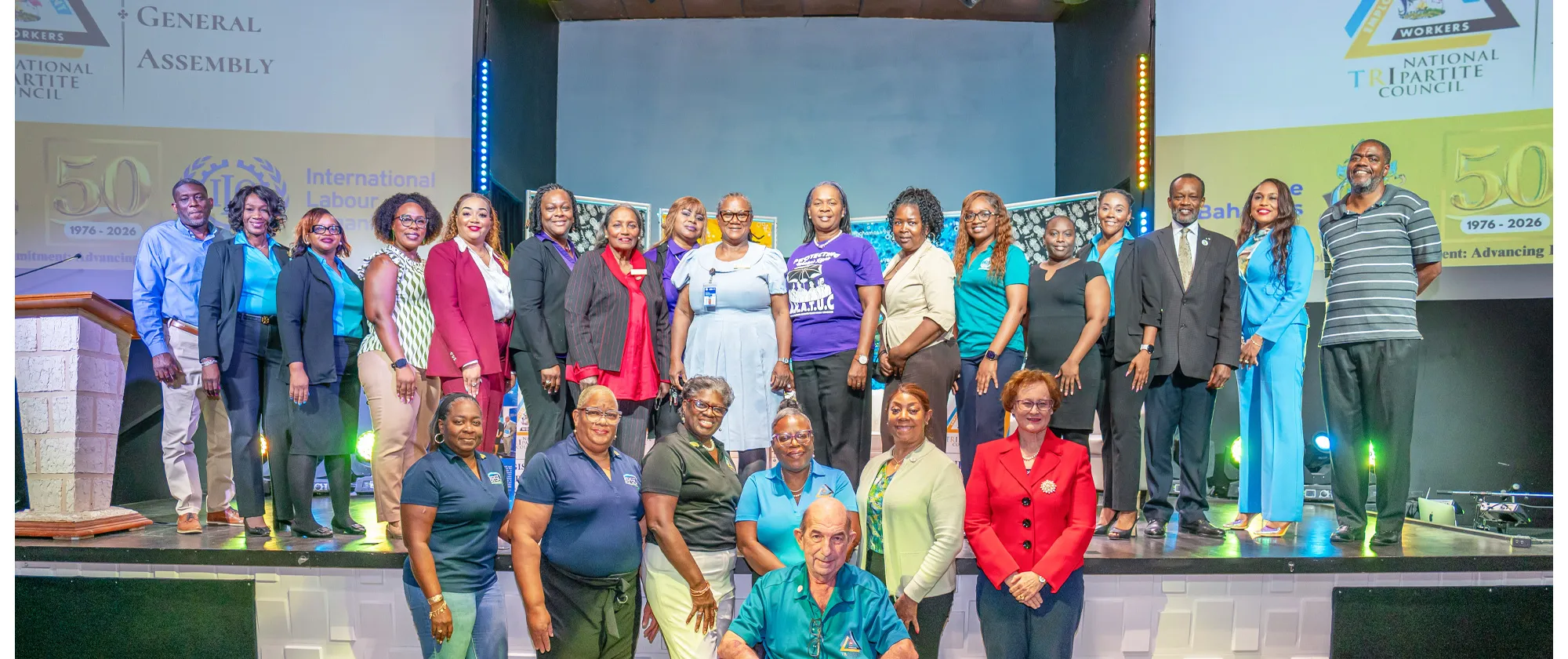
At the Annual General Assembly (AGA) of the National Tripartite Council (NTC), held in Nassau on 26–27 March 2026 under the theme “50 Years of a Shared Commitment: Advancing Decent Work and Social Justice for All,” government, employers and workers came together, not only to reflect on progress, but to define the country’s next steps in strengthening its labour framework, with the continuing support of the ILO.
Advances towards stronger labour protections
In the decades since 1976, the country’s partnership with the ILO has produced concrete results. In 2021, the country became the first in the Caribbean to launch a second-generation Decent Work Country Programme (2021-2026), structured around three national priorities: jobs and skills, social dialogue, and governance. In more recent times, ongoing collaborations have resulted in the Bahamas’ ratification of Convention No. 159 on Vocational Rehabilitation and Convention No. 190 on Violence and Harassment, adoption of a National Apprenticeship Policy and Act, and the strengthening of social security contributions following an ILO-supported actuarial review of the National Insurance Board.
Days before the Assembly, the Government of The Bahamas publicly announced that Cabinet had approved the ratification of three ILO Conventions: No. 155 on Occupational Safety and Health, No. 187 on the Promotional Framework for Occupational Safety and Health, and No. 183 on Maternity Protection. These Conventions are expected to modernize occupational safety and health systems and strengthen protections for working women, reinforcing the country’s commitment to decent work for all. The decision followed two rounds of national tripartite workshops held in May and November 2025 with technical support from the International Labour Standards Specialist in the ILO Caribbean Office, to review and validate a legislative gap analysis on all three instruments.
A partnership built on social dialogue
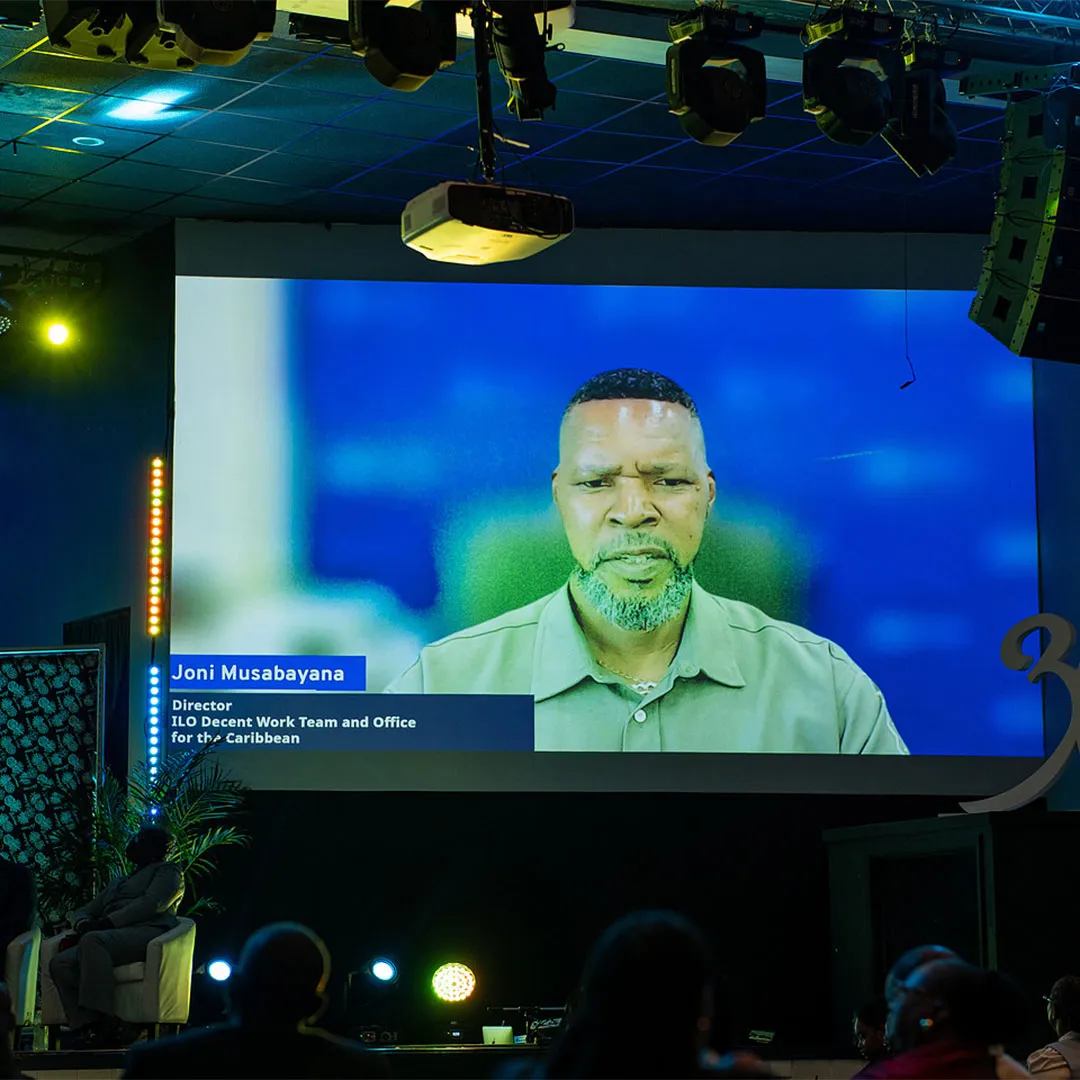
In his address to the opening of the AGA, ILO Caribbean Director Joni Musabayana highlighted the central role of tripartism in shaping national labour policies and underscored the enduring value of this model:
“At the centre of this partnership has always been tripartism. The National Tripartite Council is the living embodiment of a founding ILO principle: that government, employers, and workers, brought together in good faith, produce better laws and more durable outcomes than any one actor can achieve alone.”
Mr. Lavell Watson, Chairperson of the AGA Committee, emphasized the significance of this milestone:
“This Assembly reflects the strength of social dialogue in the Bahamas. Fifty years of partnership with the ILO has given us the tools to build a framework that protects every Bahamian worker. The decision to advance ratification of key Conventions is not only a policy achievement, it is a shared commitment by government, employers and workers to raise standards and safeguard the well-being of all.”
Strengthening social protection systems
Social protection objectives also featured on the two-day programme, with Ariel Pino, ILO Social Protection and Occupational Safety and Health Specialist, delivering an in-depth presentation to the Assembly on Social Security (Minimum Standards) Convention, 1952 (No. 102). The presentation, referring closely to the Bahamas’ current Decent Work Country programme’s (DWCP) planned outputs, outlined the nine branches of social security covered by the Convention and the principles of state responsibility, equality of treatment and adequate benefit levels.
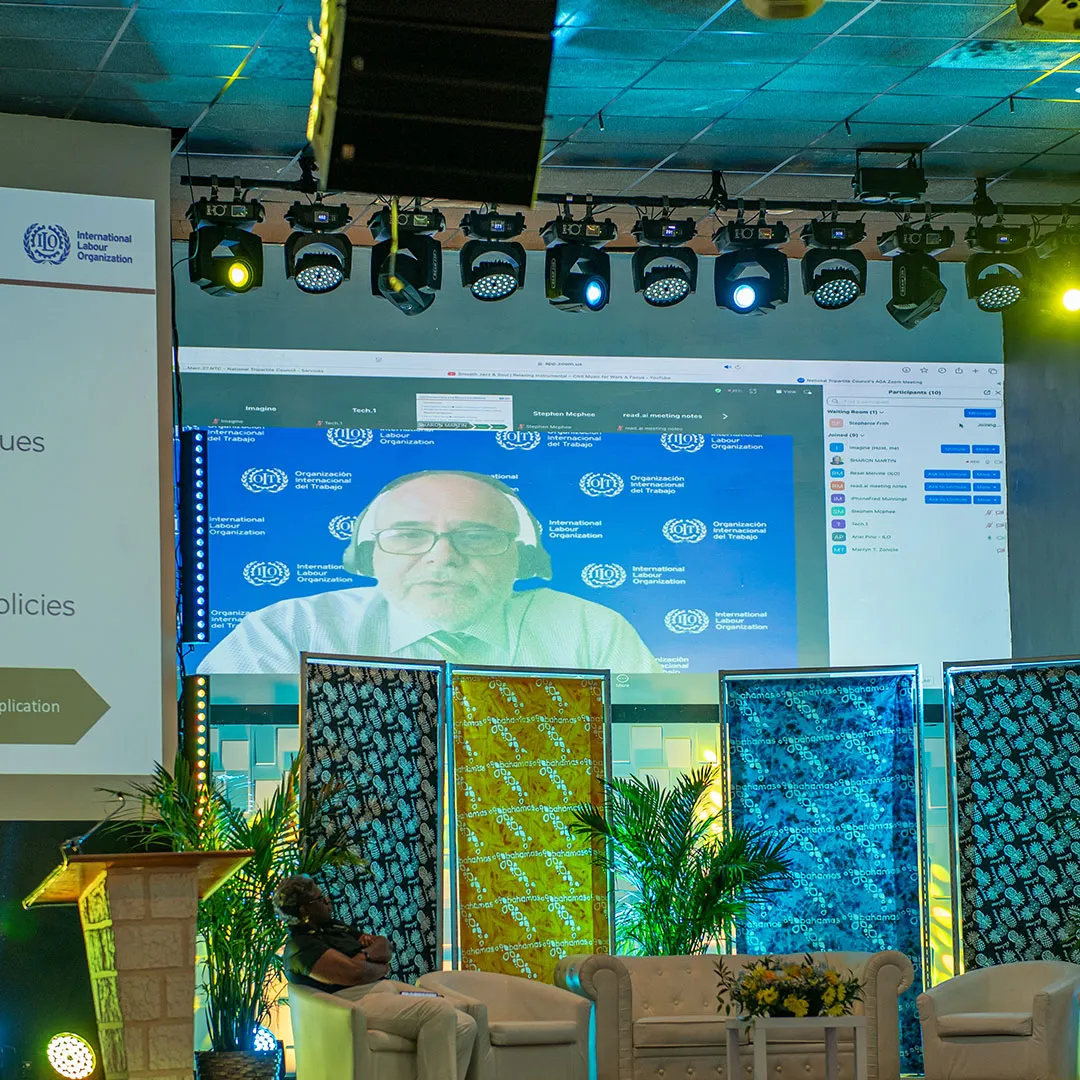
“Convention 102 stands as the global benchmark for social security systems, offering sufficient flexibility to facilitate ratification. The gap analysis conducted for the Bahamas, as part of the 11th Actuarial Review, confirms that the country is well positioned to ratify the Convention. The next steps include a tripartite validation of the gap analysis, followed by the necessary domestic ratification procedures. The ILO stands ready to support this process going forward.” Ariel Pino, ILO Social Protection and OSH Specialist.
Looking ahead
With the current DWCP cycle nearing completion, the NTC’s focus is firmly on the future. Council Chairman, Sharon Martin, shared in her closing report that the Council has set strategic targets which include formal dialogue with the ILO on the launching of a 3rd generation Bahamas Decent Work Country Programme. This future programme would have a strong emphasis on social protection (inclusive of maternity & invalidity benefits), social dialogue (wage setting, conflict resolution, the social and strategic partners) and job creation (with special attention to policies to address needs of persons with disabilities).
Joni Musabayana, ILO Director reflected this forward-looking perspective. “Fifty years is a foundation. What you build on it next is the legacy still being written,” he said. “The ILO will remain a committed partner and ally in the work you are doing to ensure a society where labour is valued, rights are protected, and no worker is left behind.”
The Council chairman Sharon Martin accepted the ILO Director’s challenge saying, “I am confident that the NTC Council Executives embrace the season of legacy, being mindful of David Green’s The Legacy Life which sums it up quite well. Legacy, he said, is not about what you leave behind, but rather what we set in motion.”