

Violence and Harassment Convention, 2019 (No. 190)
Armenia advances implementation of ILO Violence and Harassment Convention through national policy dialogue
Government, employers’ and workers’ organizations reviewed gaps and priorities for implementing Convention No. 190 following its ratification.
3 February 2026
YEREVAN (ILO News) – Representatives of the Government of Armenia, employers’ and workers’ organizations, civil society and international partners gathered in Yerevan on 30 January 2026 for a Policy Dialogue on the International Labour Organization (ILO) Violence and Harassment Convention, 2019 (No. 190), aimed at advancing national efforts to implement the Convention following its ratification in December 2025.
The event was jointly organized by the ILO and UN Women, in partnership with the Ministry of Labour and Social Affairs of the Republic of Armenia, and brought together tripartite constituents and key stakeholders to discuss country experiences, legislative gaps and priorities for effective implementation of the Convention.
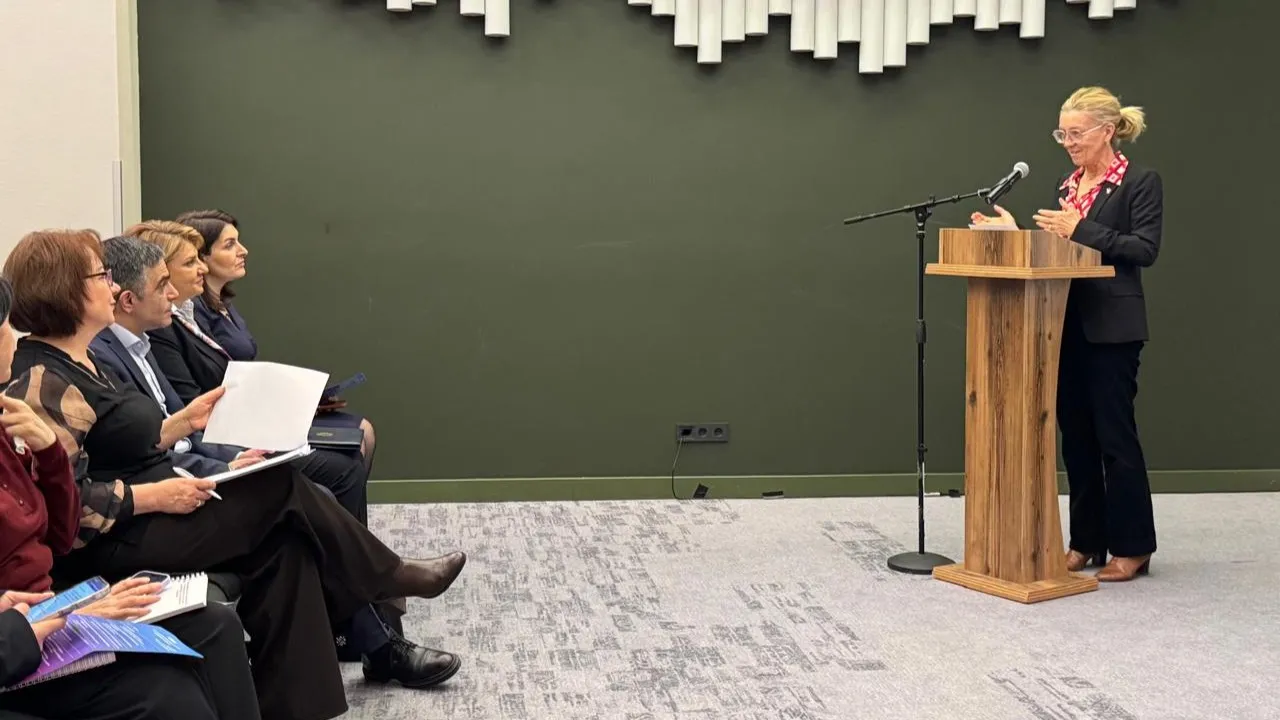
Opening the dialogue, Françoise Jacob, United Nations Resident Coordinator in Armenia, welcomed Armenia’s ratification of Convention No. 190 as a historic milestone and a strong signal of the country’s commitment to dignity, equality and social justice. She stressed that violence and harassment in the world of work constitute violations of human and labour rights, undermine productivity and trust in institutions, and disproportionately affect women. Jacob emphasized that ratification must be followed by inclusive and sustained implementation through social dialogue, with the United Nations system standing ready to support Armenia in translating this commitment into practice.

In her opening remarks, Lusine Kocharyan, Deputy Minister of Labour and Social Affairs of the Republic of Armenia, reaffirmed the Government’s commitment to decent work for all, noting that labour lies at the core of Armenia’s development agenda. She highlighted that decent and safe employment is a key pathway to prosperity, poverty reduction and inclusive economic development, and emphasized the importance of aligning national legislation and policies with international labour standards.
Reflecting on the process leading to ratification, Ruben Sargsyan, Acting Head of the National Institute of Labour and Social Research, shared Armenia’s experience and the preparatory work undertaken within the Government prior to the ratification of Convention No. 190 by the National Assembly. Drawing on his role as Deputy Minister of Labour and Social Affairs at the time, he highlighted the inter-institutional coordination, technical consultations and tripartite engagement that paved the way for the successful ratification of the Convention.
From a legislative perspective, Heriknaz Tigranyan, Member of Parliament and Chair of the Standing Committee on Labour and Social Affairs, outlined the parliamentary process leading to ratification and emphasized the role of the National Assembly in ensuring effective implementation. She noted that the Parliament will continue to monitor legislative developments and address existing gaps to ensure full compliance of national legislation with the Convention.
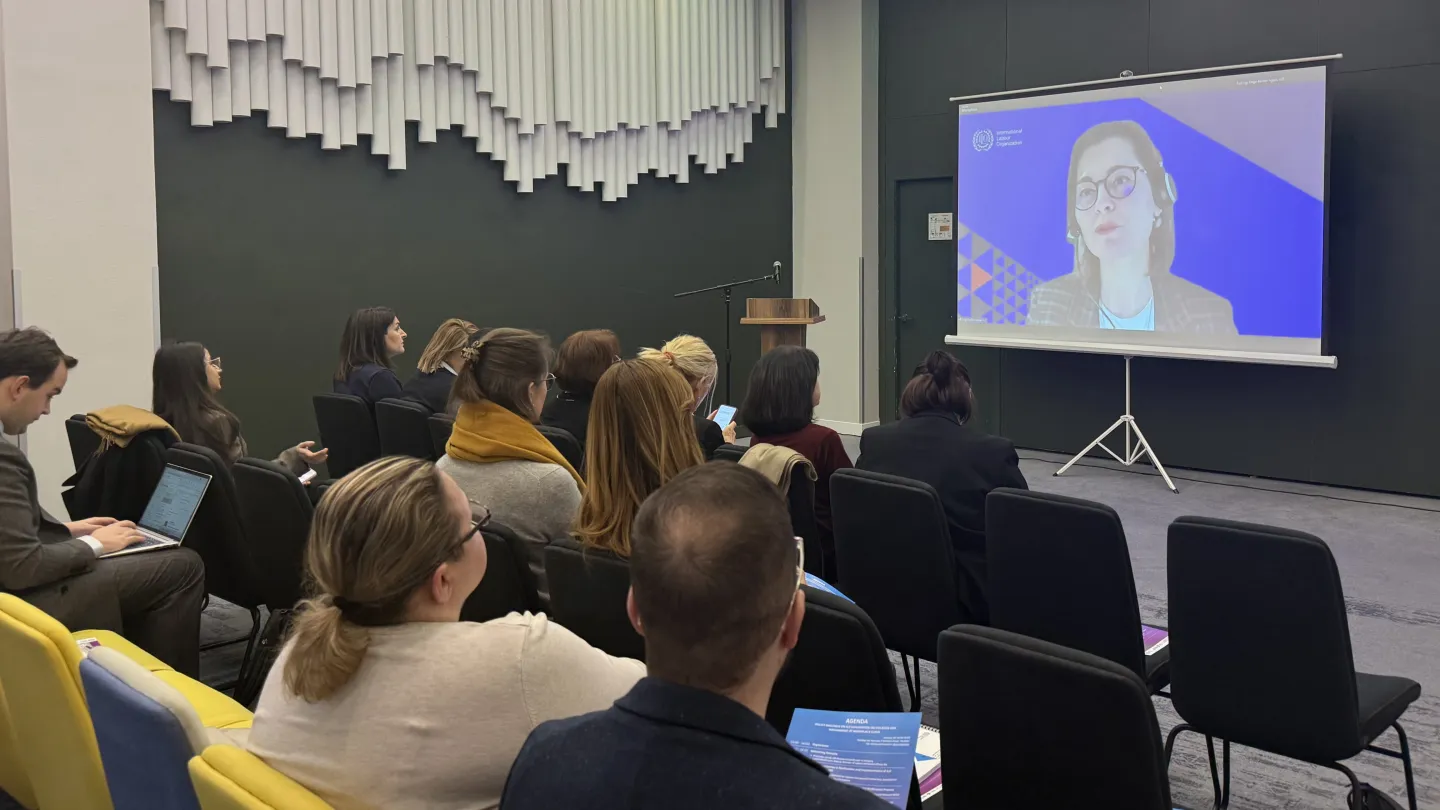
The discussion benefited from a presentation on country experiences in the ratification and implementation of ILO Convention No. 190, delivered by Özge Berber-Agtas, Gender Equality and Non-Discrimination Specialist at the ILO Decent Work Technical Support Team and Country Office for Eastern Europe and Central Asia. The presentation highlighted international good practices, common challenges and lessons learned in moving from ratification to implementation.
To inform national priorities, participants reviewed findings from ILO-supported gap analyses presented by legal expert Sergey Ghazinyan, which provided an evidence base for identifying key areas for reform. These findings fed into a panel discussion on the roadmap for implementation, focusing on gaps in Armenian legislation related to violence and harassment in the world of work, as well as practical challenges in enforcement and compliance.
Tiruhi Nazaretyan, Deputy President of the Confederation of Trade Unions of Armenia (CTUA), emphasized that preventing violence and harassment in the world of work is of critical importance for workers. She noted that CTUA receives numerous enquiries related to psychological harassment, which remains particularly difficult to identify and address in practice, and stressed the need for clear legal definitions, criteria and accessible reporting mechanisms.
Lilit Adamyan, Chief Executive Officer of the Republican Union of Employers of Armenia (RUEA), underlined that clear and predictable regulation of violence and harassment is also in the interest of employers. She highlighted that precise standards help protect employers from unsubstantiated complaints while providing a clear framework for compliance, and reaffirmed employers’ readiness to further engage in capacity-building related to the implementation of Convention No. 190.
Contributing an enforcement perspective, the Health and Labour Inspectorate Body, represented by Ara Mkrtchyan, Head of the Department of Labour Legislation Control, shared practical insights from labour inspections. He outlined challenges in addressing cases of violence and harassment under the current legal framework and noted existing constraints that limit enforcement actions, underscoring the need for clearer mandates and procedures aligned with Convention No. 190.
The dialogue concluded with a shared understanding of the importance of continued tripartite cooperation, legislative reform, institutional capacity-building, and awareness-raising to ensure effective and sustainable implementation of Convention No. 190 in Armenia.
Armenia officially ratified Convention No. 190 on 4 December 2025, following its approval by the National Assembly of the Republic of Armenia on 11 September 2025. The Convention will enter into force in December 2026. The policy dialogue marked an important milestone in advancing a shared national roadmap towards a world of work free from violence and harassment.
The event was jointly organized by UN Women and the ILO within the framework of the ILO RBSA-funded initiative “Building the capacity of constituents to pre-empt informalisation of work and promote transition to formality in the context of a refugee crisis” and UN Women’s “Women’s Economic Empowerment in the South Caucasus” (Phase III) project, funded by the Swiss Agency for Development and Cooperation (SDC) and the Austrian Development Agency (ADA).
Related content
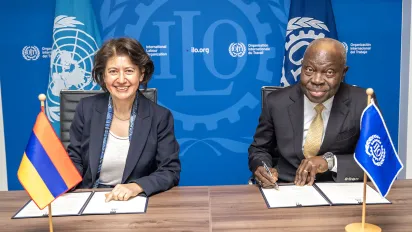
Armenia ratifies the ILO Convention on Violence and Harassment
Country portal
Armenia
Topic portal
Violence and harassment in the world of work
Building the capacity of constituents of pre-empting informalisation of work and promote transition to formality in the context of a...
Relevant projects
Building the capacity of constituents of pre-empting informalisation of work and promote transition to formality in the context of a...