Labour Statistics
Angola adopts new international standards for labour market statistics
With this initiative, Angola joins the other SADC Member States in developing their labour market statistics.
9 October 2025
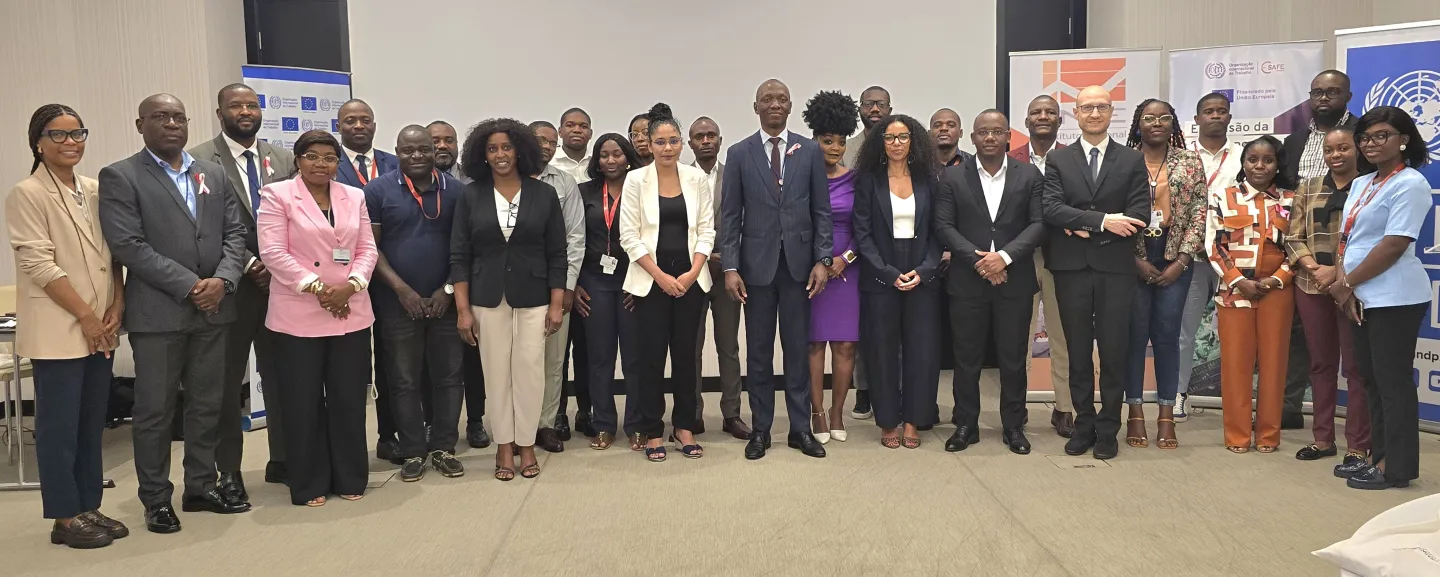
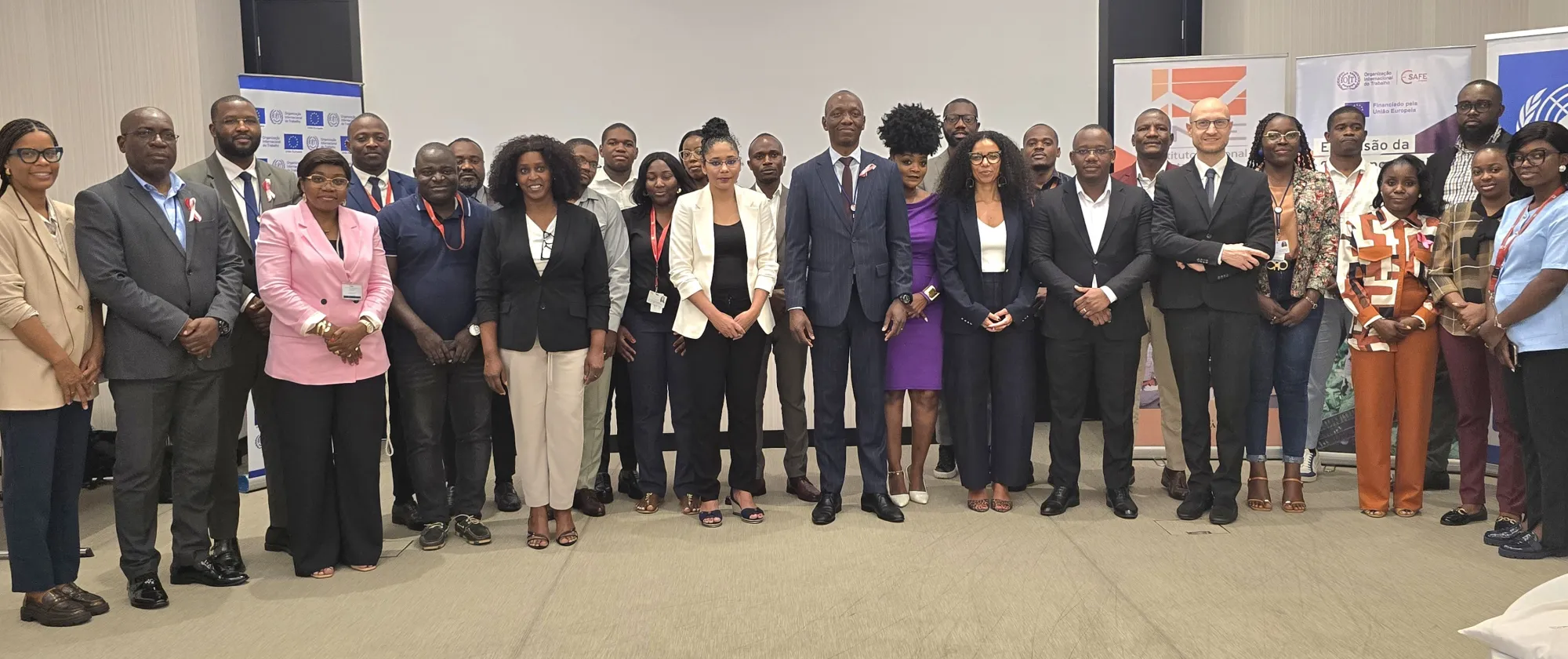
Luanda, Angola (ILO News) – About 20 staff from the National Statistics Institute (INE) and the Ministry of Public Administration, Labour and Social Security (MAPTSS) were trained, from 6 to 9 October, to finalise the questionnaire for the employment survey, as part of the adoption of the new international labour statistics standards.
The event was an initiative of INE, in partnership with the International Labour Organization (ILO) and the United Nations Development Programme (UNDP), and co-financing from the European Union, under the Project Expansion of Social Security to Support the Formalization of the Angolan Economy (ESSAFE Angola).

With this initiative, Angola joins the other SADC Member States in developing their labour market statistics, adapting new labour market monitoring standards. Through this exercise, Angola adopts the three most recent standards for measuring labour market statistics, namely: 19th Resolution on labour, employment and labour underutilisation; 20th Resolution on labour relations; and 21st Resolution on informal economy. The standards are established through the International Conference of Labour Statisticians (ICET), organised by the ILO.
At International Conferences, employers' and workers' organisations and the governments of all participating Member States contribute to the process of setting international standards. The adoption of the three standards will provide Angola with a greater variety of labour market indicators that can contribute to more effective political decision-making.

The capacity building workshop was facilitated by ILO statistics expert, Maria Payet, who said she witnessed a strong commitment and interest from the participants in developing the necessary capacities to work with the questionnaire for the employment survey, being confident in the quality of the data that will be collected, processed and published by Statistics Portugal.
The closing session was chaired by the Director General of the National Institute of Statistics, Joel Futi, who considered the training as an important step for the program to modernize and strengthen the National Planning System, as well as the National Statistical System, defined in the National Development Plan (PDN) 2022-2027, and which will contribute to strengthening the credibility and comparability at an international level of the official statistics produced by the Government of Angola.
"The training allowed the strengthening of the capacities of the technical teams involved in the process of collecting, processing, analysing and disseminating the Employment Survey in Angola, so Statistics Portugal is technically better prepared for the subsequent steps, towards the methodological review and effective implementation of the most recent resolutions of the International Conference on Labour Statistics," said Joel Futi, having announced that, from the first quarter of 2026, data will be collected, processed and published on the basis of the new ILO methodology.

The National Director of Labour, Blanche Chendovava, said that with the adoption of these resolutions, the data collected "will bring surprising results on employment and unemployment rates", reaffirming their importance for the National Employment Observatory, led by the Ministry of Public Administration, Labour and Social Security.
The ILO Programme Manager in Angola, Denise Monteiro, congratulated the Government of Angola for deciding to strengthen the National System of Labour Statistics, through the formal adoption of the 19th, 20th and 21st Resolutions of the International Conference of Labour Statisticians, and reiterated the ILO's commitment to continue to support the Government in this regard through the ESSAFE Angola Project, funded by the European Union.
"The adoption and implementation of these Resolutions mark a decisive step for the country. These standards will allow us to more accurately capture the dynamics of employment, informal work and labour relations, providing indicators that will support the formulation of more effective and evidence-based employment, formalisation and social protection policies", said Denise Monteiro.
For INE technicians Adilson Muhongo and Helena Manuel, the concepts and methods learned during the training will allow them to improve their daily work with the production of labour statistics in Angola, with high expectations in the publication of the first data in Angola based on the new resolutions of the International Conference of Labour Statisticians.