

Advancing statistical frameworks of cooperatives and the wider social and solidarity economy: ILO presents progress at global research conference
The ILO participated in the International Cooperative Alliance Committee on Cooperative Research (ICA CCR) Global Research Conference 2025, delving into the future of cooperatives in times of geopolitical changes, presenting progress in ILO-led collaborative work to improve statistics on cooperatives and the broader social and solidarity economy (SSE) and engaging with cooperative and broader SSE researchers, practitioners and policymakers.
25 July 2025
MONTREAL (ILO News) – From 8-11 July 2025, the International Cooperative Alliance Committee on Cooperative Research (ICA CCR) Global Research Conference 2025 washeld at HEC Montréal in Canada. The ILO joined researchers, practitioners and policymakers from around the world to explore the future of cooperatives and the broader SSE in times of geo-political changes. The ILO and its collaborators also showcased a decade of progress and recent development in building a robust statistical framework for cooperatives and the broader SSE, among other engagements
On 8 July, Simel Esim, Head of the ILO Cooperative, Social and Solidarity Economy Unit (COOP/SSE) and Chair of the UN Inter-Agency Task Force on Social and Solidarity Economy (UNTFSSE), spoke in the keynote opening dialogue on “The Future of Cooperatives in Times of Geo-Political Changes.” She noted that recent geopolitical developments have increased the urgency of promoting cooperatives and the wider SSE — for crisis prevention, recovery, peace and resilience. She emphasized that the adoption of the ILO and United Nations General Assembly resolutions on the SSE with strong support from across very different policy agendas shows that the SSE can find consensus across divisions. At the same time, she cautioned that shifting global priorities may affect the extent of international cooperation on these matters.
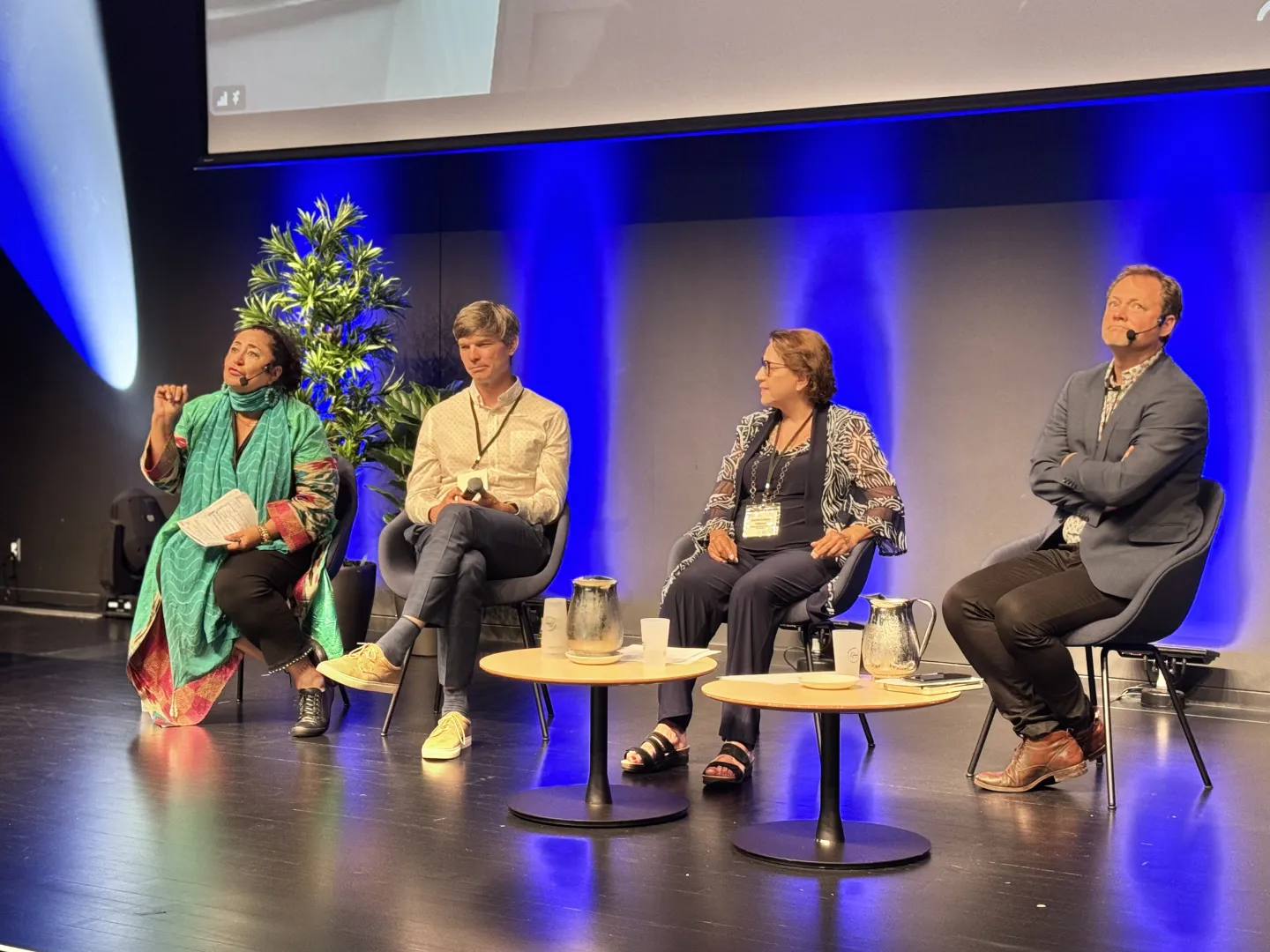
Esim highlighted that when it comes to the perceived marginality of cooperatives and other SSE entities in economies, three levels should be distinguished:
- On the level of reality, cooperatives and other SSE entities contribute meaningfully across sectors and countries, but structural limitations in legal frameworks, financing systems and public policies often constrain their full potential.
- On the level of evidence, despite an increasing number of case evidence, statistical frameworks often do not adequately capture cooperatives and the broader SSE, or they categorize them in ways that obscure their distinctiveness.
- On the level of awareness, she noted that cooperatives and the wider SSE are still largely absent from education curricula. When they are acknowledged, it is mainly in traditional sectors, whereas they are often at the forefront of innovation in the care, circular, digital, and platform economies and in the transition from the informal to formal economy.
Esim stressed that cooperatives and other SSE entities give institutional form to values at the heart of a renewed multilateralism, including solidarity, cooperation, mutual aid, care for people and planet, and democratic participation — they embody and operationalize these commitments. She concluded that while legal frameworks and better data are essential, scaling the contributions of cooperatives and other SSE entities also requires conducive environments, aligned partnerships, and stronger links between research, policy, and investment.
On July 11, the session on the development of international standards of statistics on cooperatives and the broader SSE, chaired by Simel Esim, brought together researchers and practitioners from around the world to reflect on achievements and chart the path forward.
The session highlighted the ILO’s leadership in standard-setting and international collaboration. It featured updates from two major Technical Working Groups (TWGs): the TWG on Measuring the Economic Contribution of Cooperatives (TWG-MECC), operating under the Committee for the Promotion and Advancement of Cooperatives (COPAC), and the TWG on SSE Statistics (TWG-SSES), under the auspices of the UNTFSSE.

Nawon Lee, ILO SSE Statistics Technical Specialist, and Hyungsik Eum, ILO Technical Officer on SSE Statistics outlined the progress made under the project “Strengthening the Social and Solidarity Economy Knowledge Base – Phase 2,” funded by the Republic of Korea. While the first phase of the project (2021–2023) tested the application of ILO Guidelines concerning statistics of cooperatives and evaluated the readiness of national systems in five pilot countries — Costa Rica, Italy, Republic of Korea, Tanzania, and Türkiye, the current phase (2024–2026) aims to build global capacity to produce and utilize reliable statistics on cooperatives and the SSE. The three key objectives were presented: enhancing capacity for SSE statistics, improving the measurement of the economic contribution of cooperatives, and strengthening broader stakeholders’ engagement. To achieve these goals, the project launched the aforementioned TWGs and plans to establish a Community of Practice in the second half of 2025. Expected outputs include comprehensive reports, technical manuals, and global knowledge products, culminating in a presentation at the 22nd International Conference of Labour Statisticians (ICLS) in 2028.
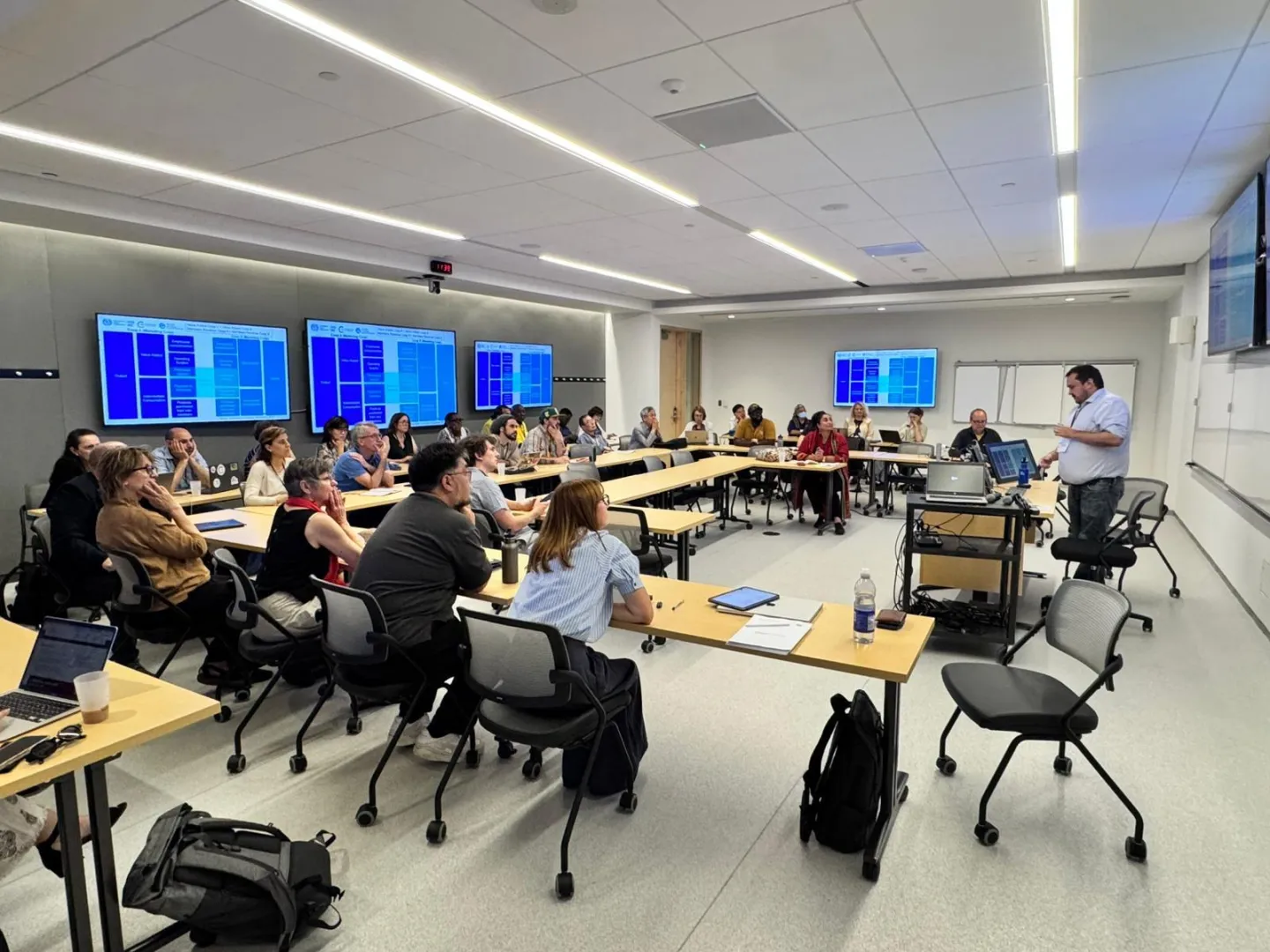
Olivier Frey, lead author of the TWG-MECC, presented the group’s work on defining and measuring the “economic contribution” of cooperatives. He emphasized that while cooperatives generate significant socio-economic value, their contributions are often underrepresented due to conventional statistical frameworks that fail to reflect cooperative specificities, such as surplus redistribution mechanisms like patronage refunds and indivisible reserves, and member-focused transactions conducted at non-market prices. Frey stressed the need for indicators that capture these distinctive attributes, while also aligning with the System of National Accounts (SNA) to ensure consistency and comparability.
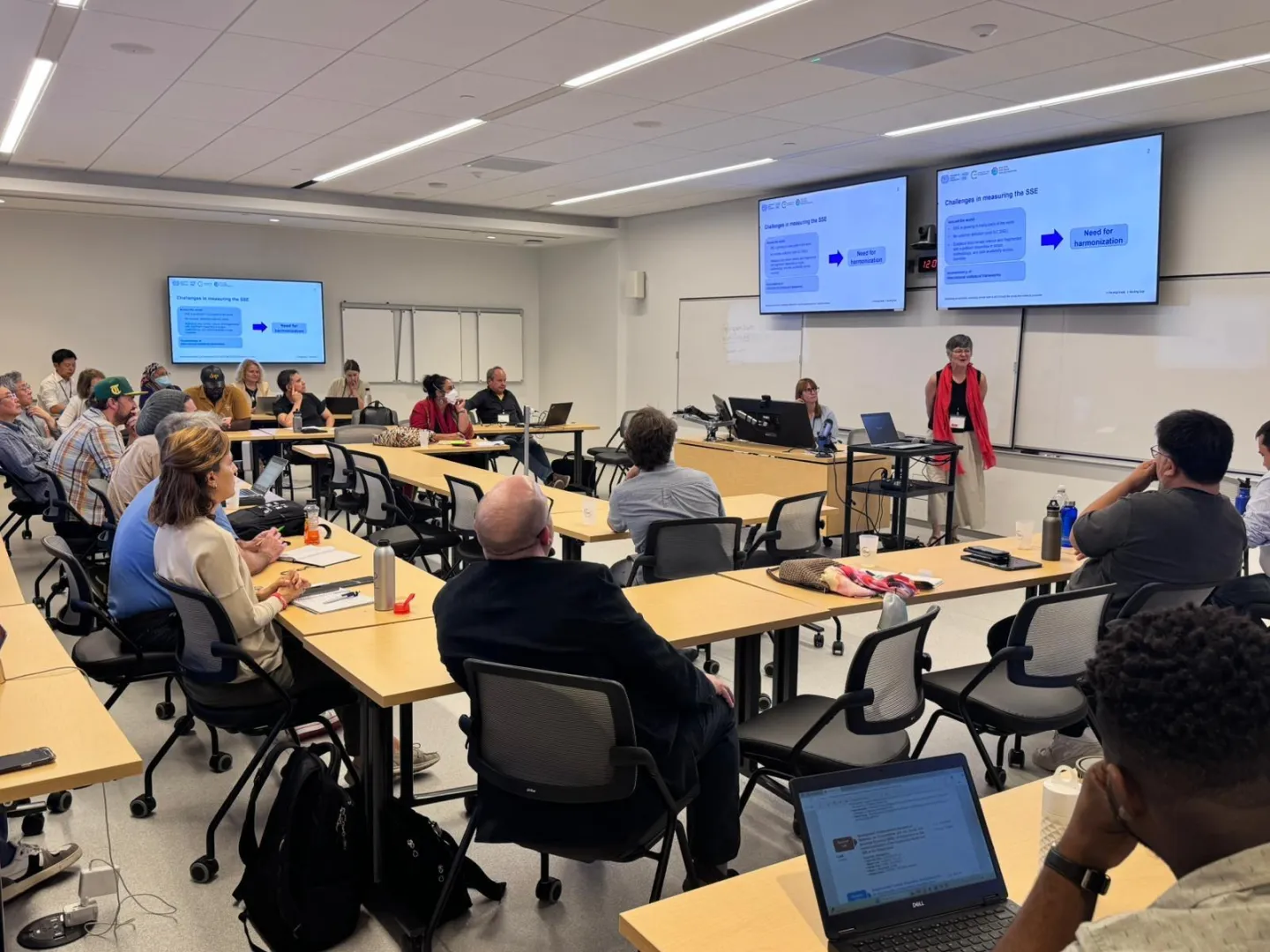
Marie J. Bouchard, Professor at the University of Québec in Montréal, and Chiara Carini, lead author for the TWG-SSES, presented the group's efforts to define and classify SSE entities in a statistically rigorous and globally relevant manner. While the 2022 ILO Resolution on Decent Work and the SSE provided a foundational definition, existing statistical frameworks remain inconsistent – especially in relation to some entities such as foundations, social enterprises, and informal groups. The TWG-SSES is working to translate SSE principles defined by the ILO Resolution into operational criteria that can serve as the basis for a coherent statistical framework for the SSE.

In addition to the panel session, the ILO team and its collaborators held an in-person workshop and met with researchers from Brazil, Korea, and Canada to explore opportunities for future collaboration. They also participated in a meeting of the International Co-operative Business Education Consortium (ICBEC), reflecting growing academic and institutional interest in further integrating statistics on cooperatives and the SSE into research, policy, and practice.
Through its active engagement at the ICA CCR Global Research Conference 2025, the ILO reaffirmed its commitment to strengthening the evidence base for cooperatives and the broader SSE. By advancing international statistical standards, fostering global partnerships and bridging research with policy and practice, the ILO continues to support the recognition and scaling of SSE contributions to decent work, social justice, and sustainable development.
Related content
You may also be interested in

Topic portal
Cooperatives

Topic portal
Social and Solidarity Economy
Strategic results
How did the ILO advance the social and solidarity economy in 2024–25?

About the ILO's Cooperative, Social and Solidarity Economy Unit