

World Day Against Child Labour
30,000 voices, one goal: Ending child labour in Indonesia through the power of football
Through a landmark partnership, the ILO and PSSI are showing child labour the red card and championing every child’s right to learn, play and thrive in Indonesia.
10 June 2026
JAKARTA, Indonesia (ILO News) - As nearly 30,000 fans packed Jakarta’s Gelora Bung Karno Main Stadium (SUGBK) on a vibrant June evening, the roar of football supporters became a powerful call for a different kind of victory – one for children’s rights.
Amid the excitement of the international friendly match between Indonesia and Mozambique on 9 June, the Football Association of Indonesia (PSSI) officially joined forces with the International Labour Organization (ILO) Office for Indonesia and Timor-Leste and PT Garuda Sepakbola Indonesia (GSI) to champion the global Red Card to Child Labour campaign ahead of the World Day Against Child Labour on 12 June.
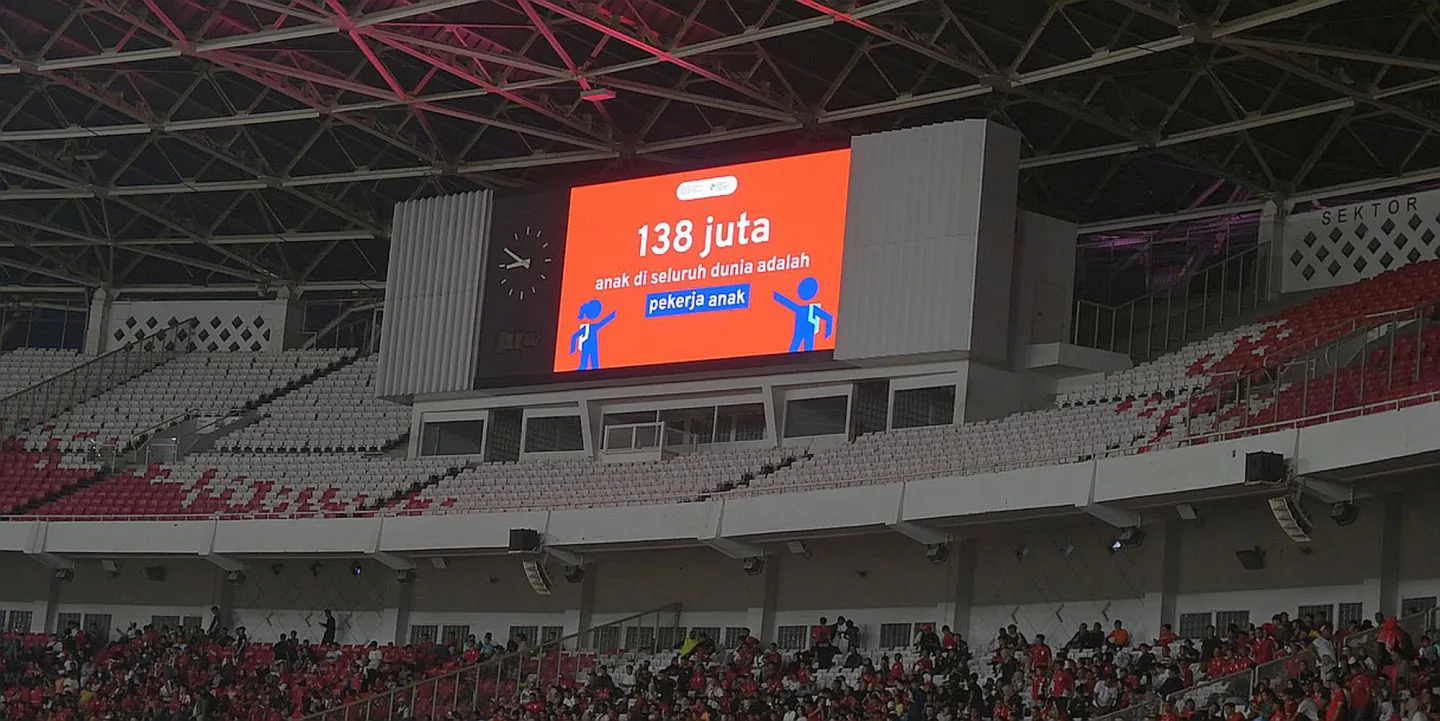
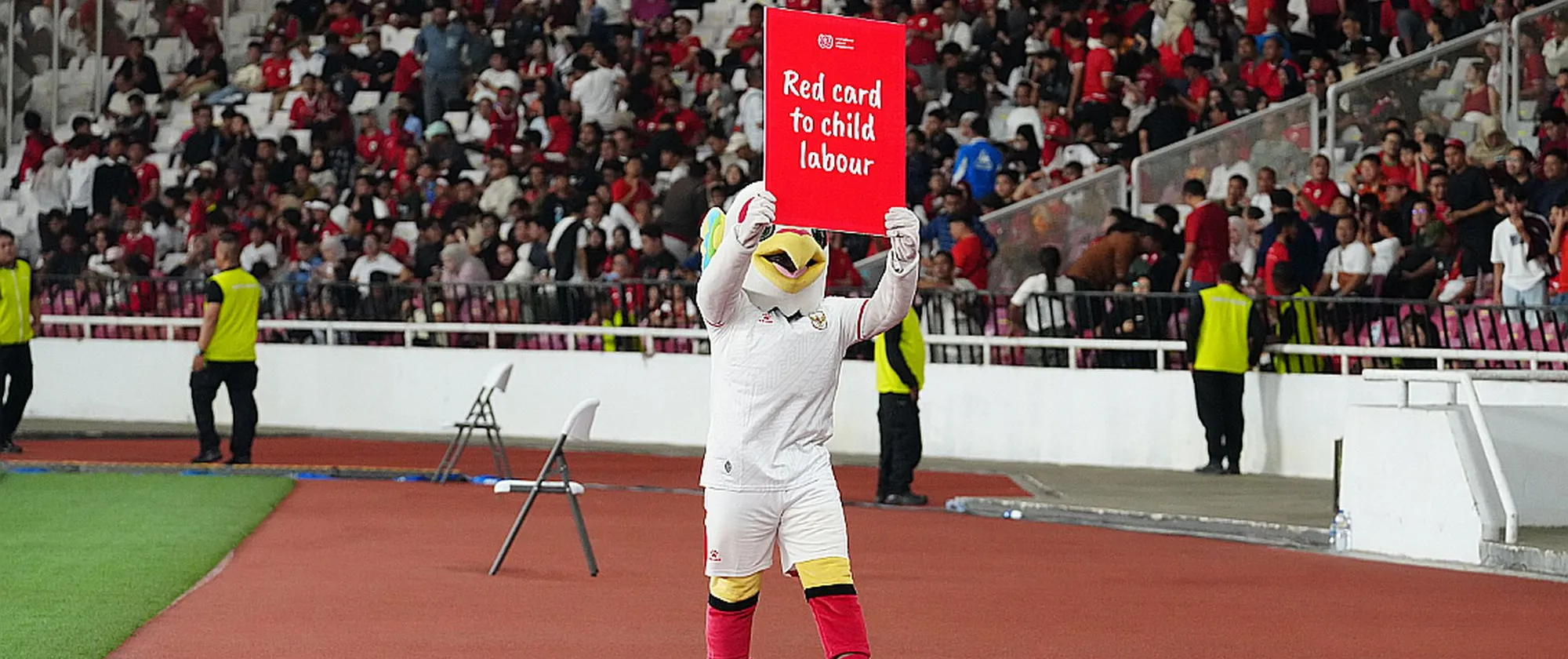
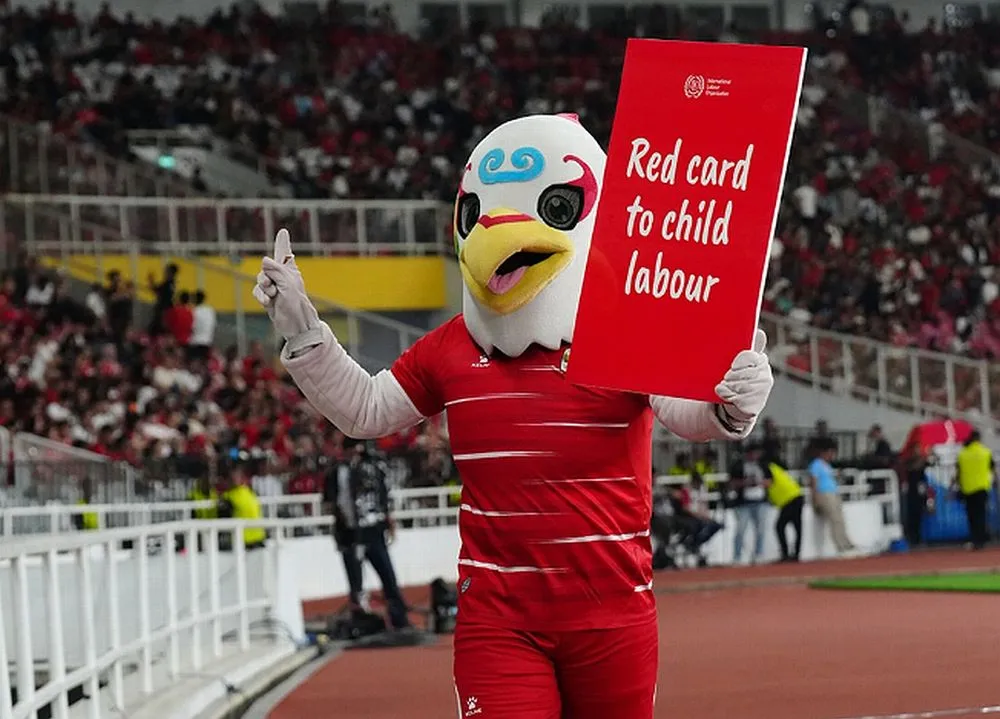
The campaign transformed one of Indonesia’s biggest football stages into a platform for social change. Educational messages appeared on giant videotron screens surrounding the stadium, capturing the attention of thousands of spectators. Moments later, the stadium announcer delivered the campaign’s message, while the iconic Garuda mascot circled the pitch carrying a banner emblazoned with a simple but powerful statement: “Red Card to Child Labour.”
Our participation in the Red Card to Child Labour campaign is a concrete demonstration of our commitment to accelerating the eradication of child labour.
Eric Thohir, Chair of PSSI
For more than two decades, the Red Card to Child Labour movement has harnessed football’s universal appeal to raise awareness about child labour and advocate for every child’s right to education, play and a safe childhood. Launched by the ILO in 2002 and strengthened through a partnership with FIFA the following year, the campaign uses football’s most recognizable disciplinary symbol – the red card – to send a clear message: child labour has no place in society.
Now, that message has reached Indonesia’s football community.
The partnership reflects a strategic effort to leverage the country’s immense passion for football to address a pressing social challenge. Despite progress, child labour remains a concern in Indonesia, particularly in agriculture, fisheries and the informal economy.
Through football’s unparalleled ability to inspire and unite people across generations, the campaign aims to raise public awareness and encourage collective action to ensure children can learn, play, and thrive instead of entering the workforce prematurely.
Just as a red card signals the end of a foul on the pitch, we must put an end to child labour in real life.
Simrin Singh, Director of the ILO for Indonesia and Timor-Leste
With this commitment, PSSI becomes only the fifth football association worldwide to formally join the Red Card to Child Labour movement. Since its introduction in Geneva in 2003, the campaign has been embraced by major football institutions, including the Confederation of African Football (CAF) in 2003, the Asian Football Confederation (AFC) in 2004 and the Chinese Football Association (CFA) in 2004.
“Our participation in the Red Card to Child Labour campaign is a concrete demonstration of our commitment to accelerating the eradication of child labour,” said Eric Thohir, Chair of PSSI. “We hope this movement, born on the pitch, will make a profound contribution to the future of children in Indonesia and across the globe.”
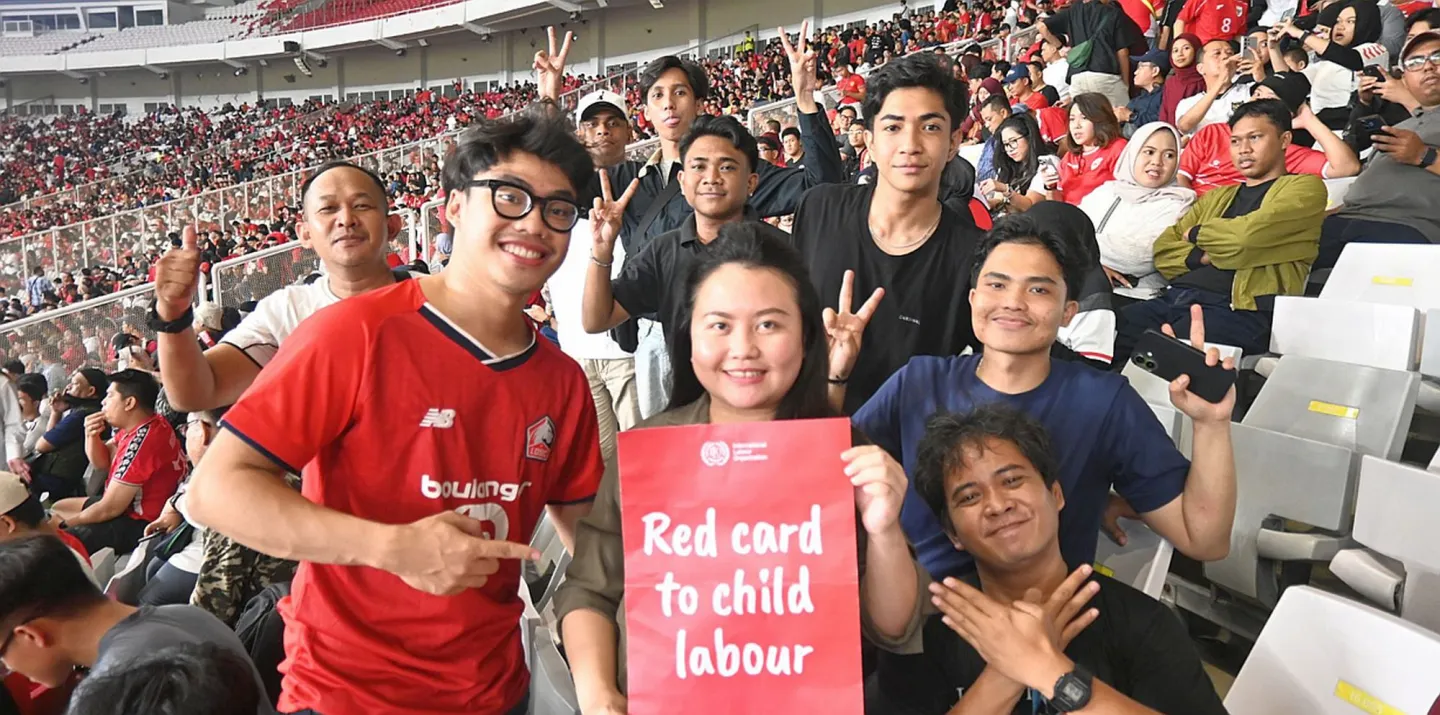
Football has long evolved beyond the boundaries of sport. In Indonesia, where the game commands extraordinary loyalty and passion, it has become a shared language capable of reaching millions. By bringing the campaign into the heart of a national team match, PSSI and the ILO are tapping into that influence to spark conversations, challenge social norms and mobilize support for children’s rights.
“Just as a red card signals the end of a foul on the pitch, we must put an end to child labour in real life,” said Simrin Singh, Director of the ILO for Indonesia and Timor-Leste. “Every child has the right to play, learn, grow and live free from all forms of exploitation.”
As the final whistle approached and fans celebrated the match on the field, another message lingered in the stadium: the future belongs to children and protecting that future requires action far beyond the football pitch.