


Demographic change
Demographic shifts in Asia and the Pacific: Policy insights from partner countries
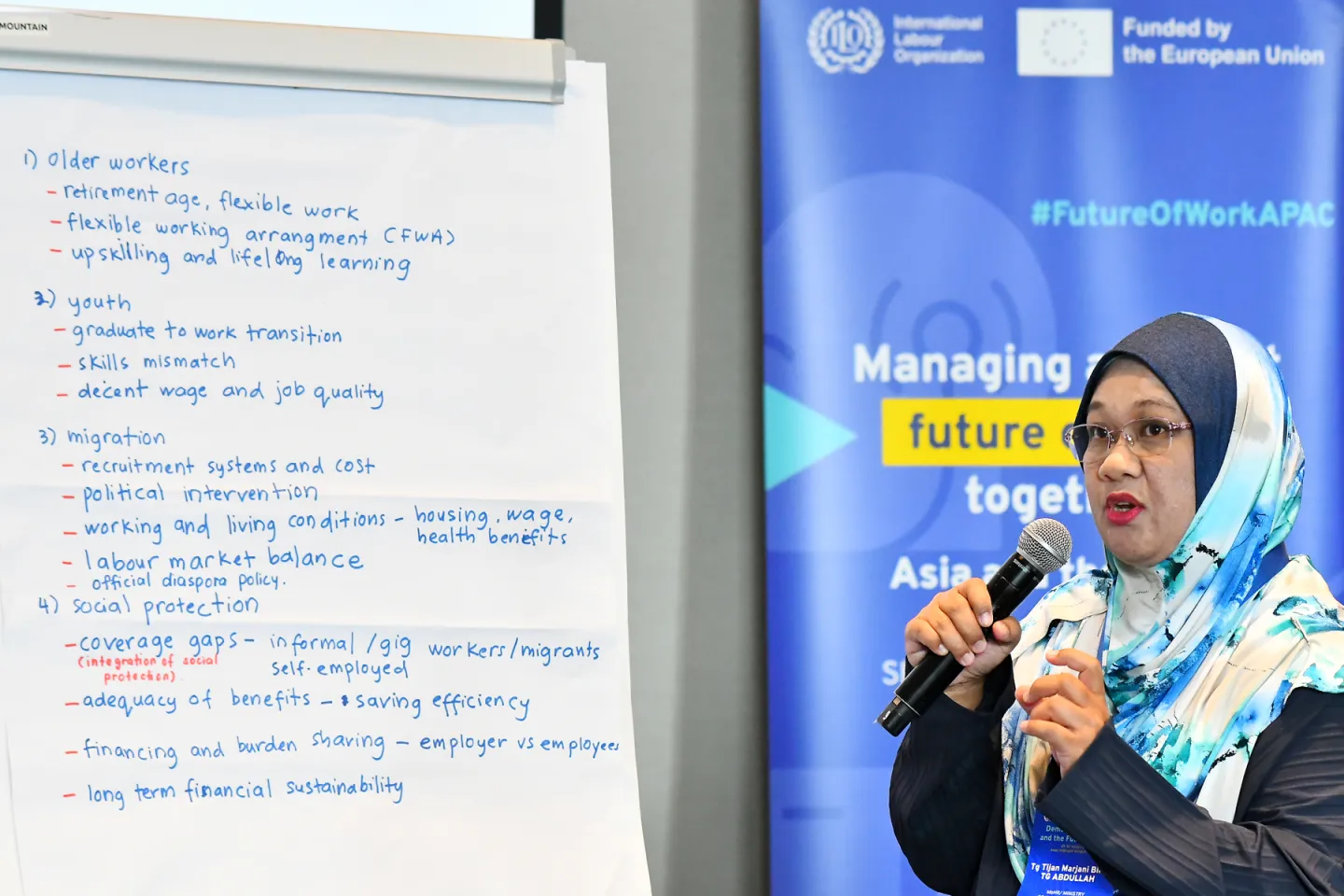
Across Asia and the Pacific, population ageing is accelerating at different speeds, creating shared challenges for labour markets, social protection and decent work, even as countries find themselves at very different starting points. In the Republic of Korea and Japan, there will soon be fewer than two working-age people for every person over 65. In India and Malaysia, that pressure is still a generation away, but building fast.
This Brief captures the discussions at the Regional Forum on Demographic Shifts and the Future of Work, held in Bangkok on 29–30 January 2026, where more than 80 policymakers, researchers, workers and employer representatives from eight partner countries in the Managing a decent future of work together in Asia-Pacific ("Future of Work: APAC") project came together to exchange experiences and identify practical policy responses. The Forum focused on what to do about the current and future of demographic shifts and labour: closing the gap between the skills young people have and the skills employers need, and rethinking what a working life looks like in an ageing society.
Among the key insights: Extending working lives requires making continued employment genuinely attractive for employers, not just a legal obligation. Social protection systems need to expand coverage and improve portability of benefits, particularly for informal and migrant workers who fall outside existing frameworks. In addition, a well-governed migration, grounded in international labour standards, can help ease labour shortages, but only as part of a broader, more coherent labour market strategy. The Brief sets out these and other policy directions emerging from the Forum's four thematic discussions on youth employment, older workers, social protection and migration.
Additional details
References
Related content

Rapid ageing reshapes jobs, growth and inclusion in Asia and the Pacific
Ageing societies
Addressing population ageing: Recent evidence and policy options from the Republic of Korea
Demographic change
Republic of Korea National policy dialogue on population ageing
Relevant projects

Future of Work: APAC
Managing a decent future of work together in Asia-Pacific