

Y20
Youth team reflections from the Youth 20 Summit
26 August 2025
The Y20 South Africa Summit 2025 officially kicked off on the 18th of August 2025 where delegates from across G20 member states convened to chart a path from ideas to global action. Over the course of the week, these bold voices would attempt to negotiate the Y20 Declaration on climate action, digital transformation, inclusion, and youth engagement.
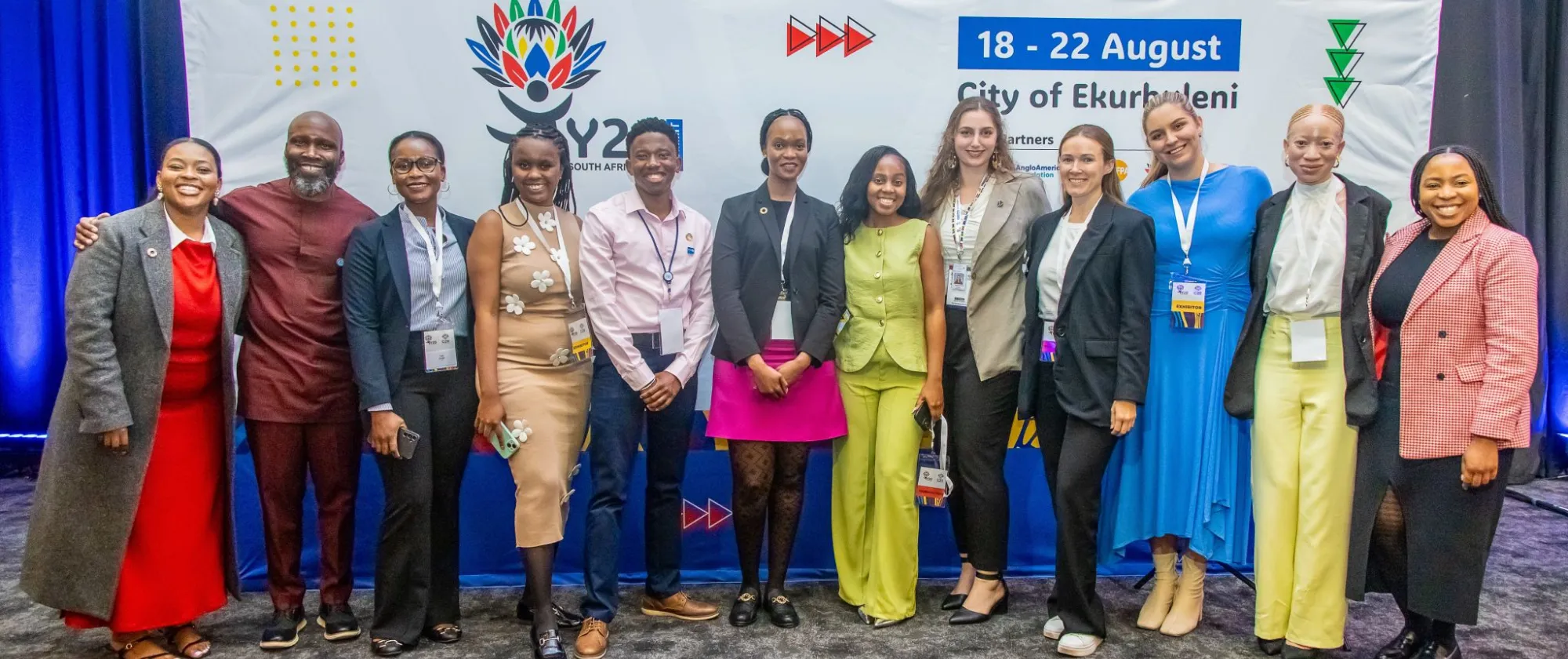
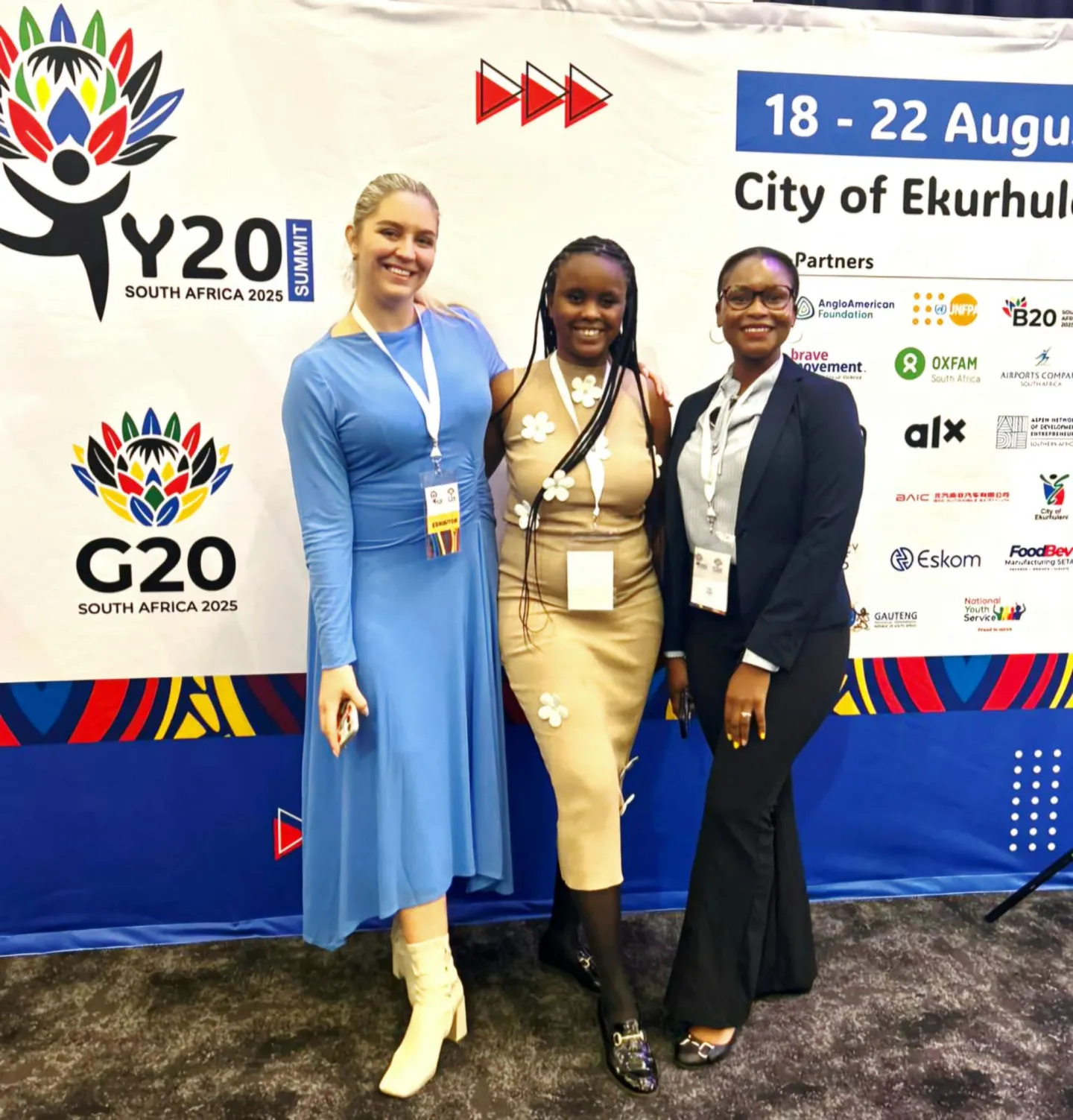
The Summit was attended by the ILO Pretoria Youth Group - Tadiwanashe Dube, Christina Van Straten & Tshiamo Mashao – who served on the UN Youth Group charged with providing technical support to the Y20 2025 tracks.
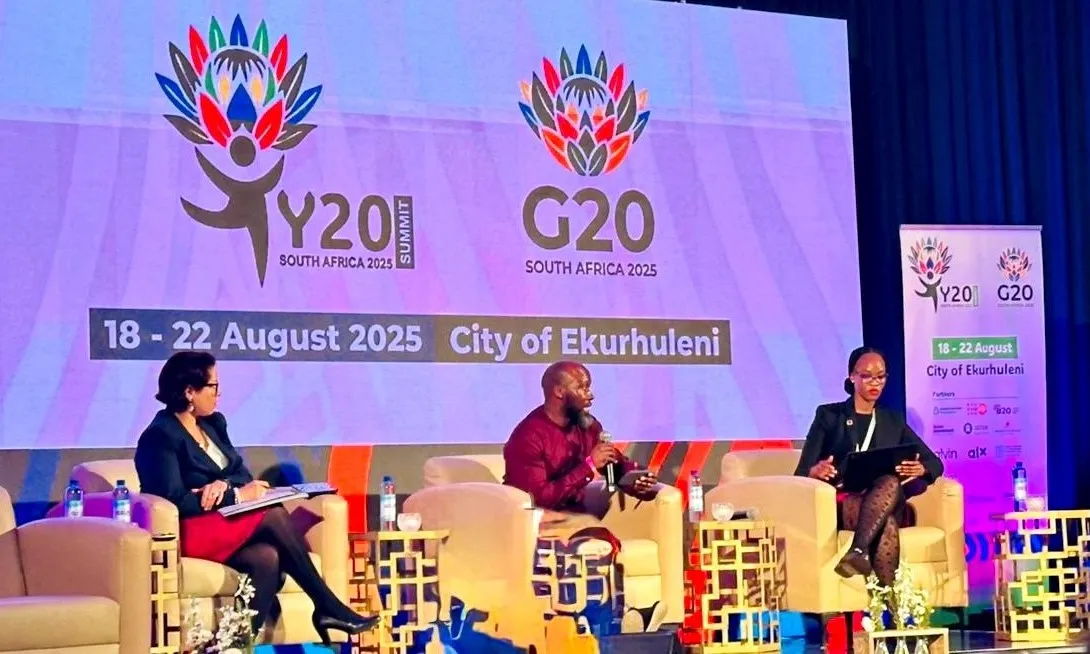
The Summit began with a powerful welcome from the Gauteng Premier's Office, affirming the significance of youth in shaping our future and influencing the G20 agenda. Further, the summit welcomed the Honourable Minister Sindisiwe Chikunga, Minister of Women, Youth and Persons with Disabilities of South Africa as the Keynote Speaker – whose words set the tone for the important conversations that lay ahead. Day 1 of the Summit also saw a dynamic panel discussion, where the ILO Specialist on International Labour Standards, Amanda Mejía-Cañadas delivered a technical briefing on how the International Labour Standards are determined and enforced. In particular Amanda unpacked convention No 190 on violence and harassment, highlighting its relevance and importance in fostering a world of work that is truly safe and dignified for all. This presentation was well received by those in attendance and would be referenced by various delegates in the track negotiations that would follow over the coming days. Numerous references to other conventions and recommendations were also reflected within the track working documents.
The Y20 Summit featured five key thematic tracks that reflected the priorities and aspirations of Africa’s youth. These included:
- Environmental Sustainability and Climate Resilience, which focused on youth-led solutions for climate action and ecosystem protection;
- Inclusive Economic Growth and Employment, aimed at fostering entrepreneurship, innovation, and equitable job creation;
- AI, Digital Innovation, and the Future of Work, which explored digital skills, ethics in AI, and technological adaptability;
- Meaningful Youth Engagement and Reforming Multilateralism, addressing youth participation in global governance and institutional reform;
- and Inclusive Social Development and Fighting Inequality, which tackled issues such as health equity, poverty reduction, and social cohesion.
Each track provided a platform for young leaders to co-create policy recommendations and shape a more inclusive and sustainable future.
Day 2 was characterised by dynamic negotiations by the youth delegates who engaged deeply across the core tracks as well as vital side-events such as partner-led panels. One of the most pressing challenges observed during the discussions, across all five tracks of the Y20 South Africa Summit, was the pushback by certain delegations against equity and inclusion-oriented terminology such as marginalisation, intersectionality, redress, and sustainability. Despite these concepts being enshrined in widely agreed international frameworks like Agenda 2030, the UNCPD, and ILO conventions (notably C190), they were often labelled as “divergent” or controversial. The track negotiations also revealed resistance towards the inclusion of fundamental concepts such as unionization and collective bargaining in the working documents. This resistance highlights a broader tension between globally negotiated standards and the political sensitivities of some member states. These points of contention also highlight the importance of the ILO’s continued work in advocating for the global realization of fundamental labour rights.
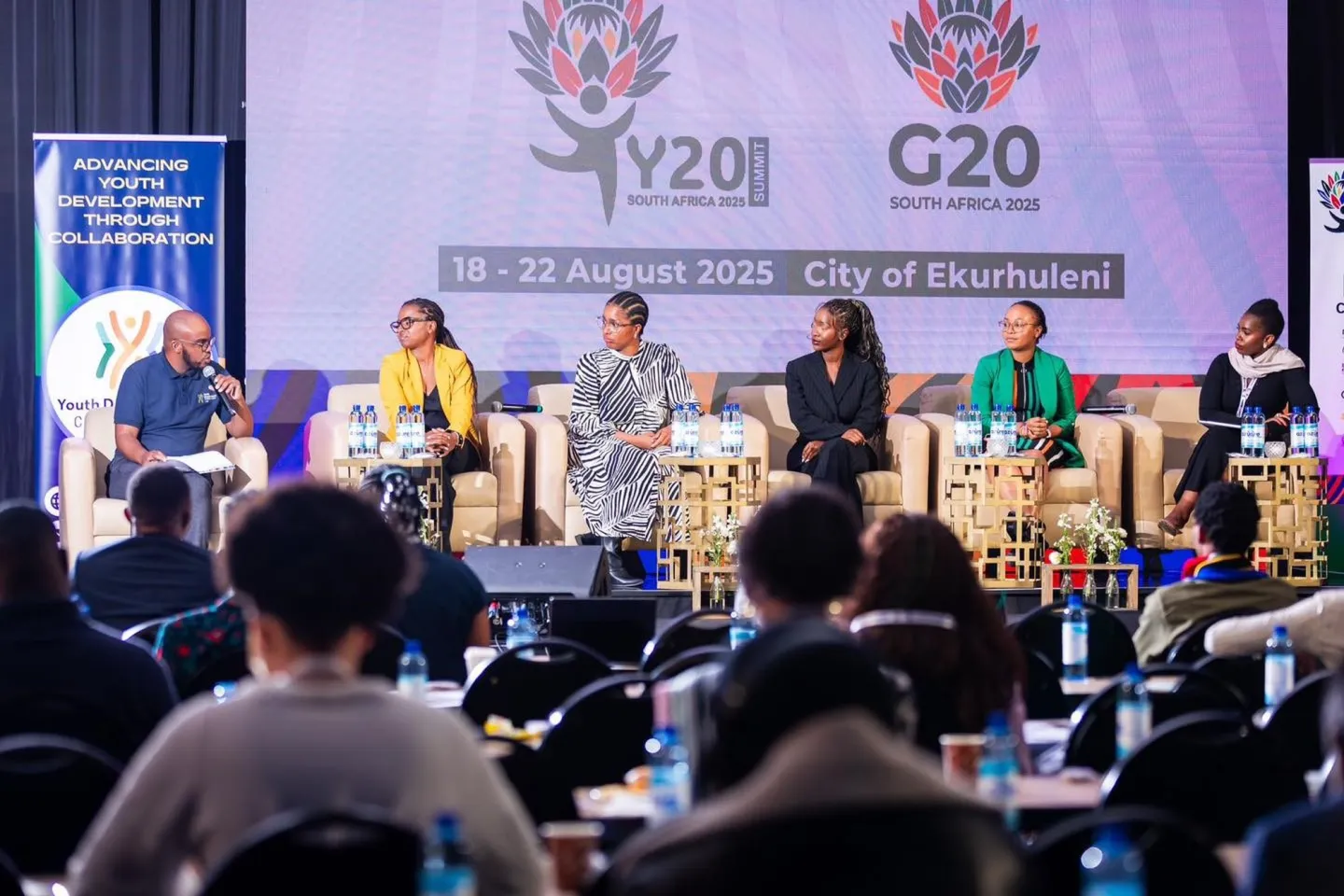
A panel discussion on “Rewriting the Rules – Youth Ecosystems Powering Inclusive Economic Growth” was held concurrently. This session unpacked how youth-driven ecosystems are reshaping economies and driving inclusive growth across Africa. From innovation and education to partnerships and entrepreneurship, the conversation highlighted the central role of young people in building sustainable pathways for economic transformation within the Y20 and G20 processes.
Delegates started day 3 in plenary where they continued engaging in robust and collaborative debates, working tirelessly to shape the final Communiqué for submission to the G20. In Track 2 on Inclusive Economic Growth and Employment the delegates emphasised the importance of strengthening the realisation of labour rights, particularly in informal and gig-economies. The negotiations held in this track also highlighted the fact that for the youth, mental health in the world of work must be acknowledged as a key priority and not a negotiable benefit. Notably, this track also urged G20 member states to reaffirm their commitment to inclusive global prosperity by promoting ethical trade, investment, and supply chains that actively avoid harming citizens, even and especially during times of conflict, while also strengthening partnerships for sustainable development.
The Track 3 negotiations on AI, Digital Innovation, and the Future of Work revealed three main perspectives. Some delegates called for G20 nations to focus on regulating AI to empower learning through responsible use, rather than prohibiting or stigmatizing it. Others expressed concern about AI potentially replacing educators, stressing the need for a human-centric approach that values the emotional and interpersonal aspects of teaching, particularly in countries with high unemployment. A third group emphasized the importance of funding research into AI’s cognitive and psychological impacts on youth and advocated for transparent, controlled use of AI to safeguard human cognitive autonomy. These differing views highlight the challenge of balancing innovation with protecting the human elements essential to education. A notable policy recommendation that emerged from this track was the call to expand international youth exchanges, internships, mentorships, and AI-focused skills development. One proposed avenue to achieve this is the creation of an International Youth Taskforce under the ILO, tasked with publishing a Youth Work Risk Index.
This index, developed with representation from G20 countries, would guide the provision of targeted mobility grants for technical upskilling in AI-related fields—ensuring that young workers are empowered, protected, and prepared for the evolving future of work.
Despite the dedication shown by all delegates throughout the Y20 negotiations, it was announced at the conclusion of the summit on Friday afternoon that no formal communiqué would be published and that negotiations would continue beyond the summit to allow for consensus to be reached. Nevertheless, we commend the youth for their unwavering pursuit of social justice and decent work, even in the midst of turbulent geopolitical times.
As Deputy Minister of Women, Youth and Persons with Disabilities, Mmapaseka Steve Letsike, aptly stated:
Young people must be the change agents of change in the South African economy. Our future is now.