

Women’s entrepreneurship development opens pathways for decent work for circular migrant workers in Morocco
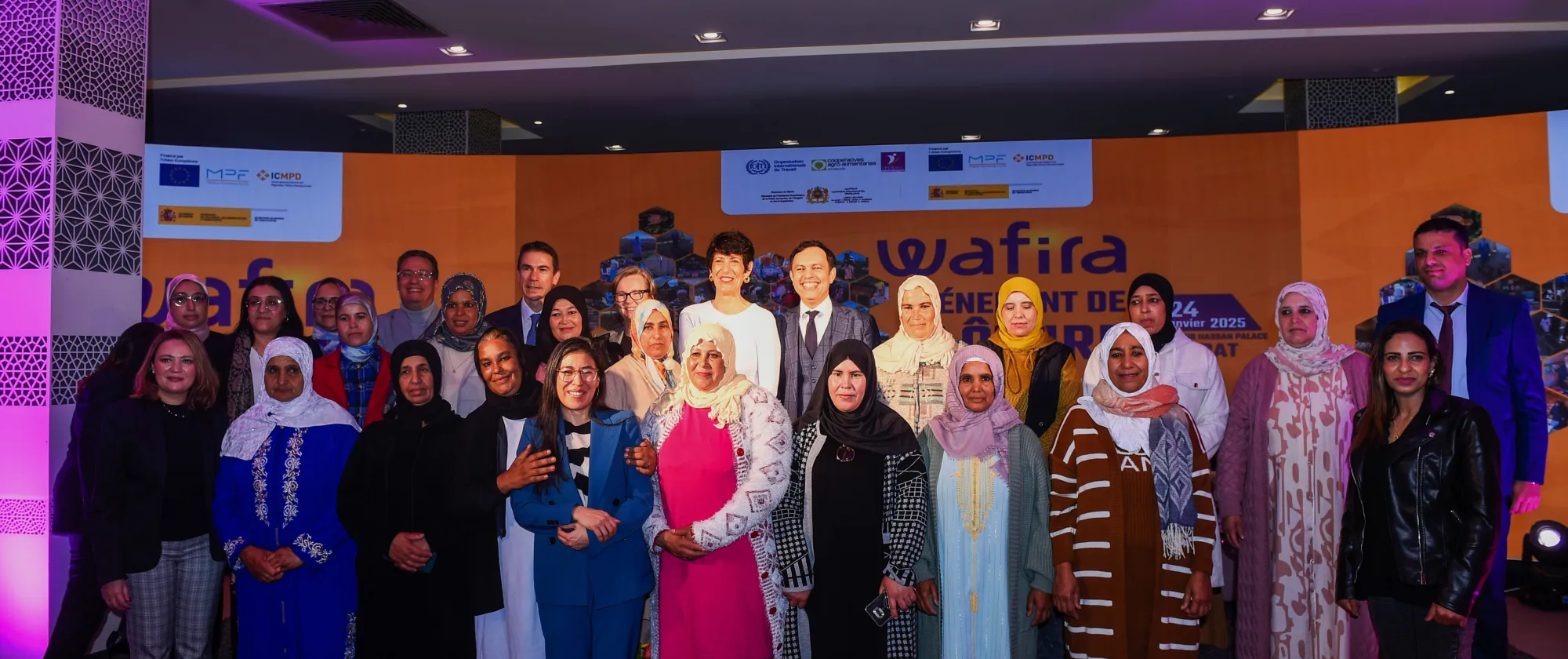
ILO WAFIRA project’s closing ceremony in Rabat brought together women entrepreneurs and partners to celebrate economic empowerment of rural migrant women. With a successful first phase, plans are underway to expand the project’s approach across different countries, ensuring better economic opportunities for circular migrant workers.
26 March 2025
Rabat, Morocco (ILO News) - Samira is one of 250 rural women from the Rabat-Salé-Kenitra and Tangier-Tetouan-Al Hoceima regions who has benefitted from ILO’s Women as financially independent rural actors (WAFIRA) project. Of these, 209 women have successfully launched and expanded their business, thanks to the training and support facilitated by ILO in collaboration with the Moroccan National Agency for Employment and Skills (ANAPEC).
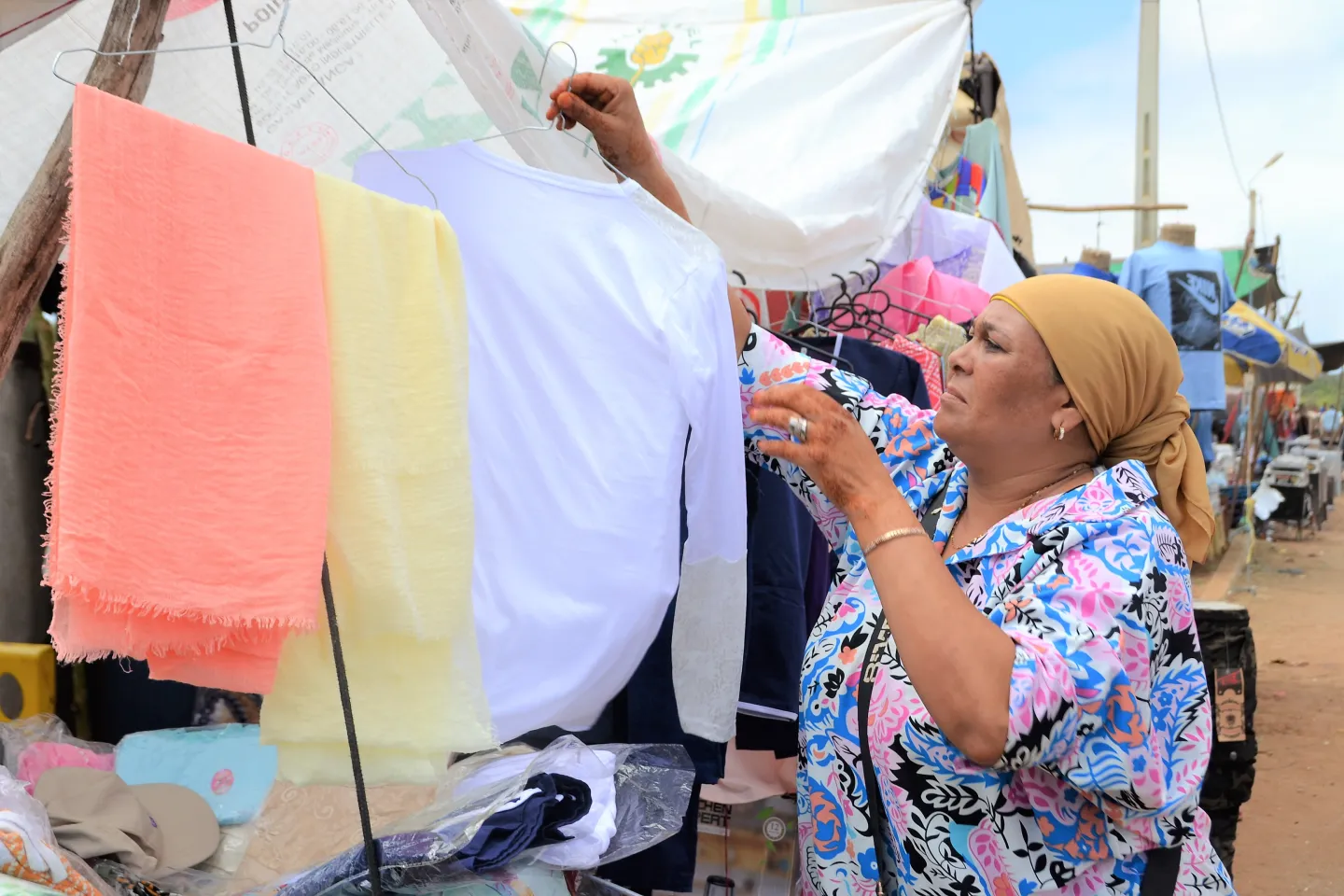
Every year, about 15,000 women participate in the circular migration programme between Morocco and Spain, travelling to Spain to harvest red fruits. Funded by the European Union through the Migration Partnership Facility (MPF), WAFIRA aims to advance economic, social and cultural rights of migrant women, promoting decent work opportunities and facilitating their meaningful integration into their communities.
An innovative approach for win-win solutions
WAFIRA adopts a capacity-building approach designed to support migrant women throughout their migration journey, ensuring they achieve economic independence upon their return to Morocco. A central focus of this is to develop income-generating activities.
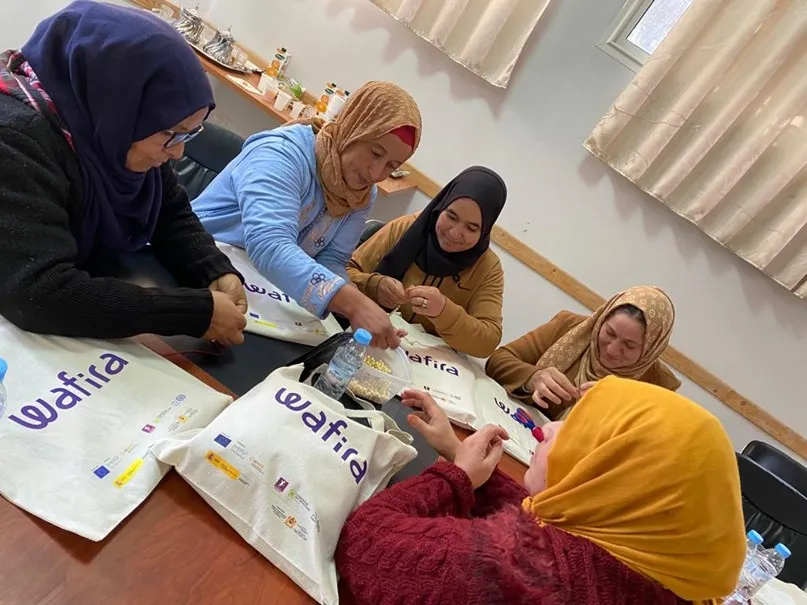
With the goal of promoting sustainable reintegration through women's entrepreneurship development, this model is built on three key pillars:
- Comprehensive training and support services, helping Moroccan migrant women formalize and grow their businesses;
- Tailored support through the migration cycle, catering to the unique needs of women entrepreneurs before departure, during migration, and upon their return; and
- A rights-based approach promoting formal business opportunities, access to financial systems, and registration to social protection schemes.
In response to the complexities of circular migration, this systemic approach combines targeted income-generation tools with social protection and women’s empowerment. This is crucial for enhancing women’s business know-how, agency and confidence, and assisting them in managing competing priorities and responsibilities. The outcome is economic and social advancements for women and their local communities, driving development in both partner countries.
Key lessons guiding way forward
Phase I of WAFIRA is nearing its conclusion, and was marked by a closing event in January 2025 in Rabat. It was attended by women entrepreneurs, representatives from the Secretary of State for Migration (SEM) of the Ministry of Inclusion, Social Security and Migration of Spain, the Moroccan Ministry of Economic Inclusion, Small Business, Employment and Skills (MIEPEEC), ANAPEC, Spanish Agri-Food Cooperatives-Andalusia, and the EU, and other key social partners. The event celebrated the project’s success and showcased its results related to the livelihoods of migrant women and their communities.
- Specialized training and support for 250 seasonal migrant women from rural Morocco to facilitate reintegration into their home communities.
- Creation of new businesses by 209 out of 250 trained women in agriculture, livestock farming, and commerce.
- Institutional capacity building of ANAPEC and local entrepreneurship stakeholders in gender-sensitive entrepreneurship and financial education to enhance future support for migrant women.
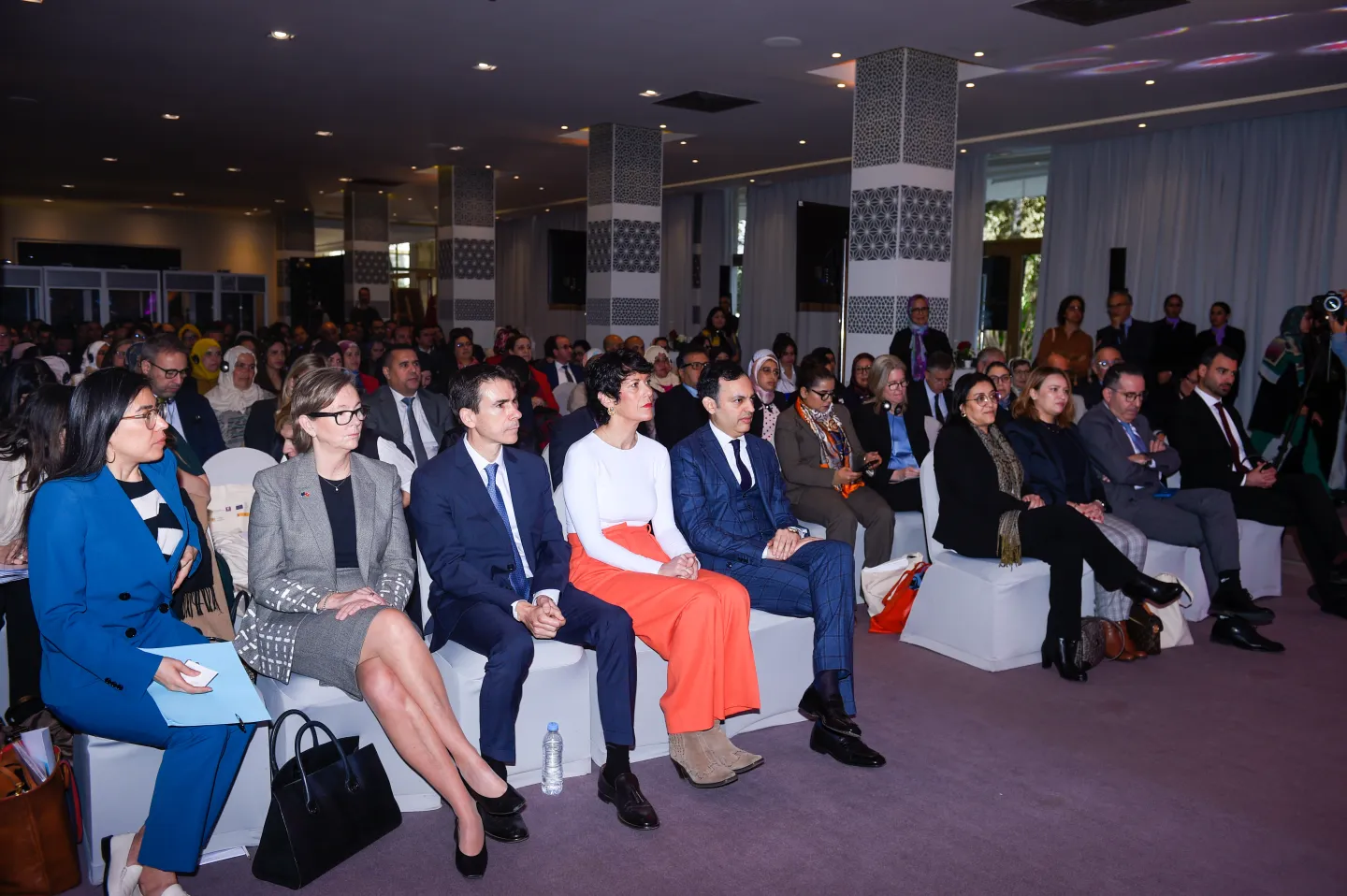
To build on these strong results, the Government of Spain has expressed its intention to scale up the model, expanding its reach to circular migrant workers in countries across both the northern and southern Mediterranean regions.
As we move forward, we reflect on critical lessons which will be key to ensuring greater effectiveness of the model.
Institutionalising support at regional and local levels
For long-term sustainability, it is essential to embed the model into regional and local institutions. To this end, WAFIRA has provided technical support to ANAPEC to strengthen local partners so they can continue offering support independently, and facilitate productive reintegration of migrant workers.
ANAPEC is already scaling-up and operationalizing capacity building. We have about 25 certified trainers, who will be instrumental in leveraging insights from this ILO project to develop strategies and tools for formalization of businesses and productive entrepreneurship.
Rajae El Harrane, Regional Director of ANAPEC for the Rabat-Salé-Kenitra region
Centering the model on women’s needs
The success of WAFIRA lies in understanding and addressing the root causes of challenges faced by migrant women. The resulting changes must be locally-driven with gender equality and women's economic empowerment at the core.
The strategies designed by WAFIRA with MIEPEEC’s support are highly specific and cater directly to the unique needs of seasonal migrant women workers.
Douae Lachkam, Head of Self-Employment Promotion Department at MIEPEEC
Strengthening partnerships between public and private players
A collaborative, multi-stakeholder approach has been key to the model’s success. Identifying incentives for governments, workers' organizations, employers’ organisations and other key partners has ensured co-creation and shared responsibility in its implementation.
A key aspect of WAFIRA that emerged during implementation was the co-creation of entrepreneurial pathways designed to support the entire circular migration cycle. Driven by dynamic collaboration, key partners have taken the lead in providing tailored services to migrant women. Having been designed, tested and systematized, the next step is to apply them on a broader scale.
Valentina Verze, ILO Enterprise Development and Job Creation Specialist
Strategic communication for long-term impact
Advancing decent work for migrant women through inclusive entrepreneurship promotion requires strong commitment from international, national, regional, and local stakeholders. To secure buy-in and undertaking, WAFIRA can serve as proof of concept that sustainable and inclusive circular migration solutions are possible, with entrepreneurs like Samira as its ambassadors.
The project sets an example for other European Member States and African countries. It represents a triple win - for the migrant women who gain economic independence, for European companies that benefit from a skilled workforce, and for the origin countries whose economies grow through returning entrepreneurs.
Patricia Llombart Cussac, Ambassador of the European Union (EU) to Morocco
We must continue promoting project outcomes among key stakeholders and supporting other countries in effectively reintegrating migrant workers while fostering economic and social opportunities. This is critical to addressing migration-related challenges in European countries.
Jeanne Schmitt, Project Manager of ILO WAFIRA
Find the recording of WAFIRA's closing event in Rabat on ILOTV.
The WAFIRA project is a pilot initiative that has trained and supported 250 Moroccan rural women engaged in the circular migration programme to Spain. The ultimate goal is to advance the economic empowerment of migrant women and their sustainable socio-economic reintegration into their home economies. Financially supported by the European Union and coordinated in Morocco by the ILO, WAFIRA has demonstrated that women’s entrepreneurship development is a powerful tool for achieving decent work and economic stability for migrant workers.
Related content

Promoting gender equality and women’s economic empowerment in enterprise development
The Women's Entrepreneurship Development programme

Project on Moroccan women migrant seasonal workers
WAFIRA: Women as financially independent rural actors