

Social Justice and Inclusive Growth
Uganda ushers in a new era of Social Justice and Inclusive Growth with launch of DWCP III and LMIS
The programme sets out national priorities to promote decent work, productive employment, social protection, and rights at work, developed through tripartite collaboration among the government, employers, and workers with support from the ILO.
2 June 2025
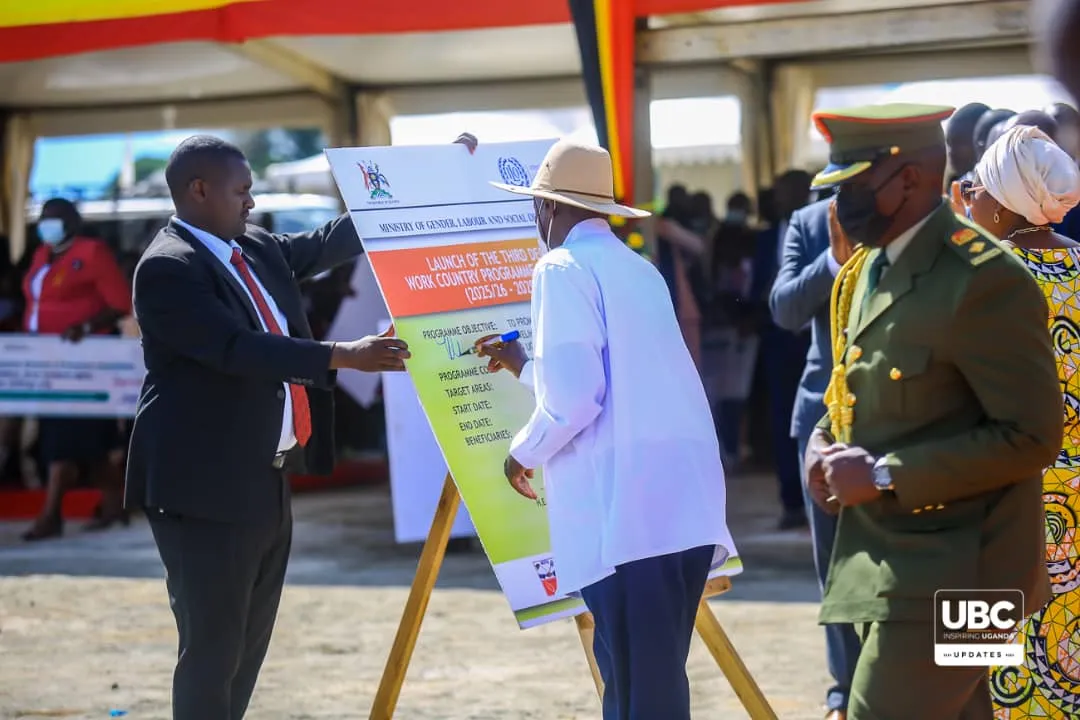
Nakapiripirit, Uganda (ILO News) Under the clear skies of Nakapiripirit District, history was made as Uganda reaffirmed its commitment to the dignity of work, the rights of workers, and inclusive economic transformation. His Excellency the President of the Republic of Uganda officially launched the Third Decent Work Country Programme (DWCP III 2025/26–2029/30) and the Labour Market Information System (LMIS) during the 2025 International Labour Day celebrations.
Held under the theme “Consolidating on the Gains of the Parish Development Model (PDM) for Increased Productivity and Inclusive Job Creation,” the event brought together high-ranking government leaders, development partners, workers’ and employers’ organizations, and the people of Uganda to celebrate the power of decent work in building a resilient and equitable society.
A Milestone in the pursuit of Social Justice
The launch of DWCP III marks a defining moment in Uganda’s social and economic journey. The long-anticipated programme sets out a clear and inclusive vision for the next five years, aiming to advance decent work, expand employment opportunities, and promote social justice as a cornerstone of national development.
Speaking at the ceremony, Hon. Betty Amongi, Minister of Gender, Labour and Social Development, emphasized the significance of the launch:
“The third DWCP represents a renewed commitment to promoting decent work, social justice, and economic growth in Uganda. It provides tripartite-plus partners with an opportunity to work collaboratively in addressing national challenges and building a future where no one is left behind.”
Prior to the Presidential launch, the DWCP III was officially signed by Uganda’s tripartite constituents, government, workers, and employers, during the Annual Labour Convention. This signing signified broad-based national ownership and a shared determination to implement the programme effectively.
Representing the International Labour Organization at the signing, Ms. Caroline Khamati Mugalla, Director of the ILO Country Office for Tanzania, Kenya, Rwanda, Burundi, and Uganda, praised Uganda’s leadership and reiterated the ILO’s unwavering support:
“Uganda, we are honoured to walk this journey with you. The ILO stands ready to support implementation through technical cooperation, innovation, and capacity-building. Your commitment as an Alliance 8.7 Pathfinder Country reaffirms Uganda’s leadership on the global stage in the fight against child labour, forced labour, and trafficking.”
Leaving No One Behind: The DWCP III Approach
The Third Generation Decent Work Country Programme (DWCP III) adopts a bold, people-centred approach to Uganda’s transformation. Rooted in social justice and national development aspirations, it focuses on three interconnected strategic priorities:
1. Promoting Decent and Productive Employment, Especially for Youth and Women
DWCP III prioritizes the creation of meaningful job opportunities, particularly for vulnerable groups such as youth and women. This includes promoting decent work in both rural and urban areas, aligning closely with Uganda’s Parish Development Model (PDM). Through targeted skills development, digital job matching, and enterprise support, the Programme aims to drive inclusive economic growth and reduce unemployment and underemployment.
2. Strengthening Labour Market Governance and the Application of International Labour Standards
A strong and rights-based labour system is essential for sustainable development. DWCP III emphasizes the withdrawal, rehabilitation, and reintegration of children involved in child labour, and survivors of human trafficking. It enhances institutional capacity for labour inspections, strengthens the enforcement of labour laws, and promotes legal and policy coherence with international labour standards to ensure that all workers are treated fairly and with dignity.
3. Advancing Social Protection and Social Dialogue
At its core, the DWCP III seeks to ensure that all workers, especially the most vulnerable are heard, protected, and empowered. The Programme promotes universal access to social protection, legal aid, shelter, and psychosocial support services for affected families. It also reinforces social dialogue as a tool for building trust, resolving disputes, and shaping inclusive labour policies through tripartite-plus engagement.
These priorities were identified through a participatory, inclusive, and evidence-based process involving a comprehensive review of DWCP II, a regulatory impact assessment, and wide-ranging national consultations.
The DWCP III is not just a framework, it is a commitment to leave no one behind in Uganda’s journey toward decent work for all
Fully aligned with Uganda’s Vision 2040, National Development Plan IV (NDP IV), and the UN Sustainable Development Cooperation Framework (UNSDCF), the DWCP III is rooted in national priorities and informed by evidence-based planning.
A Digital Leap: Launch of the Labour Market Information System
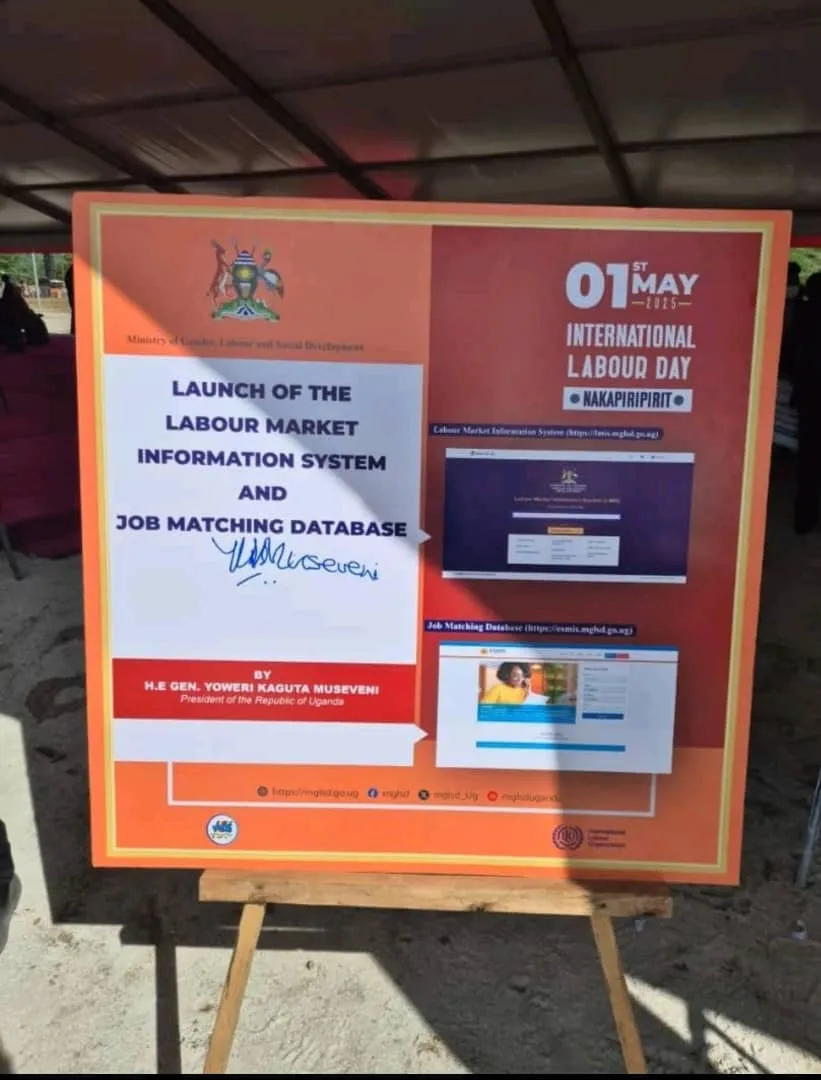
As part of the day’s landmark achievements, the President also launched Uganda’s Labour Market Information System (LMIS) and Digital Job Matching System. These platforms are expected to revolutionize the way labour data is collected, analysed, and used to shape policy and connect Ugandan jobseekers with employment opportunities.
The LMIS will improve transparency, support evidence-based decision-making, and empower youth with better access to the job market addressing the gaps between education, training, and employability.
The day concluded with an awards ceremony recognizing outstanding contributions by institutions, employers, and individuals who have advanced decent work, social protection, and respect for labour rights across Uganda.
A Nation Committed to Transformation
With DWCP III and LMIS now launched, Uganda steps boldly into a new phase of development one that prioritizes its people, strengthens partnerships, and centre work as a path to dignity, prosperity, and peace.
As the celebrations ended, one message rang clear: Uganda is ready to lead with purpose. The time for decent work for all is now.