


Child Labour
Uganda strengthens community response to child labour
In Kalungu District, the CLEAR Supply Chains has successfully supported and strengthened an informal child protection structure to identify, monitor and resolve child labour in coffee producing communities. A total of 122 para-social workers were trained on child labour in July 2024, and by the end of 2025, they had visited 12,452 households and reported 601 cases of child labour.
5 June 2026
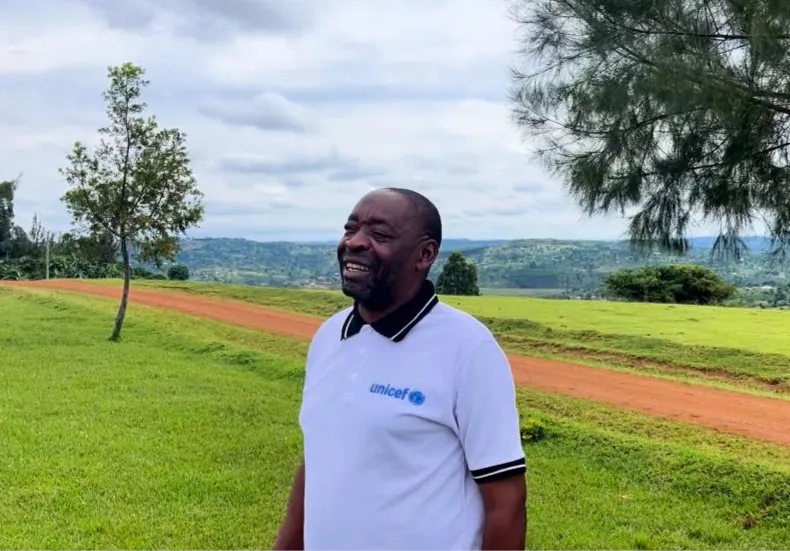
Uganda, (ILO News) - My name is Muhammad Ssempa and I am a coffee farmer from Kyamulibwa Town Council in Kalungu District, one of Uganda’s leading coffee producing areas. When the CLEAR Supply Chains project began in June 2024 to support a community-based child labour monitoring and referral mechanism in the district, I became actively involved in the prevention and referral of child labour. I was trained by UNICEF and ILO as a para-social worker to identify, monitor and respond effectively to child protection violations, in particular child labour, and became the chairperson of the para-social workers in Kyamulibwa sub-county.
When a child is at risk, we are often the first to know.
Every day, I work closely with families, children, and local leaders to identify cases of child labour and ensure that children are protected and supported. Most of the information we receive comes directly from the community. Sometimes parents, neighbours, or local leaders report cases to us. In other instances, children themselves reach out. We also move around the community, observing and recording information for easy follow-up.
Once a case is identified, we engage directly with families. Many parents are not fully aware of the risks and long-term impact of child labour. Through dialogue and counselling, we help them understand the importance of keeping children in school and protecting their wellbeing. However, not all cases can be resolved at community level. In instances where we are unable to resolve the issue, we refer the case to the sub-county Community Development Officer, District Senior Probation and Welfare Officer or even the police depending on the severity of the situation. This referral mechanism has made our work more effective. We are no longer working alone, we are part of a broader system that supports children and families.
Shifting community mindset to end child labour
When I started to work as a para-social worker, many people did not fully understand what child labour meant. It was common for children to be involved in harmful work, especially in rural areas. The people in our communities took a while to understand the issue of child labour. But over time, things have started to change thanks to our community awareness raising. Today, more families are beginning to prioritise education. Community members appreciate and recognise our role, and increasingly report cases to us voluntarily. This growing trust is one of the most important results of our work.
“We are the first line of response in our communities, and with the right support, we can ensure that every child is protected and given a chance to stay in school.”
Muhammad Ssempa Muhammad, para-social worker in Kyamulibwa sub-county, Kalungu District, Uganda.
Building stronger systems for children
The CLEAR Supply Chains project has helped us through multiple trainings on child protection and child labour. The Community Development Officer and the Senior Probation and Welfare Officer also actively support us by reviewing our cases and providing mentorship. Through regular meetings and follow-ups, we continue to learn and improve how we manage cases. Collaboration with district officials and law enforcement has also improved significantly. The police now recognise our role as para-social workers, and this has helped us address child right issues within the district. This coordination ensures that every case is handled appropriately and that children receive the support they need.
As para-social workers, we remain committed to protecting children and supporting families in our communities. I have seen how this work can change lives. With continued support, we can reach even more children at risk.
When communities are empowered, when systems are strengthened, and when children are protected, the impact is lasting. Children are able to remain in school, families are more informed, and communities become safer for everyone.
Relevant projects

Child labour
CLEAR Supply Chains: Ending child labour in supply chains