

Gender-based violence
TVET students lead gender-based violence prevention efforts across the Chattogram Hill Tracts
30 November 2025
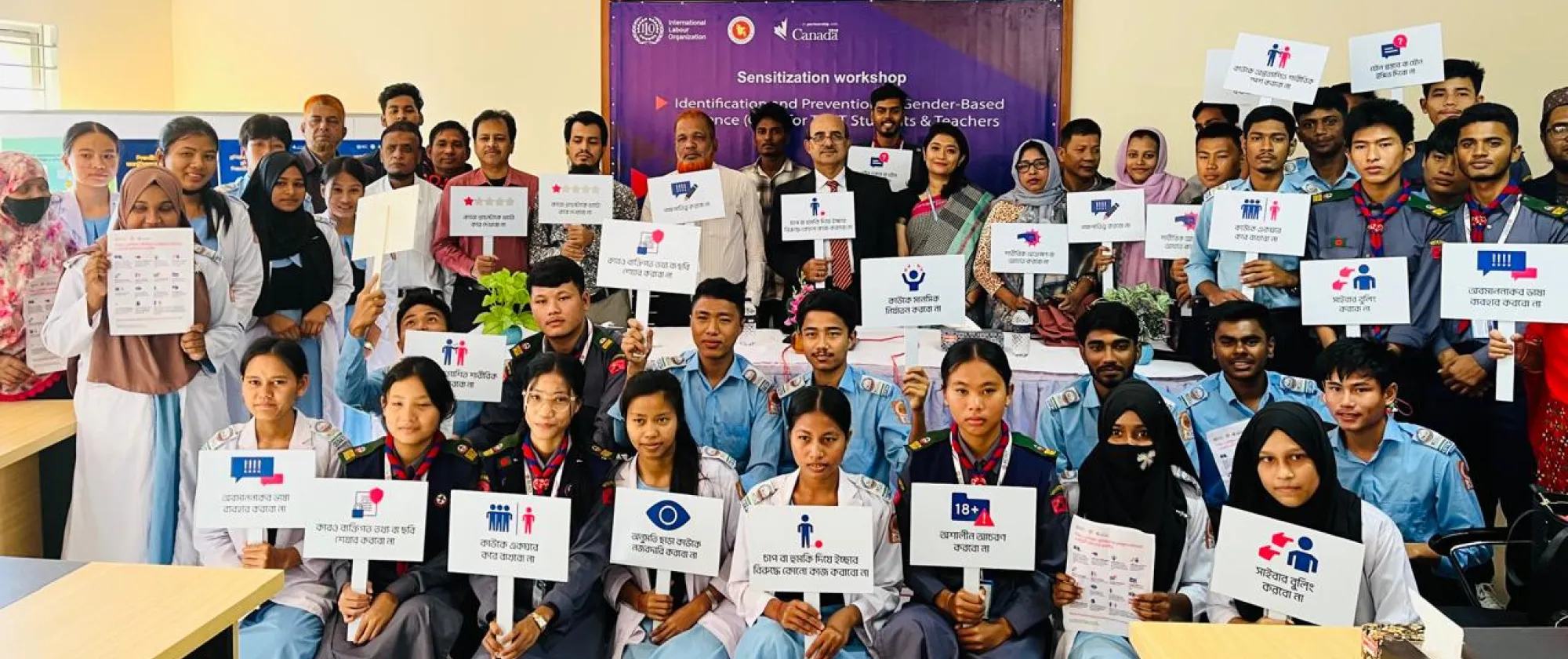
ILO news (Khagrachari, Rangamati, Bandarban) - As the world observes the 16 Days of Activism Against Gender-Based Violence (GBV), students from three districts of the Chattogram Hill Tracts stepped forward to champion safer and more inclusive learning environments. Through series of interactive awareness sessions led by the ILO ProGRESS project, which is funded by the Global Affairs Canada - TVET students, teachers, and institutional leaders strengthened their understanding of how to identify, prevent, and respond to gender-based violence (GBV) within education settings.
These sessions support the Gender and Skills Taskforce action plan developed by ILO’s ProGRESS project under the Technical and Madrasah Education Division (TMED), Ministry of Education, and contribute to building respectful learning cultures in Bangladesh’s TVET ecosystem.
Bringing dialogue, reflection, and action to TVET campuses
Across Khagrachari, Rangamati, and Bandarban, students engaged in dynamic discussions using short films, real-life scenarios, group reflections, and open dialogue. The sessions encouraged learners to identify harmful behaviours, understand their rights, and learn how to seek support when needed.
Khagrachari Technical School and College: A shared commitment to safety
In Khagrachari, students, teachers, government officials, and private sector representatives explored everyday scenarios that can escalate into violence or harassment and how to prevent them.
The Officer-in-Charge of Khagrachari Police assured students that every case brought forward will receive equal priority. He encouraged young people not to remain silent if they witness or experience violence.
Neel Ratan Datta, Principal of Khagrachari TSC emphasized that the institution would continue organizing awareness sessions, reinforcing that preventing GBV starts with everyday behaviour - respect, empathy, and responsible conduct.
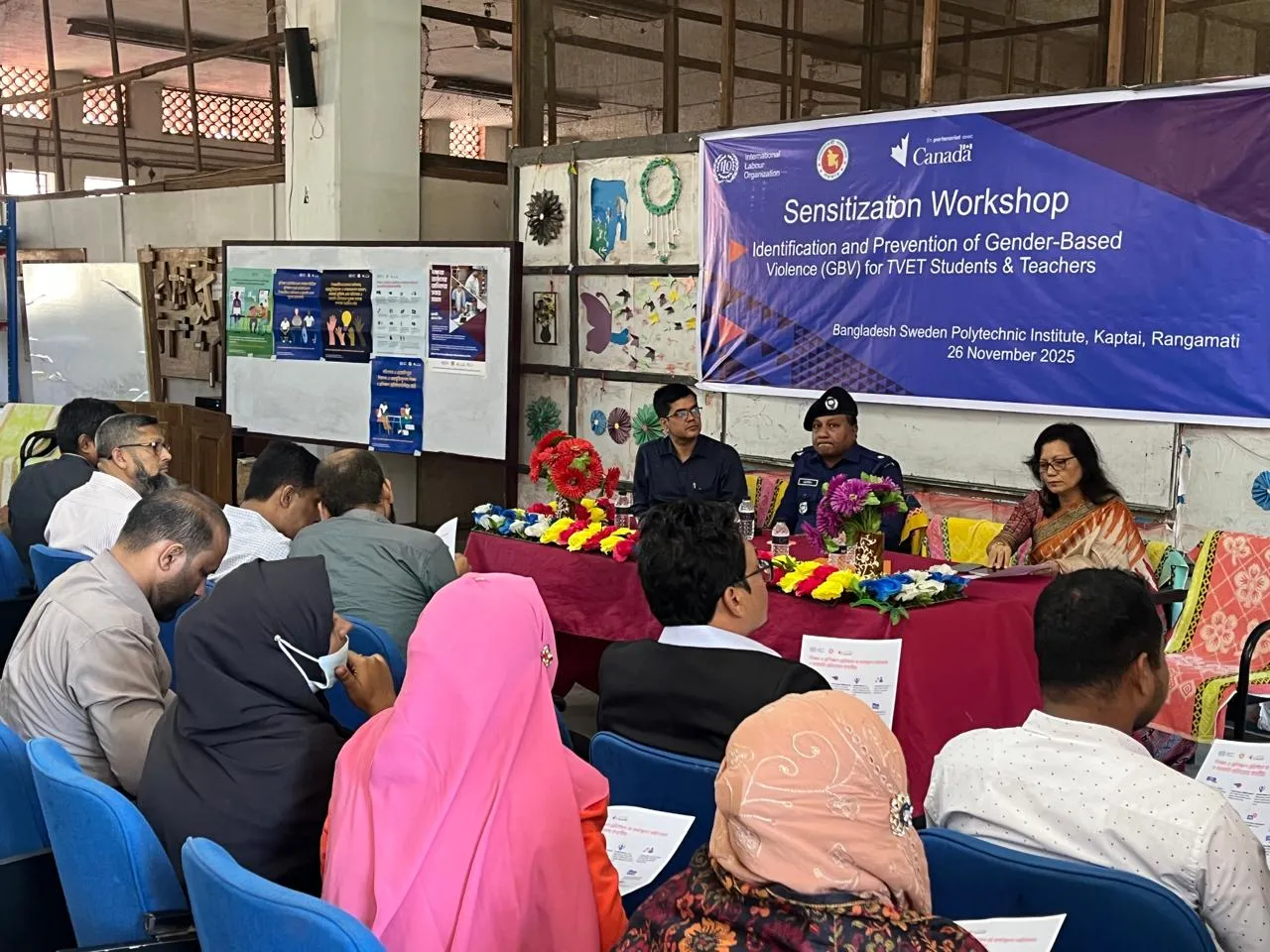
Rangamati’s Bangladesh Sweden Polytechnic Institute: Students take the lead
On the second day of the campaign, hundreds of students gathered at the Bangladesh Sweden Polytechnic Institute in Kaptai, Rangamati. Together with teachers, the District Women Affairs Officer, and the Additional Police Super, they reflected on their role in promoting safety on and offline.
Students pledged to:
- Share information about complaint and reporting systems
- Identify and respond to GBV
- Avoid judgmental or belittling behaviour
- Support peers to build confidence
- Refrain from online harassment
- Stand beside anyone facing violence
Mr Rupak Kanti Das, Principal, Bangladesh Sweden Polytechnic Institute also committed to conducting regular prevention sessions, providing counselling support, and ensuring a respectful, non-discriminatory learning environment.
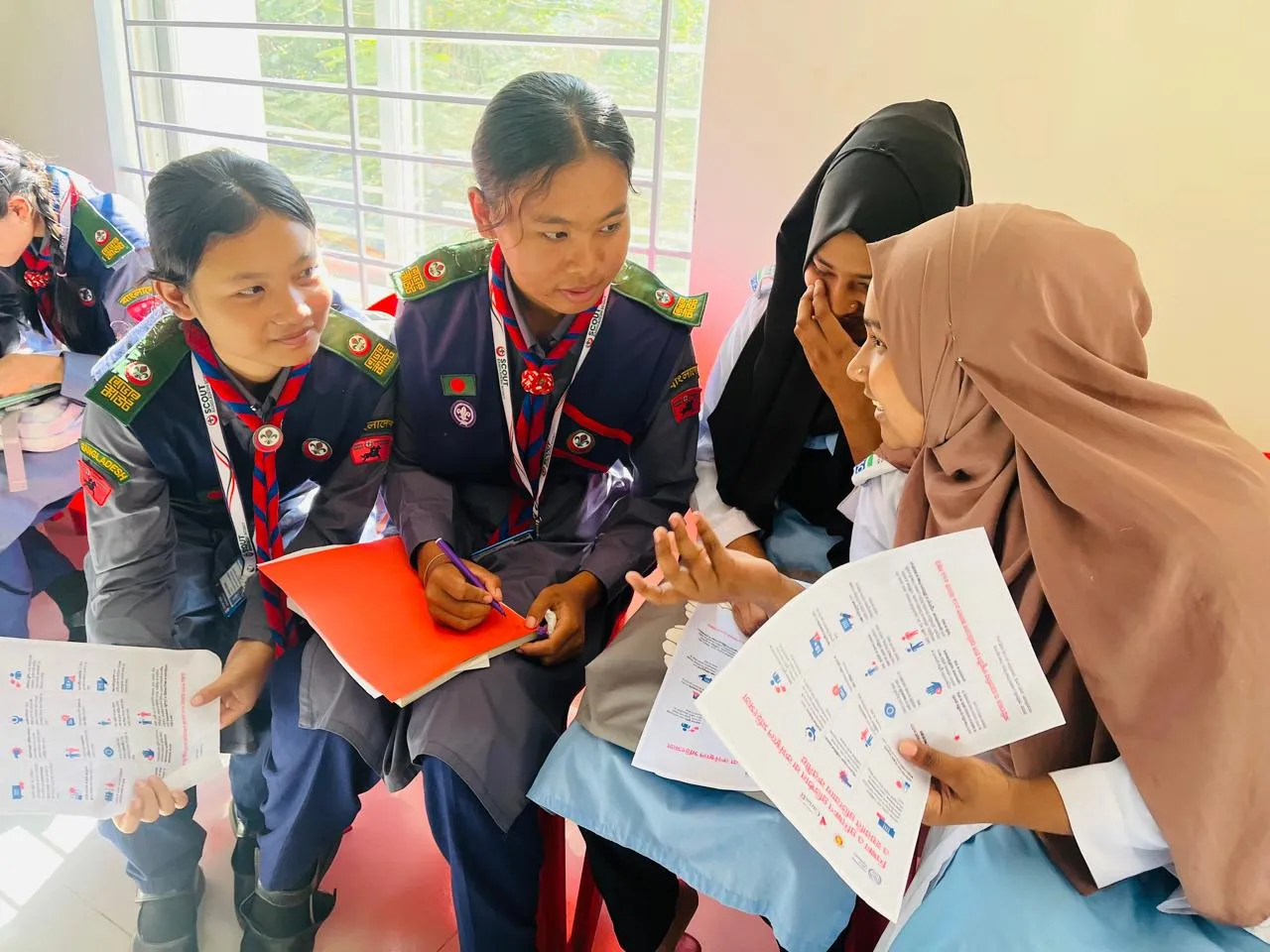
Bandarban Technical School and College: A pledge for change
In Bandarban, students publicly pledged to stand against violence and harassment, not just in campus, but in their homes and communities. The collective pledge highlighted their desire to shape a future where everyone can learn and work without fear.
Barun Tanchangya, a student of grade eight, pledged not to spread rumours on social media and promised to stand beside anyone experiencing violence or harassment.
Neelima Chakma, a grade nine student, shared that TVET students are often bullied for not being in general education. She expressed how painful it is to face such stigma. The session, she said, gave her the confidence to challenge this bullying with informed and logical arguments.
Building safer learning spaces across the TVET system
The sessions carried several key messages:
- Safe and inclusive learning spaces are essential for academic success, wellbeing, and future job opportunities.
- Students have the right to respectful, discrimination-free education.
- Teachers and institutional leaders must ensure access to counselling, guidance, and clear complaint mechanisms.
- Preventing GBV requires cooperation and support from families, institutions, communities, and authorities.
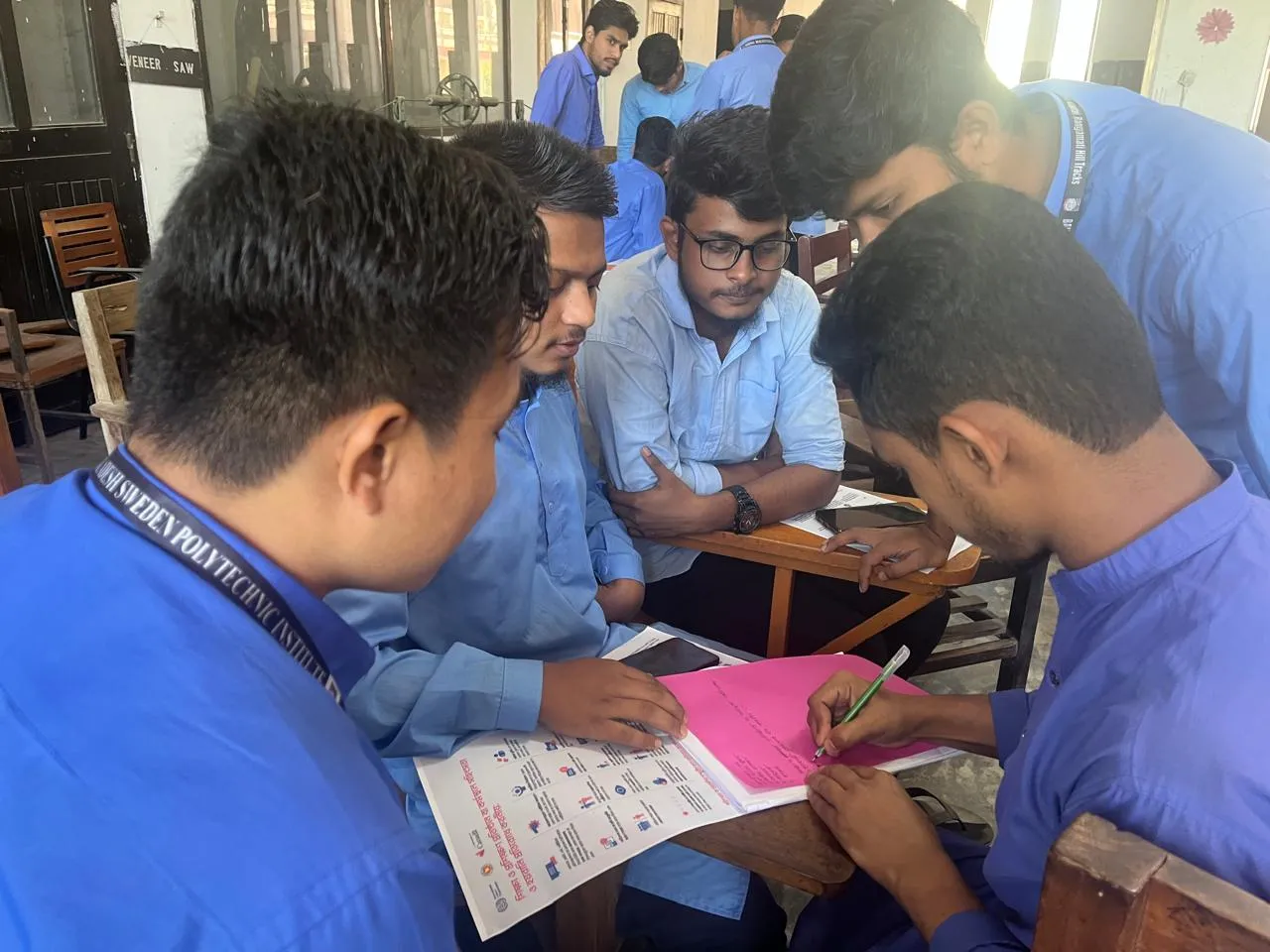
Strengthening national efforts through the ILO ProGRESS project
With the guidance from the Directorate of Technical Education (DTE), the ILO ProGRESS project is supporting TVET institutes to:
- Raise awareness of rights and protection mechanisms
- Promote respectful behaviour and positive gender norms
- Strengthen policies and procedures for GBV prevention
- Enhance collaboration among government, industry, and education partners
With support from the Global Affairs Canada, these efforts are contributing to a more inclusive and equitable TVET system nationwide.
A collective commitment to ending GBV
ILO extends its appreciation to the Ministry of Education, TMED, DTE, district authorities, TVET institutions, law enforcement officials, students, teachers, and private sector partners whose dedication made these sessions possible.
Their active involvement signals a united commitment to eliminating violence and harassment from skills development environments.
The campaign across the Chattogram Hill Tracts demonstrated that meaningful conversations supported by active engagement and institutional leadership can spark real change. With continued collaboration, skills development and TVET institutes across Bangladesh can become models for safe, respectful, and empowering learning environment for all students.
Related content

Project: Employability of women workers
Promoting Gender Responsive Enterprise Development and TVET Systems (ProGRESS)
Relevant projects
Project: Employability of women workers
Promoting Gender Responsive Enterprise Development and TVET Systems (ProGRESS)