

Labour Migration in East and Horn of Africa; Case Study
Turning Setbacks into a Thriving Business
"I was working non-stop with little rest, and my legs were swelling up because I was standing for long hours"
17 October 2024
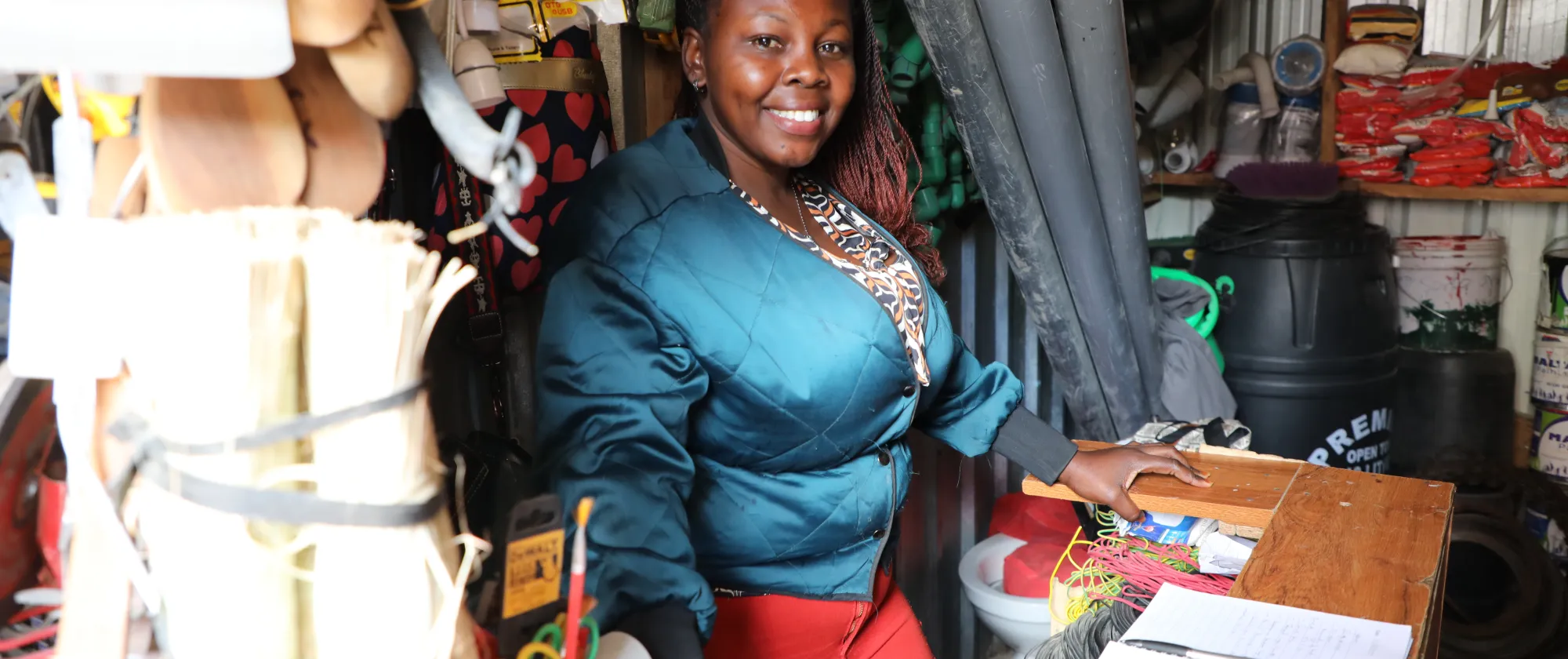
Purity Mbogo is a 33-year-old driven individual, with two kids and a loving husband from Nairobi, Kenya. Despite having two jobs as a salesperson in a hardware store and as a caregiver in private household, she encountered low payment that offered little security or growth potential. The pay was not enough to meet her family's needs, which led her to seek work abroad, hoping for a higher income and a chance to provide a better future for her children. Hence, she travelled to Kingdom of Saudi Arabia (KSA) in 2021 using regular channel facilitated by a PrEA. Despite being well prepared for her journey abroad, she was met with hardship immediately upon arrival.
Purity's work as a live-in domestic worker quickly became difficult, with long hours and physically demanding tasks. While she tried her best to manage, the continuous demand took a toll on her well-being, both physically and mentally.
I was working non-stop with little rest, and my legs were swelling up because I was standing for long hours" she shared.
After 2 years of enduring these challenges in KSA, Purity decided to return to Kenya. Unfortunately, the financial gains she hoped for had not materialized as she expected. She returned to Kenya with minimal savings due to the high cost of living and work-related expenses abroad, leaving her once again in a precarious financial situation. Determined to find a way to support her children, she began exploring opportunities for business training and support in Nairobi.
Within her search, Purity learned about the entrepreneurship training program offered by the Kenya Union of Domestic Hotels Educational Institutions Hospitals & Allied Workers (KUDHEIHA) in partnership with the International Labour Organization (ILO), through the Better Regional Migration Management (BRMM) Programme funded by the UK Foreign Commonwealth and Development Office (FCDO) from a close family member. Intrigued by the prospect of gaining skills to start her own business, she decided to enrol without hesitation, viewing the program as a chance to rebuild her life and create a stable income source.
This program was an opportunity for me to learn and finally establish a business that could sustain my family," she said.
The training, based on the ILO Start and Improve Your Business tool, covered several essential areas, including financial management, business planning, and marketing strategies. The skills Purity gained were practical and directly applicable to her aspirations of running a business. She found the sessions on financial literacy especially valuable, as it taught her how to manage cash flow and budget effectively. These skills enabled her to approach business with a structured plan rather than relying on informal practices.
Learning to budget and track my expenses gave me a sense of control and confidence in my ability to run a successful business," she remarked.

Purity's ambition did not stop at simply running a small business. She envisioned a venture that could grow sustainably and provide consistent income. Inspired by her training, she started a small business selling household and construction materials. Her early experience as a caregiver and her time in KSA, where she interacted with diverse household needs, helped her identify products that would appeal to her local community. This market insight, combined with the entrepreneurial skills she acquired during the training, enabled her to set up her business with confidence.
Upon starting her small business, Purity faced obstacles common to many returned migrants, such as limited capital, lack of collateral for loans, and the need to build a customer base from scratch. However, the support from BRMM proved essential in overcoming these challenges. Through the program, she received mentorship on exploring these challenges and advice on effectively marketing her products to reach more customers.
The mentorship helped me understand that resilience and adaptability are crucial for a small business owner. I was able to apply what I learned to grow steadily, even with limited resources" she said.
Six months after completing the training, Purity’s business has achieved modest but meaningful growth. She has expanded her product range to include more items requested by her clients, and her customer base has gradually increased. She also implemented a simple bookkeeping system that allows her to monitor her sales and expenses, a skill she attributes to her training. This system has given her insight into her profit margins and allowed her to make informed decisions about reinvestment and expansion. With a steady income, she can now provide for her children’s basic needs and save a small amount for their education.
Looking ahead, Purity plans to expand her business further by securing a larger retail space and offering new product lines. She envisions her store as a one-stop shop for household essentials in her community, with plans to eventually hire local youth to assist her with the business. Her experience has given her a sense of purpose, and she is optimistic about the future. She acknowledges the continued challenges she faces but believes her training and the ongoing mentorship from the program have equipped her with the skills and resilience needed to succeed.
Through her journey, Purity has gained not only business acumen but also self-confidence. Her story highlights the importance of targeted support for returned migrants, especially those who face barriers in finding stable income upon their return. The skills she acquired through the program have given her a foundation upon which to build a sustainable livelihood, allowing her to contribute meaningfully to her community while supporting her family.
Relevant projects

East and Horn of Africa
Better Regional Migration Management