Tunisia advances women’s entrepreneurship through a decade of coordinated action
Over the past decade, Tunisia has taken important steps to strengthen support for women entrepreneurs through coordinated action involving government institutions, social partners, financial actors, business support organizations and other stakeholders, with support from the ILO.
27 May 2026
What began as a national assessment of the barriers facing women entrepreneurs evolved into sustained action at both national and local level. Over time, this contributed to stronger institutions, expanded access to finance and business support services, and new opportunities for women-owned and led businesses, including in emerging sectors linked to the green and digital economy.
The experience also demonstrates the importance of long-term engagement and coordination across actors. Rather than relying on isolated interventions, the approach combined policy reform, institutional strengthening and practical support for women entrepreneurs on the ground. In doing so, it helped place women’s entrepreneurship more firmly within Tunisia’s broader agenda on employment, inclusion and economic development.
From assessment to national priorities
Tunisia’s efforts to strengthen support for women entrepreneurs were informed by a Women’s Entrepreneurship Development (WED) Assessment conducted between 2014 and 2016. The process brought together government, employers’ and workers’ organizations, women entrepreneurs’ associations and other national stakeholders to jointly analyse the main barriers facing women entrepreneurs and identify priority areas for action. The ILO supported this process by providing the methodology and technical guidance.
The assessment combined research and consultations, including interviews, a survey with women entrepreneurs and focus group discussions across several governorates. It examined key framework conditions such as access to finance, markets and assessed the regulatory environment.
The findings pointed to a combination of structural constraints. Women entrepreneurs faced limited access to tailored financial services and markets, as well as weak representation in policy dialogue. Social norms were also identified as a factor discouraging women from entering or expanding businesses.
These insights were translated into a set of national recommendations, validated by stakeholders involved in the process.
Building a coordinated approach
Building on the assessment findings, Tunisia adopted its first National Action Plan on Women’s Entrepreneurship Development (2016-2020)[1]. The plan established a framework for coordinated action across ministries, financial institutions, business support organizations and civil society.
As one of the early outcomes Tunisia launched its first government-backed financing line dedicated to women entrepreneurs in 2017. Efforts also expanded beyond national policy to support action at governorate level.
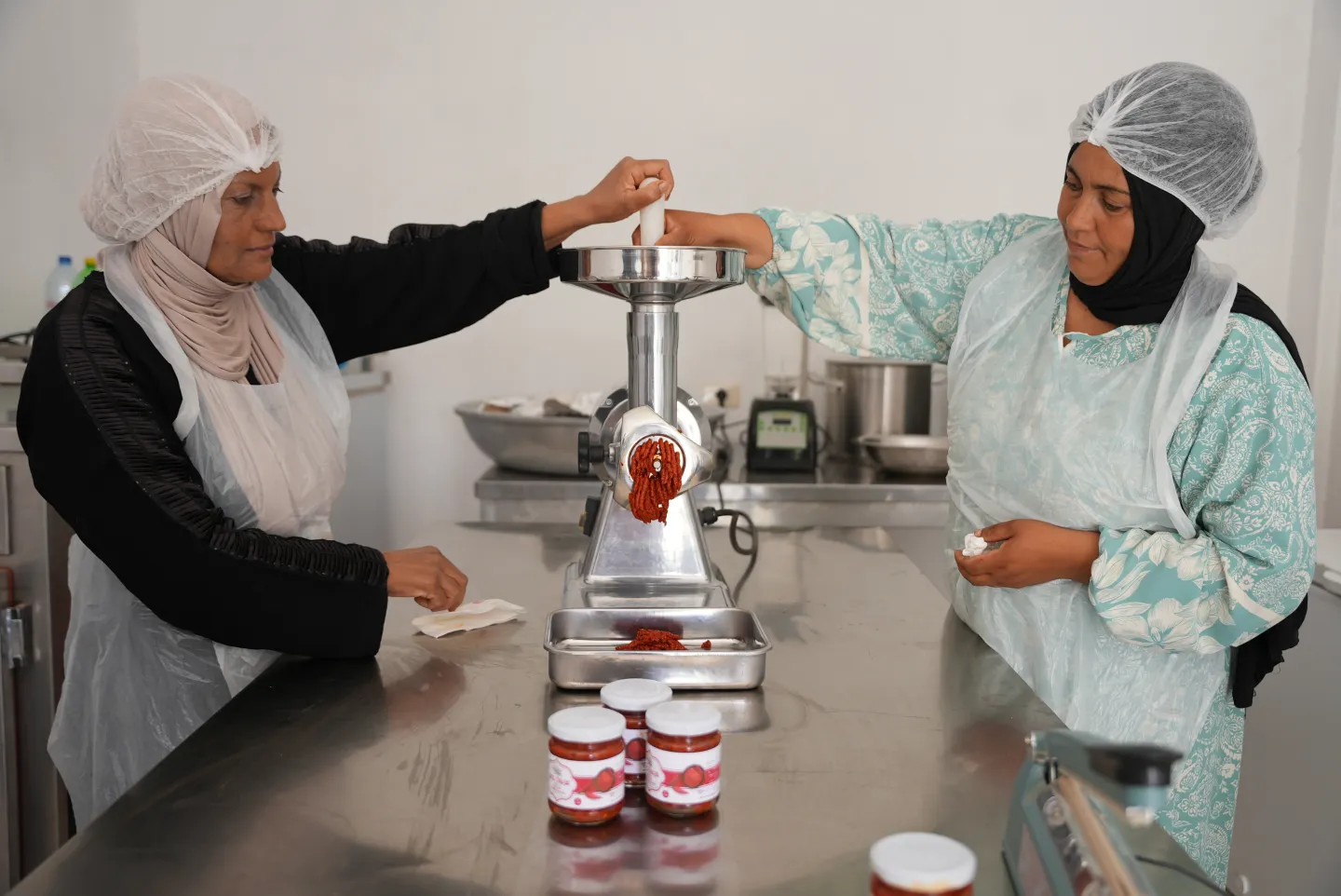
In regions such as Manouba, Sfax and Nabeul, the ILO supported local institutions to deliver gender-responsive services, including entrepreneurship training and improved access to finance. The interventions also helped strengthen market opportunities for women entrepreneurs in sectors such as agriculture and handicrafts through collaboration among local actors.
In 2021, other government-backed loan programmes for women entrepreneurs were launched in partnership with the National Agricultural Bank and the Small and Medium-Sized Enterprise Bank.
Expanding support and new priorities
The next phase of Tunisia’s efforts took shape through a National Programme on Women’s Entrepreneurship for 2022–2026, focused on expanding support and introducing new priorities.
Financial support for women entrepreneurs was expanded through additional national banks. At the same time, new areas such as digital and green entrepreneurship as well as the social and solidarity economy (SSE) were integrated into national efforts.
The ILO also supported the integration of women’s economic empowerment into Tunisia’s SSE agenda, particularly in regions where women’s labour force participation remained lowest. This included support for new and existing collective enterprises in the social and solidarity economy, helping create economic opportunities for women.
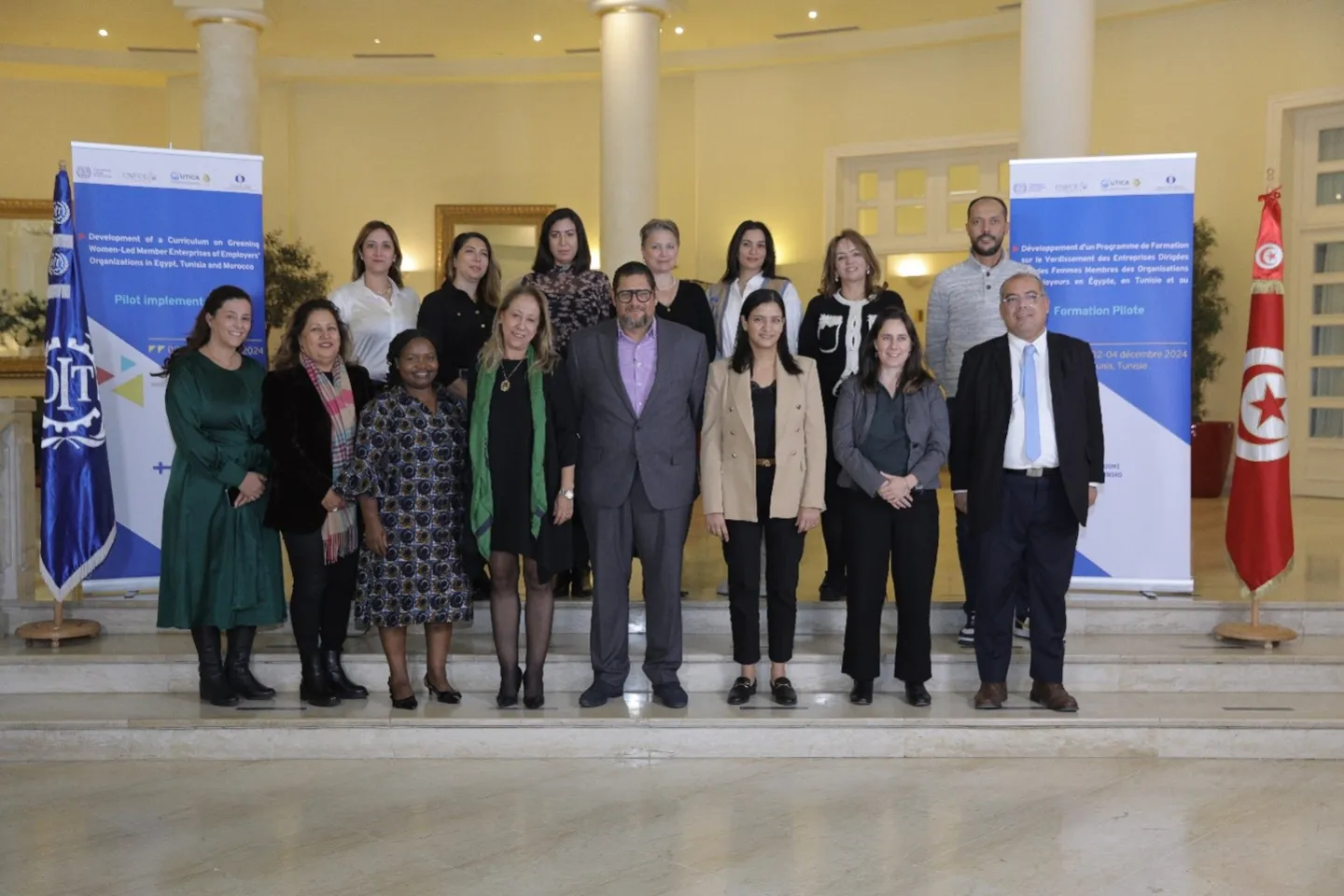
The ILO also deepened its engagement with the national women entrepreneurs’ association, the Chambre Nationale des Femmes Chefs d’Entreprises (CNFCE). The collaboration covered areas such as research, training and policy advocacy, as well as the development of tools including a green business guide for women entrepreneurs.
In parallel, the ILO supported the development of Tunisia’s National Strategy on Women and Climate Change, adopted in 2022, which promotes women’s participation in climate-related economic opportunities.
Results and lessons after ten years
A decade of action has led to tangible results. Access to finance for women entrepreneurs has improved, supported by tailored financial products and services across several national banks. According to national authorities, around 6,000 women-owned and led businesses have been created under the current action plan, generating approximately 12,000 jobs.
Efforts have also focused on strengthening institutions. More than 500 business development service providers have been trained to deliver gender-responsive support, contributing to better quality services for women entrepreneurs.
I launched Nakawa Bio in 2016 in central-eastern Tunisia, producing certified organic prickly pear seed oil. During the COVID-19 crisis, support from the ILO helped us rethink our marketing approach and explore new business opportunities, including franchising.
Dr. Lobna Dems, founder of Nakawa Bio
Looking ahead
Despite progress made, structural gaps remain. Women’s participation in the labour force stands at around 26.6 per cent, compared to 64.9 per cent for men. Women also represent only about 19 per cent of formal business owners and remain concentrated in lower-productivity sectors such as services, agriculture and handicrafts.
Tunisia is now preparing the next phase of its work through a draft national strategy on women’s entrepreneurship to 2035. The strategy builds on lessons from the past decade while seeking to address remaining barriers and expand economic opportunities for women.
The Tunisian experience highlights the importance of sustained engagement, coordination across actors, and linking policy development with practical support at local level. Continued collaboration between government, social partners and organizations representing women entrepreneurs will be central to maintaining progress and expanding opportunities in the years ahead.
The Tunisian experience shows that progress in women’s entrepreneurship requires sustained commitment over time. It also highlights the value of linking national policy with practical support at local level, while bringing together public institutions, social partners and organizations supporting women entrepreneurs around shared priorities. For the ILO, this work forms part of a broader effort to support more inclusive labour markets and decent job creation by strengthening the conditions for women to start, grow and sustain businesses.