

Tripartite partners examine six priority ILO Conventions to shape Botswana’s future of work
From workplace safety to ending violence and forced labour, Botswana is exploring international standards that can transform the world of work.
22 May 2026
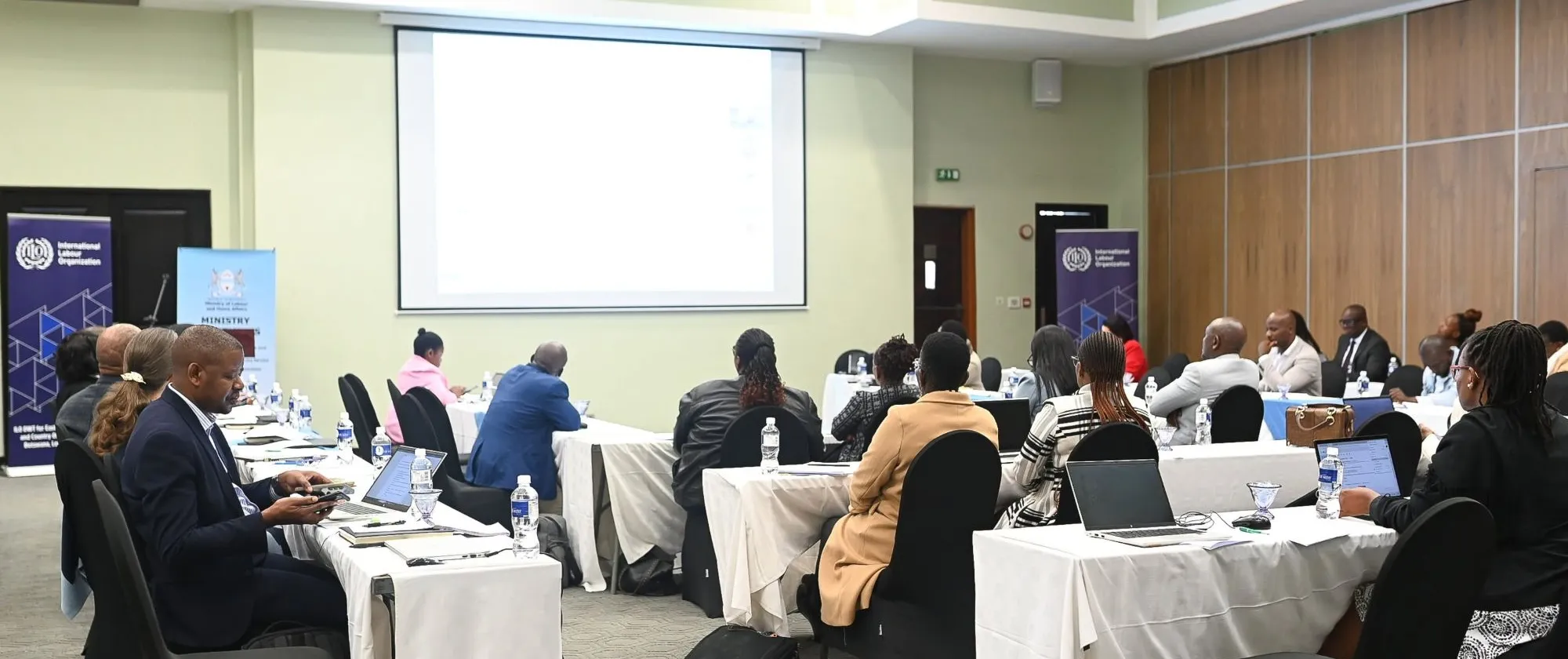
Gaborone, Botswana (ILO News) – The International Labour Organization (ILO), in collaboration with the Ministry of Labour and Home Affairs, convened a two-day tripartite workshop from 18–19 May 2026 to strengthen national capacity on international labour standards and support Botswana’s consideration of six priority ILO instruments identified for possible ratification.
The workshop was preceded by a preparatory meeting with Government officials in May 2026 and brought together representatives from several government ministries, Business Botswana (BB), Botswana Federation of Trade Unions (BFTU), and Botswana Federation of Public, Private and Parastatal Sector Unions (BOFEPUSUSU) to examine the implications, opportunities and obligations associated with ratifying key International Labour Standards that can contribute to a safer world of work, stronger labour market institutions and more inclusive economic growth.
Opening the workshop, ILO Director for the Decent Work Technical Support Team and for ILO Decent Work Technical Support Team for Eastern and Southern Africa and Country Office and Country Office for South Africa, Botswana, Lesotho and Eswatini, Alexio Musindo, reaffirmed the ILO’s commitment to supporting Botswana in advancing decent work through the promotion and implementation of international labour standards.
International labour standards are not simply legal instruments. They are tools for governance and national development that help countries build fairer, more productive and resilient labour markets, Musindo said.
Botswana has been a member of the ILO since 1978 and has ratified 17 ILO conventions currently in force, including eight fundamental conventions and three governance instruments. In 2022, the country further strengthened its labour governance framework through the ratification of the Labour Inspection Convention, 1947 (No. 81), and the Labour Inspection (Agriculture) Convention, 1969 (No. 129).
The workshop focused on six priority instruments: the Protocol of 2014 to the Forced Labour Convention, 1930 (P29); the Occupational Safety and Health Convention, 1981 (No. 155); the Promotional Framework for Occupational Safety and Health Convention, 2006 (No. 187); the Employment Policy Convention, 1964 (No. 122); the Domestic Workers Convention, 2011 (No. 189); the Violence and Harassment Convention, 2019 (No. 190); and the Indigenous and Tribal Peoples Convention, 1989 (No. 169).
Participants explored how ratification of these instruments could strengthen Botswana’s efforts to prevent forced labour, ensure a safe and healthy working environment, address violence and harassment in the World of Work, promote employment-centred development policies, and advance inclusion and protection for vulnerable groups. Discussions also highlighted the contribution of ILS to productivity, social justice, sustainable economic growth and investor confidence.
A central theme of the workshop was the importance of tripartite social dialogue, and ILS-related obligations under the Tripartite Consultation (International Labour Standards) Convention, 1976 (No. 144). Through engagement among government, employers and workers, participants examined how ILS can be translated into effective national policies and practices that respond to Botswana’s development priorities.
The workshop forms part of the ILO’s ongoing multidisciplinary support to Botswana and the Southern African Development Community (SADC) in promoting the ratification and effective implementation of international labour standards as a foundation for decent work and sustainable development.