

Tripartite dialogue strengthens pathways to inclusive social protection in Botswana
A tripartite workshop in Gaborone strengthened national capacities and social dialogue to advance inclusive social insurance reforms aligned with international social security standards in Botswana.
12 May 2026
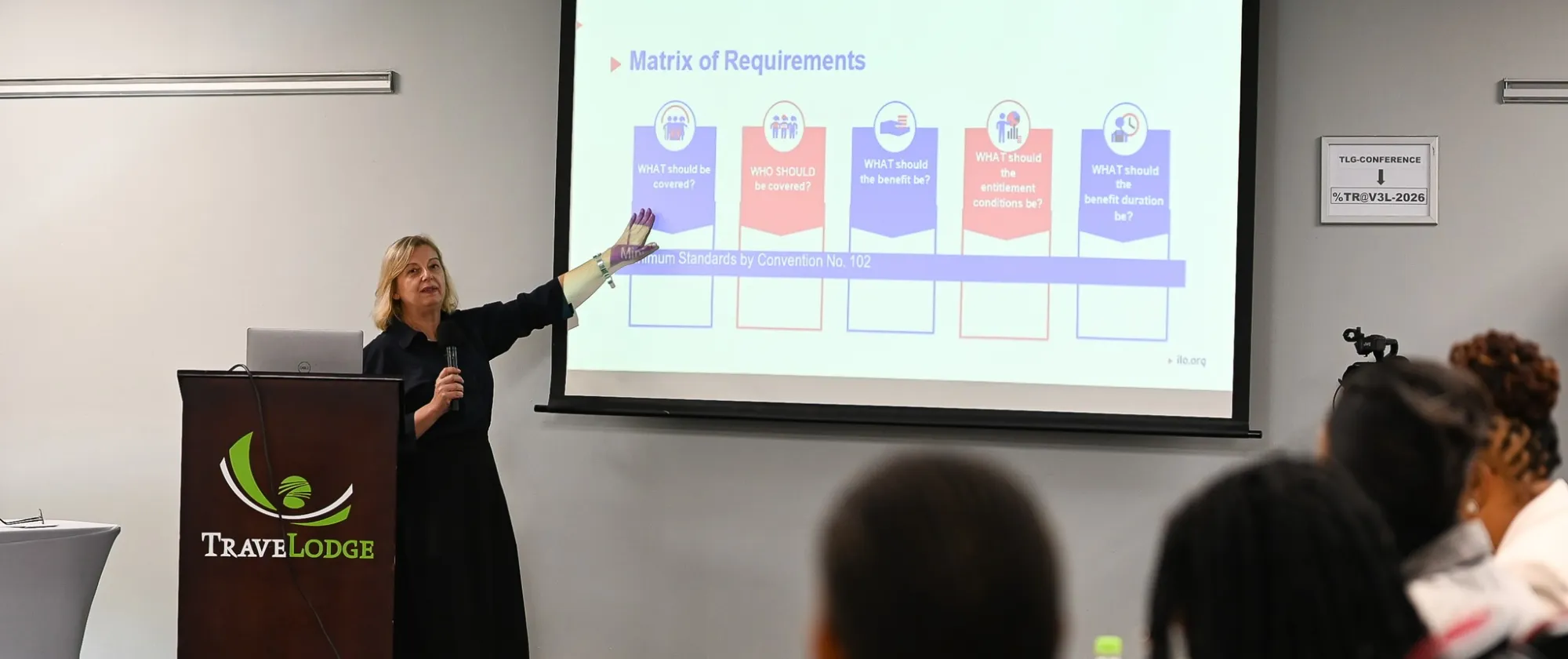
Gaborone, Botswana — A Tripartite Workshop convened by the Ministry of Labour and Home Affairs, in partnership with the International Labour Organization (ILO) and development partners, marked an important step toward transforming Botswana’s social protection system into one that better serves workers, employers, and the broader economy.
Bringing together representatives from government, workers’ and employers’ organizations, and civil society, the workshop focused on aligning Botswana’s policies with international social security standards.
The workshop was opened by Acting Deputy Permanent Secretary for Labour and Social Security, Ms. Tshenolo Omphitlhetse who stated:
Social protection is a national development vehicle; it is not a privilege but a right and powerful economic stabilizer for all Botswana citizens. It is part of MLHA’s mandate that is addressing citizens’ lifecycle needs from birth, when we issue birth certificate through working age when we support when you are looking for a job until when you leave this world.
"In lifecycle approach to social protection everyone plays critical role: finance, local government, business, workers organisations. We want to establish stronger schemes and extend coverage to informal workers. For that we need strong system that can withstand economic shocks and evolving labour market changes. It is important for us to align with international standards and to use them for actionable reforms. '' - Acting Deputy Permanent Secretary
Beyond technical discussions, the exchange created a shared understanding among constituents of how a well-designed social insurance system can directly improve people’s lives.
For workers, the reforms discussed have the potential to provide more reliable and predictable protection against life’s risks such as workplace injuries, maternity, illness, or unemployment. Expanding access to contributory schemes means greater income security, reduced vulnerability, and improved dignity, particularly for those currently excluded from formal protection systems. Participants emphasized that adequate and accessible benefits can also act as an incentive for workers to transition into formal employment.
For employers and the economy, the move merged towards social insurance starting with an employment injury scheme offers a more equitable and efficient system. Instead of individual employers bearing unpredictable costs, contributions to a common fund would spread risks and ensure fairer protection for all workers. This approach not only improves compliance but also strengthens workplace safety systems through better links to prevention and rehabilitation services.
At the national level, strengthening social protection is expected to play a pivotal role in enhancing economic resilience and fostering inclusive growth. Botswana’s continued efforts to expand and modernize its social protection system present an opportunity to broaden coverage, strengthen income security, and boost productivity. Advancing social insurance will support national development priorities under Vision 2036 and the Botswana Economic Transformation Programme, contributing to a more dynamic, inclusive, and sustainable economy.
The workshop also underscored the value of social dialogue. By jointly identifying priorities, such as introducing employment injury, maternity, sickness, and unemployment benefits constituents are building consensus on reforms that are both technically sound and socially acceptable.
As Botswana moves forward with legislative reviews, feasibility studies, and awareness campaigns, this collaborative process lays the foundation for a more inclusive system one that not only protects workers but also strengthens the country’s social and economic fabric.