

Labour Migration in East and Horn of Africa
Towards a Rights-Based Labour Migration Framework for South Sudan
South Sudan validated the situational analysis of South Sudan’s labour migration context and developed guiding principles, vision, and mission for the National Labour Migration Policy and Action Plan.
8 November 2024
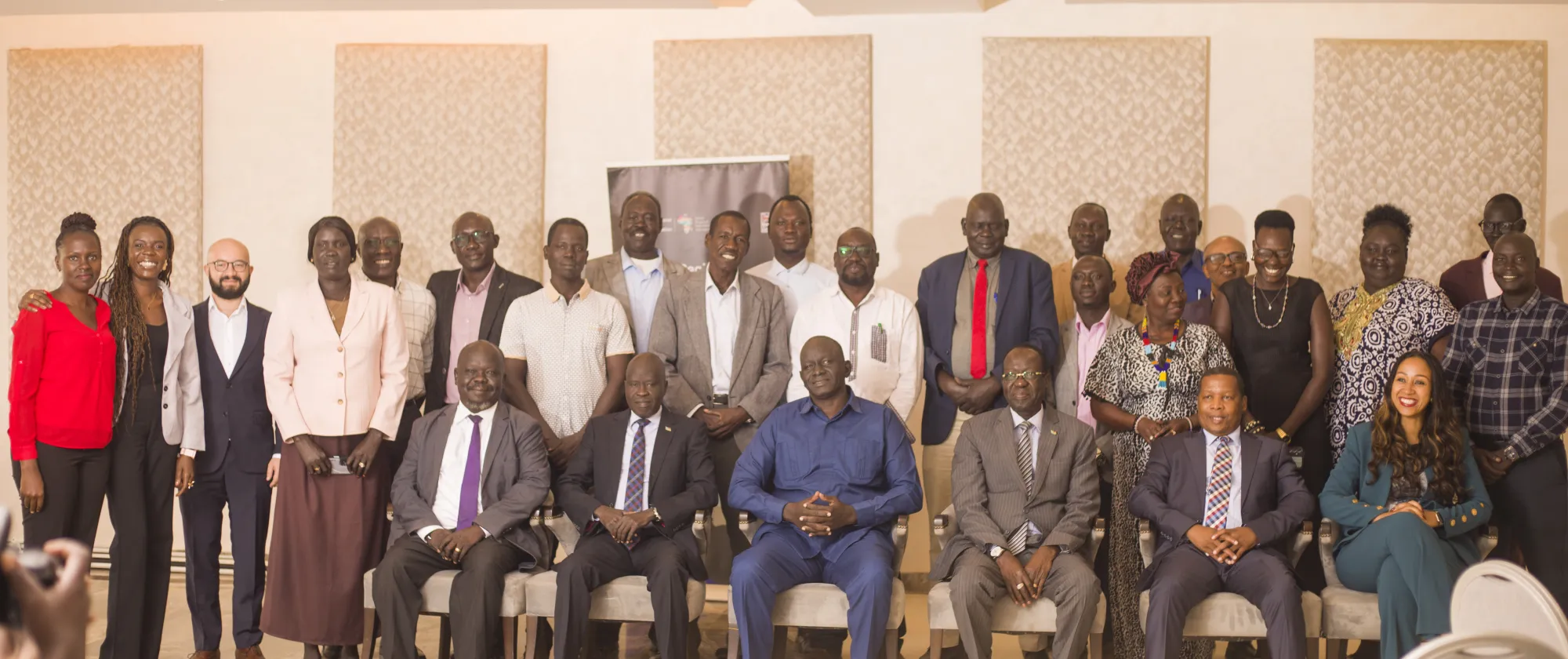
South Sudan validated the situational analysis of South Sudan’s labour migration context and developed guiding principles, vision, and mission for the National Labour Migration Policy and Action Plan. The Ministry of Labour of South Sudan, in collaboration with the ILO BRMM programme, hosted a workshop in Juba, South Sudan from 5 to 7 November 2024, to validate a situational analysis report and identify key priorities for the development of a Labour Migration Policy.
The workshop brought together 35 participants, including representatives from the government, employers' associations, trade unions, private employment agencies and civil society. Through engaging relevant stakeholders in the policy development process, the workshop strengthened ownership and ensured that the developed policy would be both gender-responsive and rights-based.
During the opening session, H.E. General James Hoth Mai, Minister of Labour, emphasized the need for a comprehensive legal framework to protect migrant workers. He stressed that the government has a duty to make migration safe and beneficial for all, particularly given South Sudan’s dual role as both a destination and origin country for migrants.
"Migration is a fundamental part of human history, and it will continue as people seek better opportunities. Our responsibility as a government is to ensure that migration happens safely, with dignity, and with full protection of the rights of those involved. This Labour Migration Policy is not just about managing movement; it is about securing futures, creating opportunities, and protecting the most vulnerable. - H.E. Gen. James Hoth Mai, Minister of Labour, South Sudan.
Representatives from the Employers' Association and the Workers Trade Union Federation highlighted the economic challenges driving migration in South Sudan and the need for policies that address both the protection of outgoing migrant workers and the rights of incoming migrant workers. The speakers collectively reaffirmed their commitment to ensuring that the Labour Migration Policy aligns with international labour standards and addresses the unique challenges faced by South Sudanese migrant workers.
The policy development process was presented followed by the situational analysis report, which provided an overview of South Sudan’s labour migration trends, legal frameworks, and institutional structures. The key challenges, including weak governance frameworks, limited access to services for migrant workers, and lack of reliable data on labour migration was identified. Following the presentation, participants engaged in discussions and proposed amendments to ensure the report accurately reflects the country’s context and finally validated the findings.
Based on the situational analysis participants identified key priorities for the Labour Migration Policy of South Sudan. The participants further define the vision, mission, and guiding principles for the policy, emphasizing the importance of transparency, gender equity, coordination, and alignment with international standards.
Participants also developed a roadmap for policy implementation, identifying the roles and responsibilities of various government agencies and stakeholders. The Ministry of Labour was designated as the lead agency for labour migration governance, with a recommendation to establish a Labour Migration Committee to coordinate efforts across different sectors. This committee was proposed to work closely with the National Coordination Mechanism to ensure that all aspects of migration governance are encompassed.
The workshop concluded with a commitment from the government to advance the policy development process. Participants agreed on the next steps, which include revising the draft policy, conducting further consultations, and organizing a validation workshop to finalize the document. The policy will then be submitted for political approval and implementation.
This workshop represents a critical step in South Sudan’s journey toward establishing a robust Labour Migration Policy. By fostering dialogue and collaboration among key stakeholders, the country is laying the foundation for a policy framework that promotes safe migration, protects the rights of migrant workers, and contributes to national development. The ILO, through the BRMM program, remains committed to supporting South Sudan in achieving these goals and ensuring that labour migration governance is strengthened in the region.
Relevant projects

East and Horn of Africa
Better Regional Migration Management