


Migrant domestic workers
From tears to hope for migrant domestic workers
After experiencing abuse, a former migrant domestic worker has turned her pain into purpose, dedicating her life as a Migrant Desk Officer to helping Overseas Filipino Workers and their families in the Philippines.
11 June 2026
NEGROS OCCIDENTAL, Philippines (ILO News) - "If my desk had a mouth, it would scream and cry." After years of listening to the stories of abused and distressed migrant workers, Salvacion "Sally" Barrios knows exactly what she means.
Sally serves as the Migrant Desk Officer of Talisay City in Negros Occidental, helping Overseas Filipino Workers (OFWs), migrant domestic workers, and their families through some of the most difficult moments of their lives. She provides support, guidance, and a listening ear to workers facing abuse, exploitation, migratand family problems.
What many people do not know is that Sally's journey began with her own painful experience as a migrant domestic worker.
Sally left the Philippines in 1997 to work abroad as domestic worker. Like many Filipino mothers, she was driven by a simple dream of giving her children a good education.
"We never dreamed of becoming rich," she says. " All we want is for our children to get a good education."
The reality she encountered was the start of her calvary, far from the better life she had hoped for.
She worked long hours, waking up as early as 3:00 in the morning. Just months after arriving, her employer began harassing her. The abuse became increasingly serious until she secretly contacted her recruitment agency for help. She was rescued before the situation became even worse.
The experience left a lasting mark on her life. "It taught me not to give up," Sally recalls. "If we do not fight for our rights, who will?"
Fortunately, she later found work with a diplomatic family who treated her with respect and dignity. But she never forgot the fear and helplessness she felt during those difficult months.
Years later, those memories would shape Sally’s mission to help others. Her story reflects the experiences of many domestic workers who long worked without adequate recognition or protection.
It was this reality that prompted the adoption of the Domestic Workers Convention, 2011 (No. 189), which affirmed that domestic workers are entitled to the same rights and protections as all other workers.
This year marks the Convention’s 15th anniversary. The Philippines played a historic role as its ratification triggered its entry into force and underscored the country’s commitment to decent work for domestic workers.
“Much has changed since then. Many domestic workers are now more visible. Their work is increasingly recognized. More domestic workers enjoy legal protections, written contracts, minimum wages, social protection, and access to remedies. These are important gains. Yet much remains to be done,” Khalid Hassan, Director of the ILO Country Office for the Philippines underscores.
For Sally, the importance of those protections is deeply personal. Many of the migrant workers who come to her office are women who have experienced violence, harassment, or exploitation. Some are too afraid to speak. Others believe they have no choice but to endure abuse because their families depend on the money they send home.
"When I listen to stories of abuses and provide psychosocial support, I cannot control my tears and stop crying," she says.
Some cases have been heartbreaking. Sally recalls helping migrant domestic workers who survived sexual violence abroad, only to face rejection and stigma when they returned home. Such experiences reinforced the need for safe spaces where survivors can seek help without fear or judgment.
With support from the ILO, Sally and her colleagues received training initially through the Safe and Fair Programme on how to respond to these situations with care, confidentiality, and respect. The lessons helped them become more sensitive to the needs of women migrant workers and survivors of violence.
Sally also helped organize migrant workers in Talisay City and supported the creation of the city's OFW Helpdesk. The helpdesk provides information and services for workers and their families before departure, during employment abroad, and upon their return home. It also assists distressed workers, supports rescue efforts, and helps connect migrants to social protection and reintegration services.
“Many women and migrant domestic workers who experienced violence and harassment are at a loss on what to do. We are ready to listen. We also assist displaced and distressed OFWs, including on rescuing and filing cases in coordination with the local government,” Sally shares.
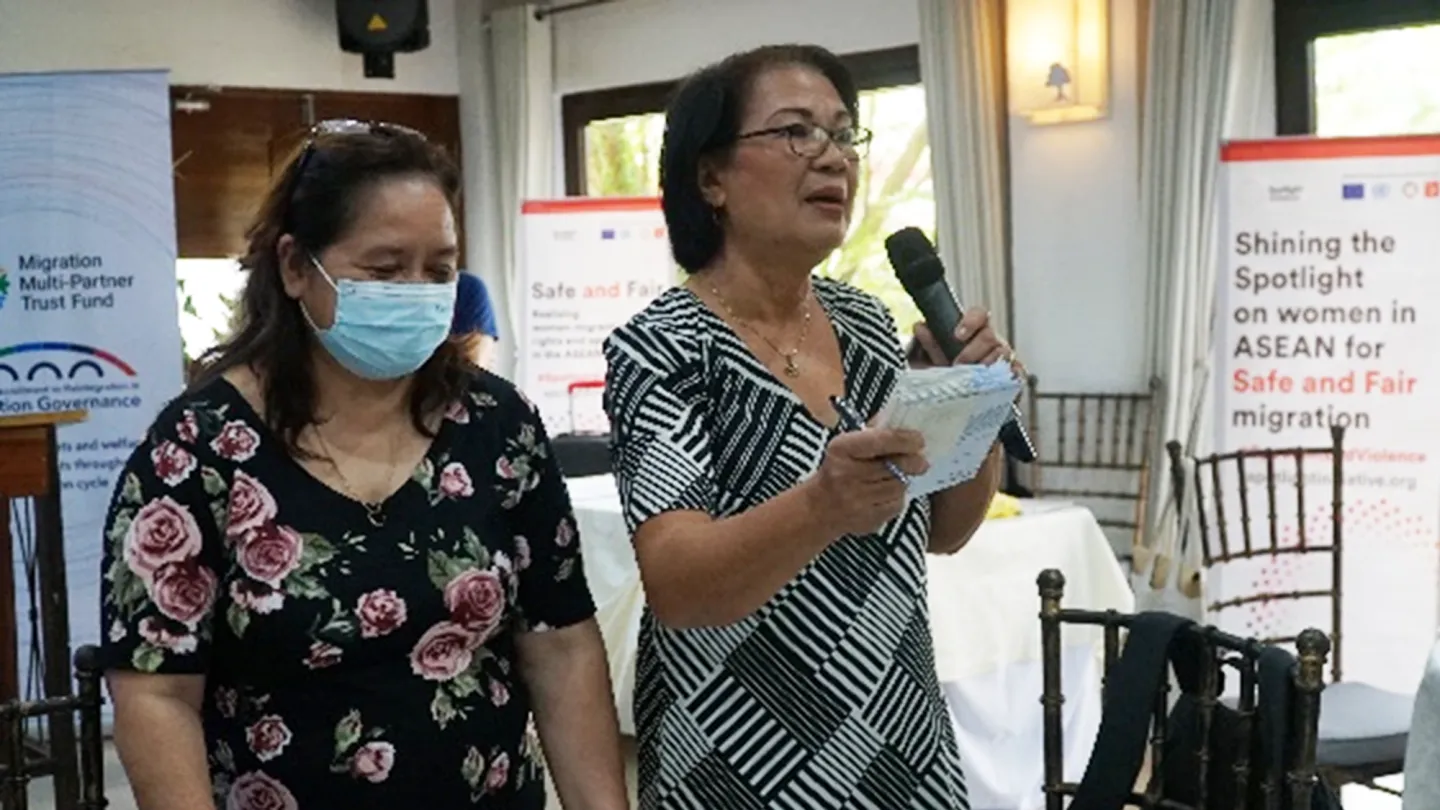
Sally continues to advocate for decent work for domestic workers, safer workplaces for women, and freedom from violence and harassment. She promotes and educates them as well on the Violence and Harassment Convention, 2019 (No. 190), which the Philippines has also ratified to ensure that all workers can do their jobs without fear of abuse.
For Sally, however, it is about making sure that workers who leave their families in search of a better future are treated with dignity and respect. From a domestic worker who fought for her own rights, Sally has become an advocate helping countless others find protection, support, strength, and hope.
Relevant projects

Migration
Safe and Fair: Realizing women migrant workers’ rights and opportunities in the ASEAN region
Safe and Fair: Realizing women migrant workers’ rights and opportunities in the ASEAN region