

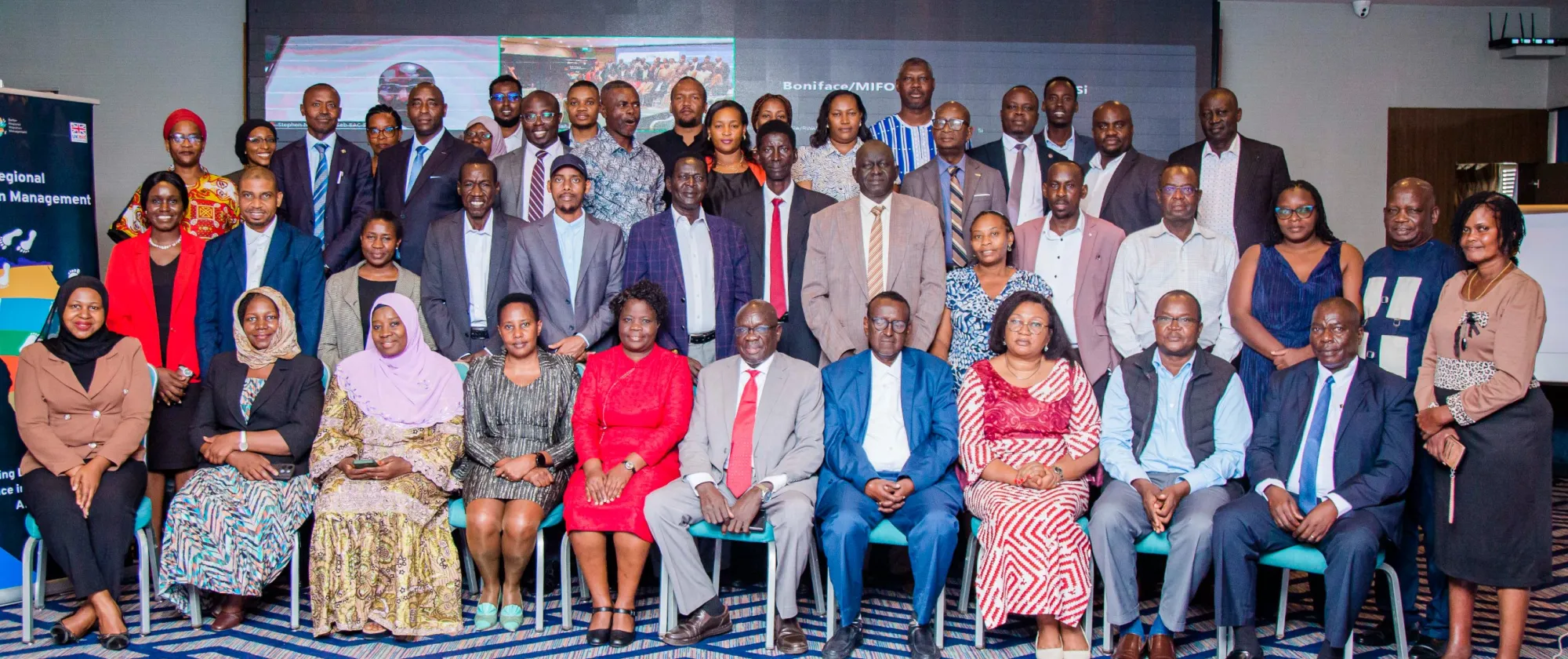
Tanzania Hosts Regional Meetings Advancing EAC Social Protection and Skills Recognition Frameworks
Tanzania hosted two critical regional meetings that advanced the East African Community’s (EAC) agenda on labour mobility, social protection, and skills development.
3 May 2025
Between February and Early March 2025, Tanzania hosted two critical regional meetings that advanced the East African Community’s (EAC) agenda on labour mobility, social protection, and skills development. These sessions, supported by the International Labour Organization (ILO) through the Better Regional Migration Management (BRMM) programme funded by the UK Foreign, Commonwealth and Development Office (FCDO), brought together EAC Secretariat staff, Partner State representatives, social partners, and technical experts to align national priorities with a shared regional vision.
From 24 to 26 February, Dar es Salaam served as the venue for the Regional Meeting on the Development of Regional Competency Standards for Domestic Workers. This session focused on the harmonization of occupational standards to improve worker mobility, enhance skills recognition, and build a competitive labour force across East Africa. The three-day event brought together representatives from government ministries, employer organizations, training institutions, and worker representatives to develop a roadmap for establishing regionally recognized competency standards.
Participants addressed existing gaps in competency frameworks, with emphasis on differences in training curricula, assessment procedures, and qualification mechanisms across countries. These disparities continue to limit the mobility of domestic workers, many of whom are employed informally and face high vulnerability. Technical working groups were established to oversee the harmonization process, which includes finalizing competency standards, improving quality assurance mechanisms, and promoting closer alignment with international benchmarks. The roadmap developed outlines a step-by-step approach for mutual recognition of skills, ensuring consistency in certification while also addressing barriers for workers who seek employment across borders.
The meeting underscored the importance of technology in transforming skills assessment and recognition systems. Stakeholders discussed opportunities to digitize certification processes, introduce online training, and enable remote skills verification. These efforts aim to modernize competency frameworks and widen access to recognized qualifications, especially for workers in underserved areas or non-traditional sectors. Participants committed to embedding these frameworks within national policies and training strategies, with continued engagement from both government and private sector actors.
Shortly after the meeting to establish regional competency standards on domestic workers, from 27 February to 1 March, the EAC Secretariat and the ILO convened a technical meeting in Dar es Salaam to finalize the Action Plan for the implementation of the EAC Social Protection Policy. This follow-up to earlier regional consultations aimed to transform the policy into a practical roadmap, defining specific roles, responsibilities, and timelines for Partner States. The three-day meeting validated the Action Plan by aligning 14 programmatic priorities with the six overarching policy goals outlined in the EAC Social Protection Policy.
The Action Plan addresses a wide range of social protection interventions, from income security and health services to child support and employment promotion. It also integrates gender equity and inclusion of vulnerable populations, ensuring that the framework is responsive to the diverse realities of citizens across the EAC. Participants adopted a monitoring and evaluation (M&E) framework that will guide the tracking of progress, identify performance gaps, and support evidence-based policy adjustments.
The validation of the Action Plan marked a major milestone. Typically, a lengthy and complex process, the consensus was reached efficiently due to the technical preparation of the EAC Secretariat, the consultant, and participating experts. To maximise resources, the meeting was strategically aligned with a prior technical committee gathering, which reduced logistical costs and enabled seamless continuation of discussions.
Together, the meetings demonstrated Tanzania’s central role in accelerating regional integration efforts in both social protection and workforce development. They also highlighted the strategic collaboration between the EAC and the ILO in strengthening governance frameworks that enable safe, fair, and productive labour mobility.
The outcomes from Dar es Salaam will have long-term implications. On the social protection front, the validated Action Plan offers a structured path toward coordinated implementation of social safety nets that respond to the socio-economic needs of East Africans, including migrant and informal workers. On the skills recognition side, the development of regionally harmonized competency standards will expand opportunities for East African workers, particularly domestic workers, by ensuring their skills are recognized and valued across borders.
Moving forward, Partner States are expected to integrate both frameworks into their national systems. Governments will align their policies and budgets with the EAC Action Plan, while also adapting training programs and certification systems to meet regional competency benchmarks. The ILO will continue to provide technical support and strategic guidance to ensure the effective implementation and institutionalization of these efforts.
With political commitment, technical clarity, and a shared vision in place, the EAC is now better positioned to foster inclusive social protection systems and create pathways for a skilled, mobile, and empowered regional workforce.
Relevant projects

East and Horn of Africa
Better Regional Migration Management