

Development cooperation in Lebanon
Tackling pests, opening markets: Farmers and government experts address challenges with ILO support
Funded by Sweden, the ILO’s BOUZOUR project in Lebanon is enabling cherry farmers such as Richard Skaff and Sami Harika to adopt better pest-control methods, opening more pathways to global export markets.
21 November 2025
BEIRUT (ILO News) - Cherry farmers in the Bekaa Valley in eastern Lebanon are learning new techniques to protect their crops and meet international export standards with support from the ILO’s BOUZOUR project, the Ministry of Agriculture, and the Chamber of Commerce, Industry and Agriculture of Zahle and Bekaa (CCIAZ).
From combating harmful insects to upgrading farming practices, this collaboration is helping farmers improve production and access export markets. Chief among these are European Union (EU) markets, where meeting quality and safety standards opens the door to higher-value opportunities - an important step toward revitalizing livelihoods and strengthening resilience amid Lebanon’s ongoing economic challenges. Reaching these markets, however, also requires safer and fairer working conditions in farms and packhouses, as international buyers increasingly expect compliance with decent work standards. The ILO’s strategy therefore involves supporting farmers meet export requirements while ensuring that improved productivity goes hand in hand with better working conditions and more inclusive job opportunities for local communities.
Certification program to boost cherry and stone fruit exports
Under the ILO BOUZOUR project, the Chamber of Commerce, Industry and Agriculture of Zahle and Bekaa (CCIAZ) is supporting the Ministry of Agriculture (MoA) to establish an export certification programme for cherries and other stone fruits. The programme focuses on meeting quality and requirements relating to plant health, particularly fruit fly management, to strengthen Lebanon’s export capacity, ensure compliance with European Union (EU) regulations, and contribute to economic growth.
In close collaboration with the MoA, the Chamber is helping design and implement a certification process that guarantees cherries and other stone fruits meet EU entry standards. This includes direct engagement with exporters and farmers, with emphasis on monitoring, management and control of fruit fly infestations.
Since exporters are not always aware of the relevant standards, specific guidelines are being developed in partnership with the MoA to align with EU requirements. These guidelines will give exporters a clear framework for compliance, ensure quality, and support the successful expansion of Lebanon’s cherry and stone fruit exports.
Protecting orchards, strengthening livelihoods
For farmer Richard Skaff, working the land has always been about resilience. He previously attended training sessions on the basics of occupational safety and health in the field such as the safe handling of tools and chemicals, but not on identifying pests like fruit flies or understanding related risks. However, he knows these risks are never far away.
“For us, these risks are constant concerns,” Skaff explained. “We worked with NGOs before to learn basic safety in the field. But when it comes to insects, many farmers don’t even know what they are facing. Without that knowledge, you can’t improve your production.”
Mediterranean fruit fly infestations are a threat that every cherry farmer knows only too well. Left unchecked, the insect can destroy entire harvests. Through the BOUZOUR project, the Ministry of Agriculture (MoA) and the Chamber of Commerce provided Richard and his peers with traps to monitor and control the pests.
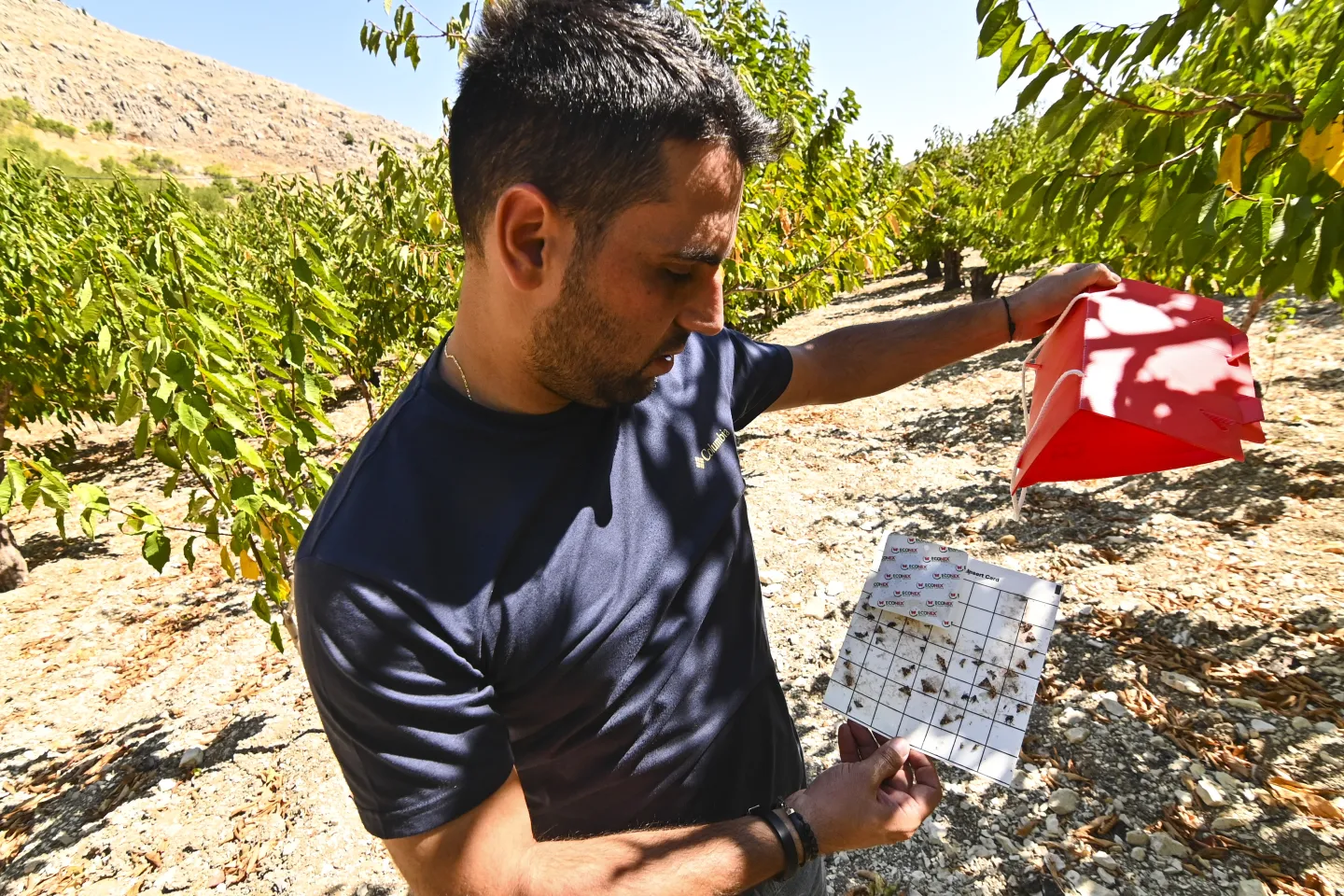
“The traps help us monitor the cherry trees and prevent the Mediterranean fruit fly from spreading and harming the fruits,” Skaff said. “We knew about them before, but we never had the means to deal with them. Now, by setting up these traps, we can produce healthy cherry crops.”
Hope for better harvests and new markets
For Sami Harika, another farmer taking part in the initiative, the impact is already clear.
“Through the Ministry and the Chamber, we were able to install traps, especially for insects that attack cherries,” he said. “The traps are good for monitoring, and for knowing when and how to intervene. This means we can produce cherries that meet the specifications needed for export, especially to Europe.”
Still, Harika points to ongoing struggles. Scarcity of high-quality pesticides and other crop protection products means farmers often rely on low grade pesticides that yield limited results. This not only limits their productivity but also impacts the quality of their crops.
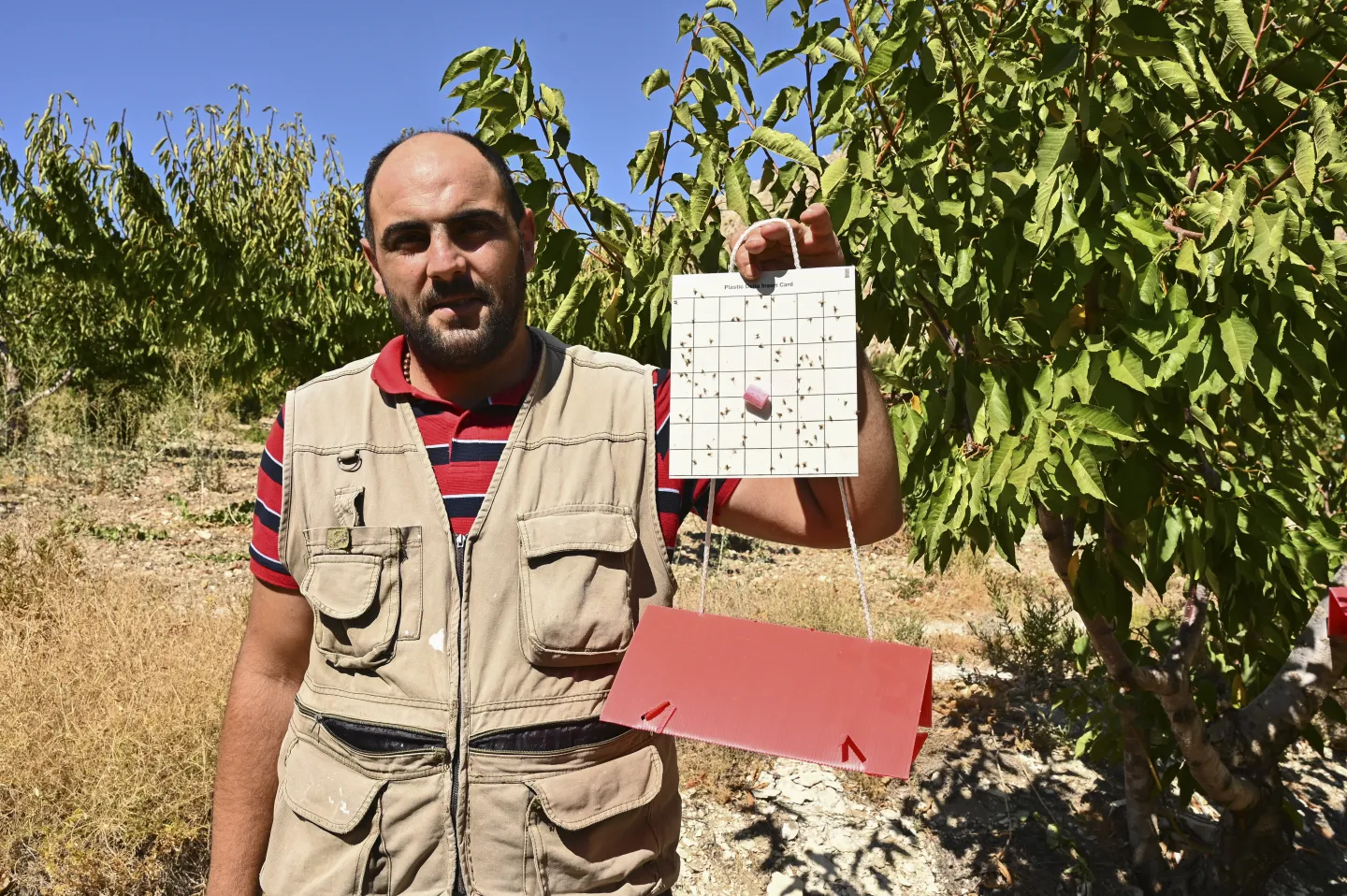
“We need more government support to provide us with the right treatments and supplies,” Sami Harika stressed. “If we can produce more and improve the quality of our cherries, we will be able to access new markets, like the EU. That would change everything for us.”
Guidance that makes a difference
Behind these advances is the patient work of agricultural engineers like Roula Mallo, a Ministry of Agriculture extension agent who works directly with farmers.
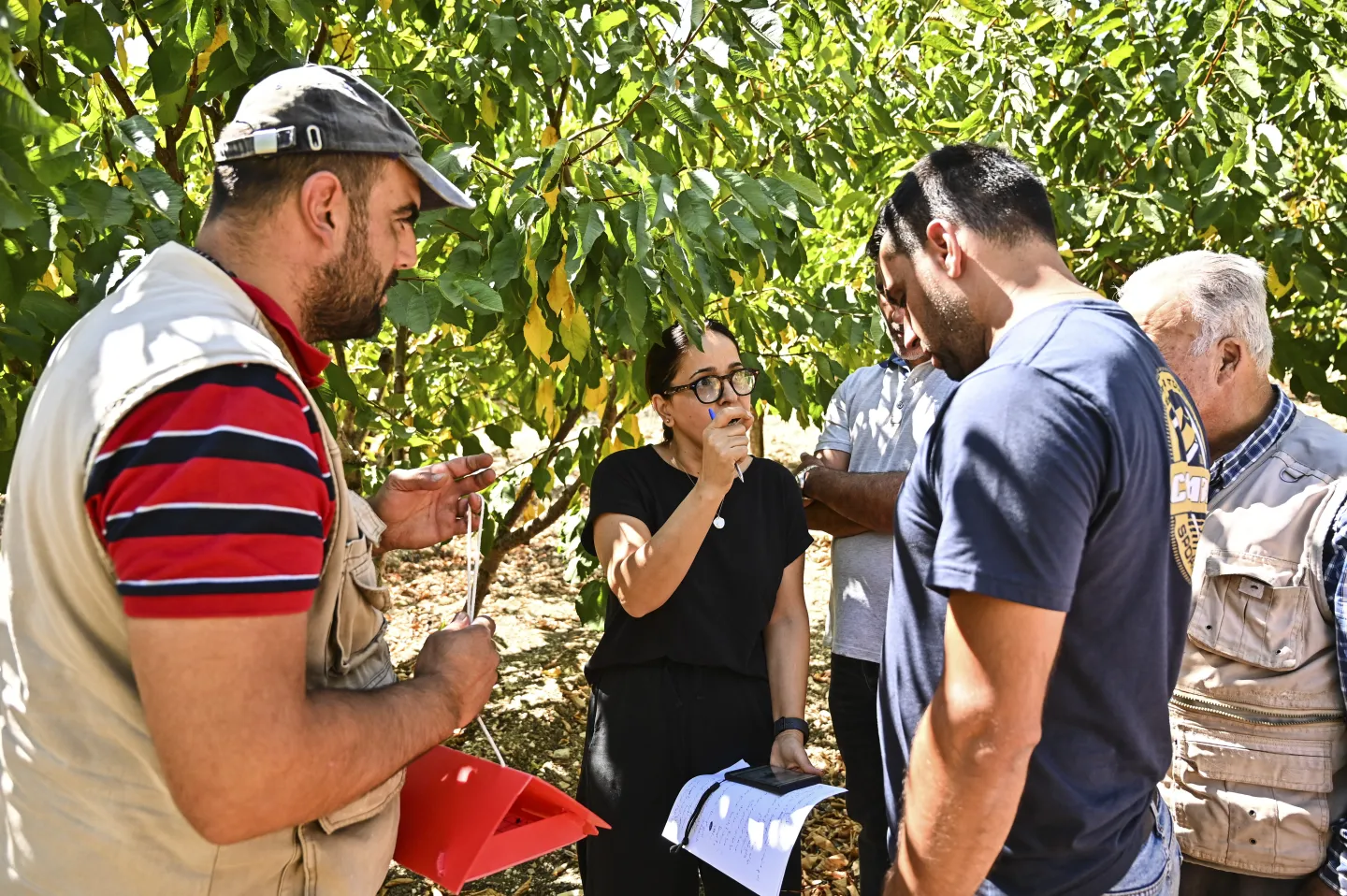
“With the support of the Chamber of Commerce, we provided seminars and training to introduce farmers to the certification programme under the BOUZOUR project and focus on harmful insects,” Mallo explained. “Some had heard of the traps, others had not. The sessions helped them identify seven different insects affecting cherries and how to respond to each one.”
Mallo explained that the role of engineers goes beyond just transferring information; it’s about building trust and staying connected.
“We are in constant contact with the farmers, answering any questions they might have. This continuity is important. Farmers need to feel supported as they adopt new practices,” Mallo said.
The training was also a chance for Mallo to strengthen her own knowledge. “As agricultural engineers, we already have technical expertise, but the sessions gave us new insights, especially on pest management for cherries. This makes our guidance to farmers more practical and effective.”
Training the trainers
At a broader level, the Ministry of Agriculture is working to make sure its staff stay up to date. Khalil Abou Rjeile, Head of the Ministry’s Agricultural Resources Department in Mount Lebanon, highlights the importance of training of trainers (ToT) programmes.
“Any agricultural engineer who does not receive continuous training will fall behind,” he said. “These training of trainer programmes keep us informed about what’s happening locally and internationally, so we can pass that knowledge on to farmers in the right way.”
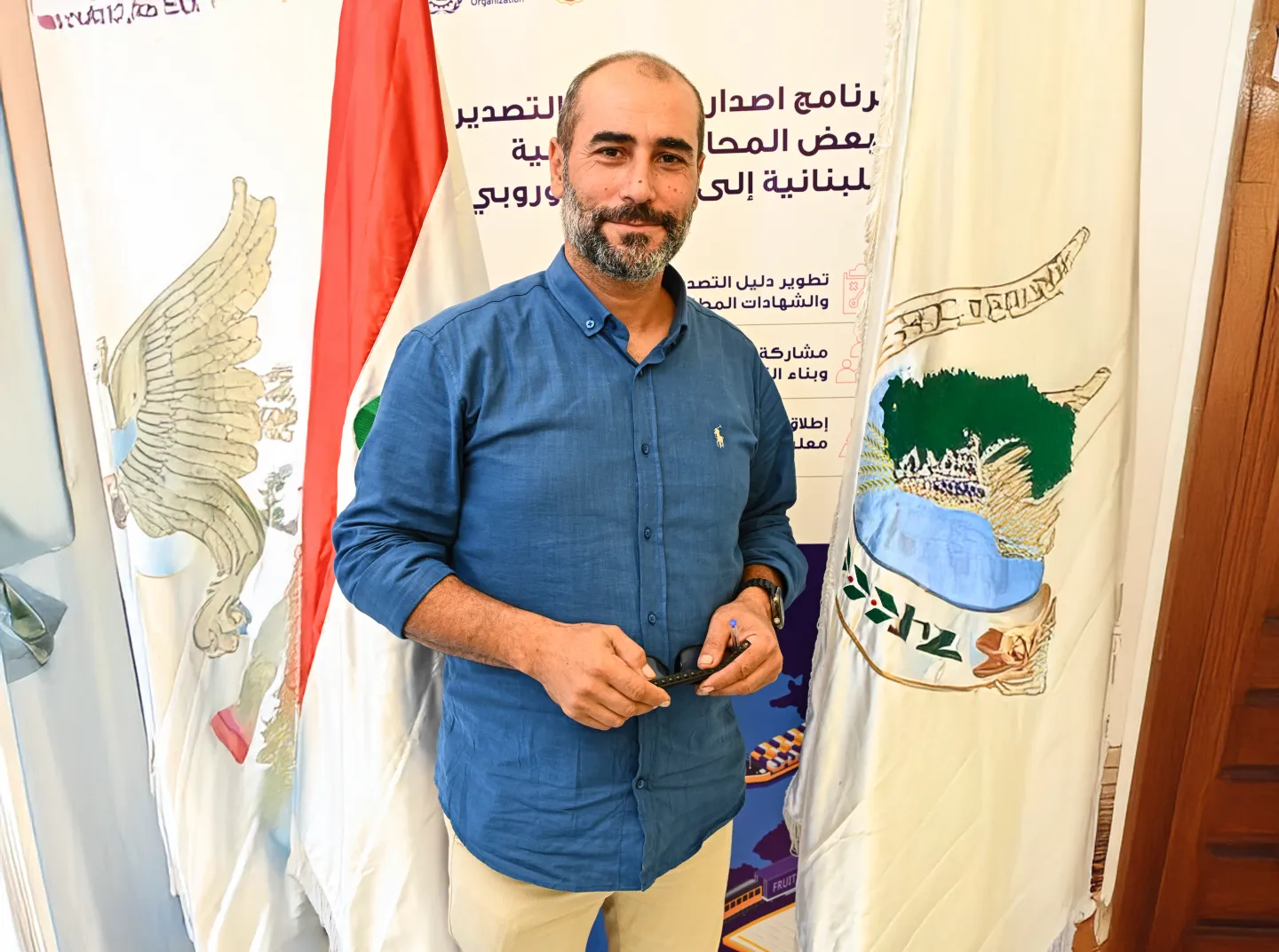
But Abou Rjeili acknowledges the challenges of introducing change.
“We are, in many ways, changing the farmers’ lifestyle; asking them to shift practices they’ve relied on for decades. New concepts are not always accepted immediately. Farmers want to see results first. And sometimes, new measures come with costs they cannot afford. That is why it takes time, patience and proof that these changes will benefit them.”
A strategy for the future
Silvana Gerges, Head of the Plant Affairs Division at the Ministry, situates these efforts within a larger national vision.
“Lebanon’s agricultural sector is in urgent need of support. We developed a strategy for 2025 to enhance the sector, but financial constraints made implementation difficult. With the help of donors, we are now revising our approach so the sector can come back to life.”
She sees the BOUZOUR project as a crucial step in aligning farmers with international standards.
“The training facilitated by BOUZOUR helps engineers guide farmers and exporters on how to meet EU requirements. Every step matters: from identifying insects, to treatment, to packaging. These procedures will determine whether farmers receive the certificates that allow them to export.”
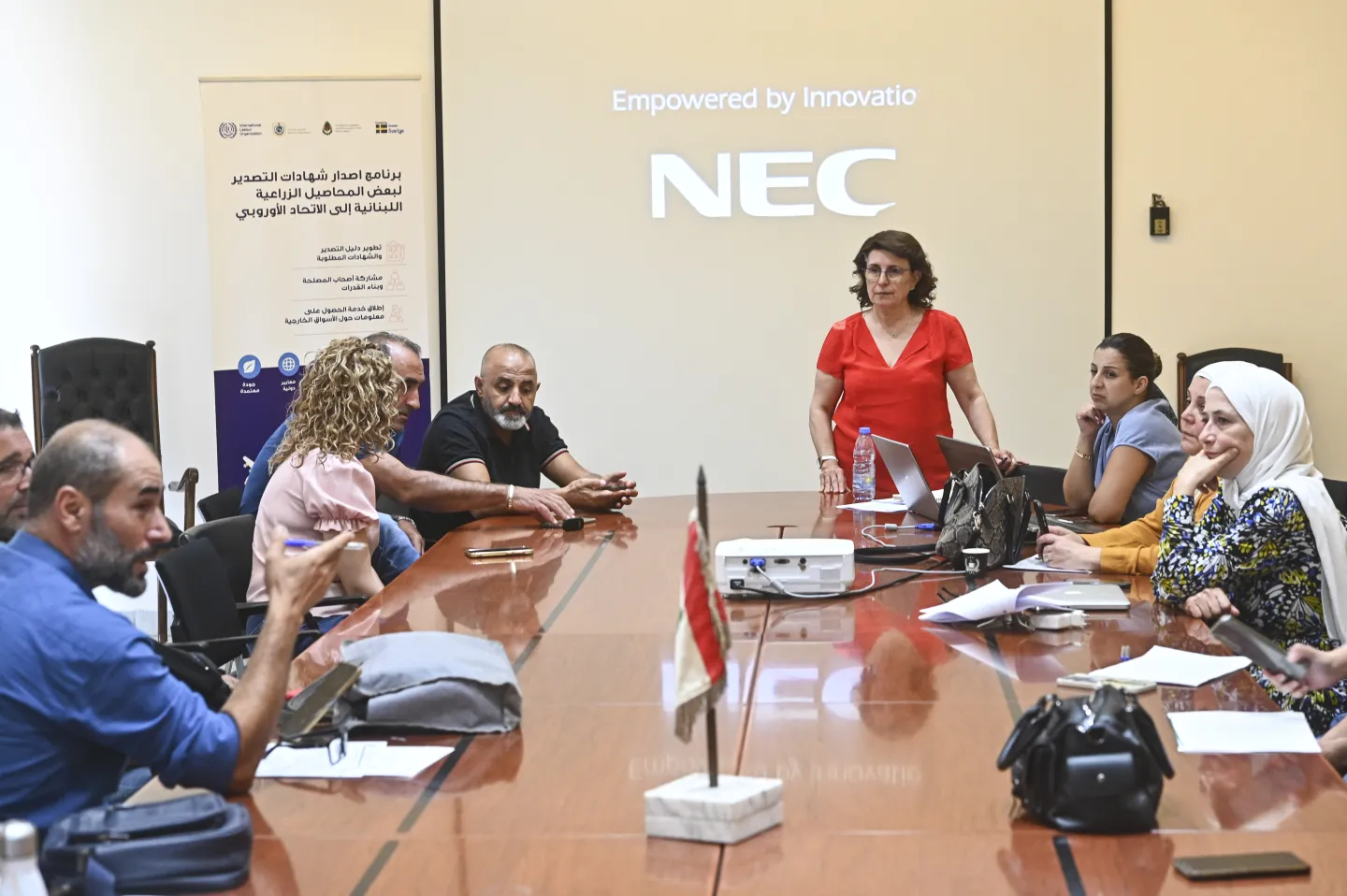
The training sessions were detailed, and included showing farmers pictures of the insects and how to identify them in the field. “This kind of practical knowledge is what makes a difference. Farmers now have a roadmap to follow, and if they commit to it, the sector can start to recover.”
The ILO’s BOUZOUR project is equipping farmers with knowledge and practical tools to improve working conditions in Lebanon’s agricultural sector while supporting the sustainability of one of the country’s most important crops. At the same time, it is revitalizing the cherry export sector, creating job opportunities for local farmers and communities, strengthening resilience, and connecting farms to global markets during a time of economic crisis.
Related content
Project
Building Inclusive Markets and Decent Work for Syrian Refugees and Lebanese Host Communities (BOUZOUR)
Relevant projects
Project
Building Inclusive Markets and Decent Work for Syrian Refugees and Lebanese Host Communities (BOUZOUR)