


Supporting a more sustainable agricultural workforce in Lebanon
Through its partnership with PlantLab, the ILO’s BOUZOUR project is testing how structured agricultural services can strengthen farm management while promoting safer, fairer working conditions for agricultural workers.
5 February 2026
BEIRUT (ILO News)- Agriculture remains a vital source of livelihoods in Lebanon, employing an estimated 20–25 per cent of the Lebanese workforce and tens of thousands of workers from neighbouring Syria. Yet despite its economic importance, persistent decent work deficits persist in the sector. Agricultural workers, particularly seasonal and migrant labourers, often face long working hours, low wages, unsafe conditions, and limited access to legal protection or social security. These challenges affect not only workers’ wellbeing and dignity, but also the productivity and sustainability of the sector as a whole.
Recent research by the International Labour Organization (ILO), conducted under the BOUZOUR project which is funded by the Swedish International Development Cooperation Agency (Sida), highlights the structural gaps shaping labour recruitment and working conditions in agriculture in Lebanon. The findings point to widespread informality, weak enforcement of labour standards, unregulated recruitment practices, and limited grievance mechanisms. Farmers, meanwhile, struggle to secure reliable and skilled labour for essential tasks such as pruning, harvesting and orchard management, often relying on informal labour brokers, which makes it difficult to secure reliable and skilled workers.
Against this backdrop, the BOUZOUR project is piloting alternative, service-based approaches that improve farm management while directly addressing working conditions and labour practices.
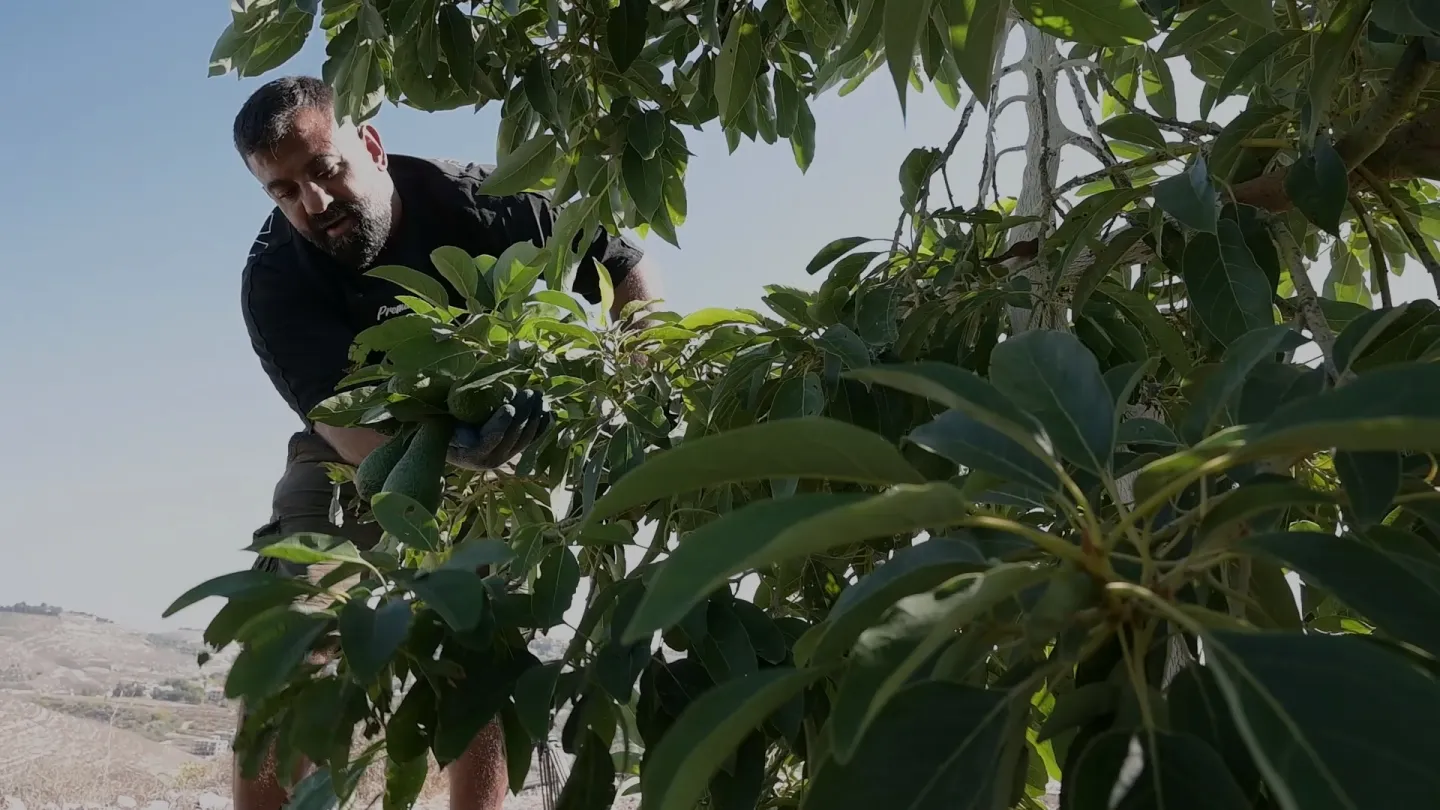
The intervention supports farmers like Ahmad Dia and farm supervisors such as Haitham Wehbe to reorganize how work is planned, how labour is managed, and how safety and skills are embedded into daily operations, both increasing productivity and improving workers’ wellbeing.
Working with PlantLab to improve farm practices
In partnership with PlantLab, a Lebanese agricultural service provider specialized in farm operations, the project is testing a service center model that connects farmers with trained workers through more structured, transparent and ethical mechanisms. Rather than relying on informal recruitment systems, the model aims to provide farmers with dependable access to skilled labour, while ensuring workers benefit from training, safer workplaces and fairer conditions.
The intervention focuses on strengthening PlantLab’s capacity to deliver integrated farm management services, combining technical expertise with workforce organisation and training. Initial implementation focused on farms in North and South Lebanon. Building on early results, PlantLab has since begun expanding its services to the Bekaa, Mount Lebanon, and Akkar, while generating lessons to inform further scale-up across other regions.
Through hands-on technical guidance and structured service provision, farmers receive support to improve orchard management, productivity and planning. At the same time, workers benefit from clearer roles, improved skills and more stable employment conditions, addressing one of the most persistent decent work deficits in agriculture.
Improving working conditions on farms
A central pillar of the collaboration with PlantLab is the improvement of working conditions and occupational safety. Training activities place strong emphasis on safe work practices, including the proper use of personal protective equipment during pruning and fertilizer application, first aid preparedness, and basic occupational safety and health (OSH) principles.
Across participating farms, workers reported satisfaction with their working environment and a clear understanding of their roles and responsibilities. All workers were provided with appropriate protective gear and first aid kits. The organization of work reflected a coordinated approach, where tasks were clearly assigned and carried out efficiently, contributing to both worker wellbeing and farm performance.
This structured approach not only reduces occupational risks but also helps farmers retain trained workers over time, lowering turnover and reducing the costs associated with repeated training. It responds directly to farmers’ expressed preference for working with consistent, skilled teams rather than relying on ad hoc seasonal labour.
“With the support we received, workers now use protective equipment properly. Safety has become part of how we manage the farm,” explains Dia.
Strengthening farm management and labour reliability
Beyond safety and conditions, the service-based model addresses a critical bottleneck in Lebanese agriculture: access to reliable, qualified labour. By linking trained workers to farms through a service provision center, the model improves the timing and quality of key agricultural operations, pruning, harvesting, and land preparation, on which crop quality and yields depend.
“Some of my one-year-old trees now produce more than trees that are three or four years old,” said Haitham Wehbe, farm supervisor, reflecting the impact of improved planning and skilled labour on farm performance.
For farmers, this means better planning, more predictable labour supply, and improved production outcomes. For workers, it means clearer employment arrangements, skills development, and greater job stability.
“After working with PlantLab, everything changed. We learned when to fertilize, when to harvest, when to pick — we learned so much,” said Dia.
The model also enhances workers’ long-term employability within the agricultural sector through integrating training and technical support into service provision.
Related content
Project
Building Inclusive Markets and Decent Work for Syrian Refugees and Lebanese Host Communities (BOUZOUR)
Relevant projects
Project
Building Inclusive Markets and Decent Work for Syrian Refugees and Lebanese Host Communities (BOUZOUR)