

Strengthening Kenya’s fight against child labour through data-driven action
Kenya strengthens its fight against child labour with new data-driven solutions. An ILO-led workshop in Naivasha trained national experts to analyse Kenya Housing Survey data, turning statistics into actionable policies.
26 August 2025
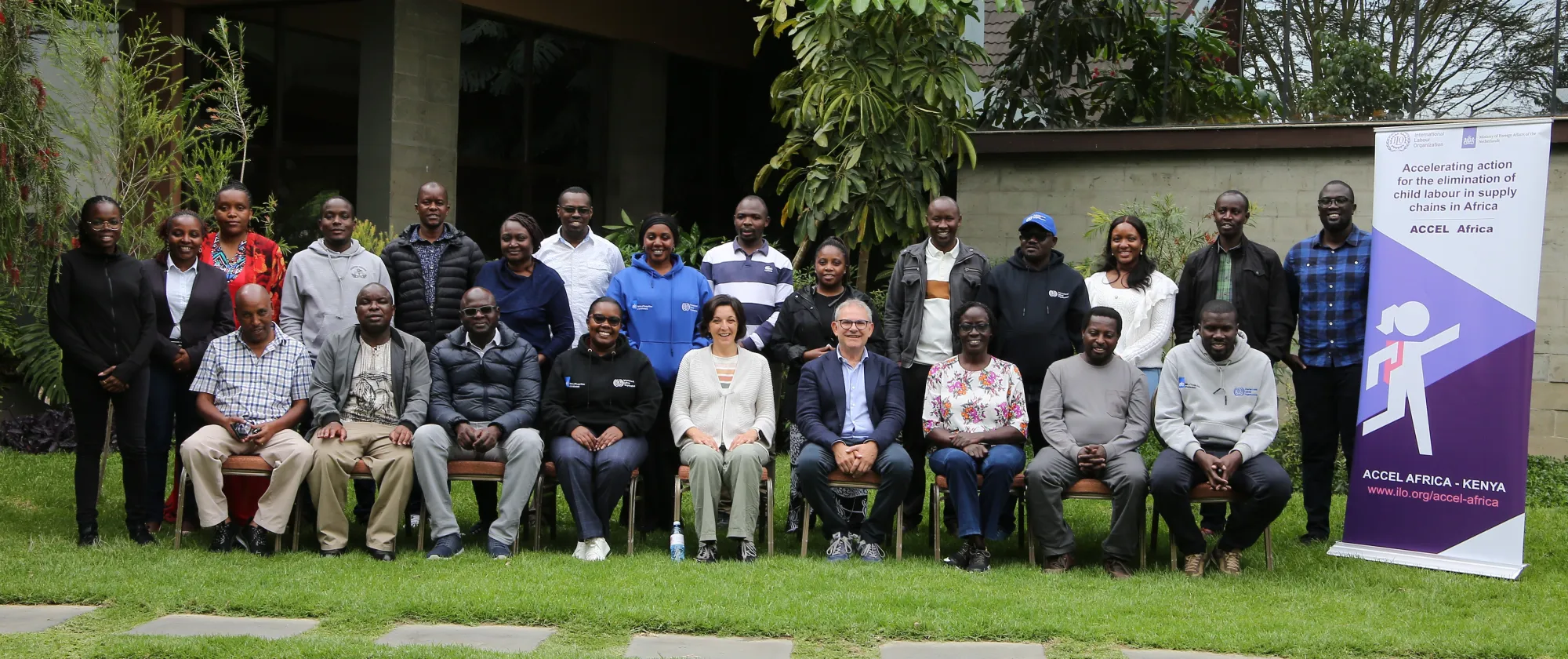
NAIVASHA (ILO News) – Kenya has taken a significant step in its fight against child labour. Between 18–26 August 2025, national experts and stakeholders gathered in Naivasha for a capacity-building workshop on child labour data analysis and report writing. Led with technical support from the International Labour Organization (ILO), the training equipped participants with skills to interpret findings from the 2023/24 Kenya Housing Survey (KHS) and turn statistics into actionable policy solutions.
The workshop benefited from the expertise of two specialists from the ILO’s Statistics Department in Geneva. Combining global knowledge with hands-on guidance, they worked closely with participants to analyse KHS data, ensuring both methodological rigor and practical application. This support is particularly significant given the scale of the challenge: child labour remains a pressing socio-economic issue in Kenya and globally. According to the ILO Child Labour Global Estimates (2024), 138 million children worldwide are engaged in child labour, more than half of them in sub-Saharan Africa. In Kenya, millions of children continue to face exploitation in agriculture, domestic service, and hazardous work, undermining their rights to education, health, and a dignified childhood.
The workshop focused on strengthening national expertise to move from data collection to data-driven action. Kenya has made progress in child labour research through national surveys, such as the Kenya Integrated Household Budget Survey (KIHBS), and sector-specific studies on child labour in agriculture. The newly available KHS data, capturing children’s economic activities, household chores, and hazardous work, provides an important opportunity to build on this progress. Policymakers can now access comprehensive data to better understand the socio-economic and demographic characteristics of working children, identify the sectors and occupations most affected by child labour, and analyse regional and gender disparities in its incidence.
Beyond teaching technical skills, the initiative supports Kenya’s wider labour reforms. Child labour data will be added to the Kenya Labour Market Information System (KLMIS), giving policymakers a clear way to track trends, plan actions, and measure progress. Participants also learned advanced statistical methods, helping them turn data into practical, evidence-based policies.
The momentum from the Naivasha workshop will continue, with a comprehensive analytical report expected before the end of 2025. The report will consolidate the new child labour data into a national evidence base, offering policymakers a clear picture of where action is most urgent and guiding targeted interventions.
By building national expertise, strengthening institutions, and leveraging global partnerships, Kenya is laying the groundwork to better protect its most vulnerable children. The true measure of success, however, will be whether the insights gained translate into real change; children in classrooms instead of farms, at play rather than in hazardous work; ensuring every child grows up free from exploitation
Relevant projects
Accelerating action for the elimination of child labour in supply chains in Africa (ACCEL Africa)