


Strengthening cooperatives to tackle child labour in Uganda’s tea and coffee supply chains
The ILO ACCEL Africa project, financed by the Ministry of Foreign Affairs of the Netherlands, supported cooperative members and trainers in Uganda to strengthen governance, business skills, and cooperative development, reinforcing the role of cooperatives in improving livelihoods and preventing child labour in tea and coffee supply chains.
25 November 2025
MBALE (ILO News) - From 24 November to 5 December 2025, the International Labour Organization (I LO), through the ACCEL Africa project, implemented a capacity-building initiative for cooperatives in Mbale, Kabarole, and Masaka. Using ILO’s Think COOP, Start COOP, and My COOP tools, the training strengthened cooperative governance, improved business skills, and enhanced the role of cooperatives in preventing child labour in tea and coffee supply chains.
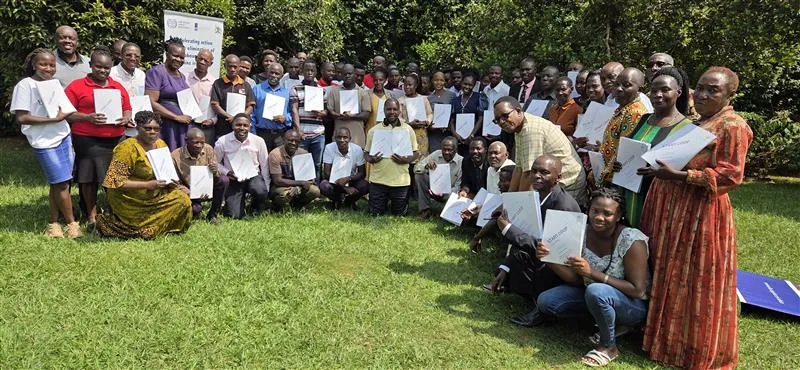
Cooperatives remain central to Uganda’s rural economy, providing farmers with better market access and opportunities for collective growth. Although the Government of Uganda offers strong support, such as low-interest loans, national cooperative policy, and the Cooperative Society Act, and access to financial programs like the Parish Development Model, many cooperatives still face challenges related to weak administration, limited business development knowledge, and low member engagement. As a result, some cooperative members rely heavily on their Boards of Governors or only participate in annual general meetings.
During this training cycle, 135 cooperative members, including management teams and Boards of Governors, participated in interactive sessions on cooperative principles, governance, product diversification, and strategies for increasing income. Participants also explored their responsibilities in combating child labour within their communities and supply chains.
To ensure long-term sustainability, the ILO COOP Master Trainer and ACCEL Africa technical team conducted an intensive five-day assessment for trainers who had previously taken part in the Training of Trainers program. Eleven trainers delivered COOP modules to 45 cooperative members using official ILO guides, received daily feedback to improve their facilitation skills, and strengthened their alignment with ILO cooperative development standards.
Key achievements included strengthened facilitation capacity among trainers, improved understanding of cooperative tools and governance among members, enhanced decision-making and operational skills, and greater awareness of opportunities for cooperative growth.
Cooperatives continue to offer a powerful pathway to improved livelihoods, market access, and value addition for farmers. The ILO remains committed to supporting their development through tailored training, strengthened local capacity, and collaborative efforts to eliminate child labour. Together with farmers, trainers, and partners, the ACCEL Africa project continues to build stronger, more resilient cooperatives that advance decent work and sustainable community development.
Relevant projects

Accelerating action for the elimination of child labour in supply chains in Africa (ACCEL Africa)