

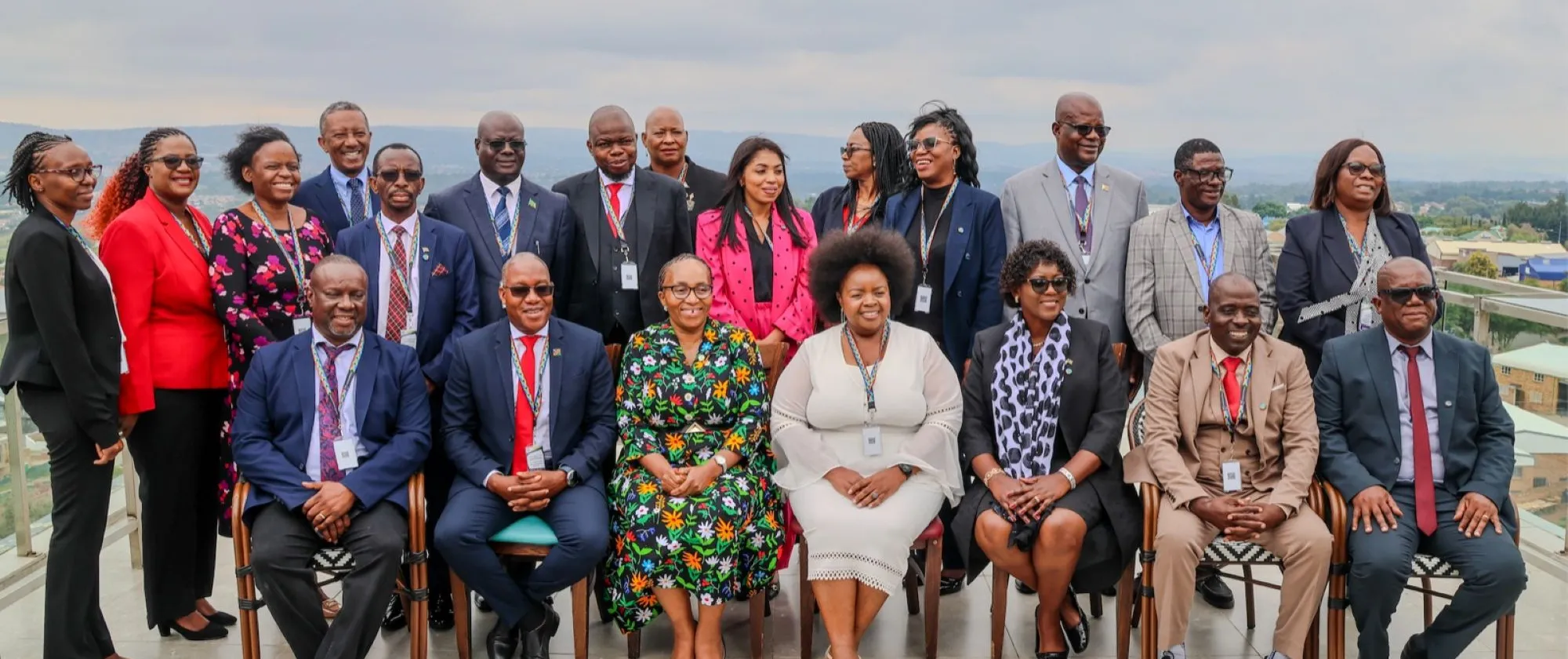
Southern African Development Community enhances regional labour market cooperation
27 February 2026
The Southern African Development Community (SADC) Senior Officials for the Employment and Labour Sector met in Johannesburg, South Africa, from 24 to 26 February 2026 to address a critical turning point for the regional workforce. Against a backdrop of pressing challenges—including regional unemployment rates reaching 36.9% and youth unemployment soaring to 62.5%—the meeting called for a decisive shift from policy ambition to practical, coordinated regional action. Officials emphasized that in a rapidly evolving global environment, the region must move beyond discussion toward delivering measurable job creation and strengthening social protection systems to support millions of underutilized workers.
Honourable Ms. Nomakhosazana Meth, South Africa’s Minister of Employment and Labour, delivered the keynote address, highlighting the risks posed by rising geopolitical fragmentation and global instability. She urged Member States to utilize regional collaboration as a “shock absorber” to protect labour standards and social justice.
The Minister underscored several persistent hurdles, such as high informality, weak migration governance, and the slow ratification of the SADC Protocol on Employment and Labour. To combat these, she called for policy coherence and sustainable financing, urging a move from competition to cohesion to advance inclusive development across the block.
The ILO Director, Mr. Alexio Musindo called for dialogue on the profound impact of technological transformation, specifically Artificial Intelligence (AI), which is already reshaping production systems and the organization of work within SADC. He noted that while AI offers the possibility to improve productivity, it also presents a social justice question regarding whether it will expand opportunities for women and youth or deepen existing inequalities. Concerns were raised that without deliberate action, AI could widen gender gaps, particularly since women are overrepresented in sectors vulnerable to automation and underrepresented in STEM fields. Furthermore, the expansion of digital labour platforms has created new income opportunities but left many workers without traditional protections or access to labour justice.
In addition to technological shifts, the meeting explored the vital link between trade policies and development pathways. Officials argued that trade agreements can no longer be divorced from labour standards, as expansion without safeguards leads to downward pressure on wages and the informalization of work. By mainstreaming International Labour Standards into trade architecture, SADC aims to ensure that regional industrialization reinforces a commitment to decent work rather than triggering a "race to the bottom". This requires intense institutional coordination between ministries of trade, labour, and finance to ensure that workers' rights and occupational safety are embedded in the region’s economic growth.
The meeting successfully reviewed a broad agenda, including the implementation of the Code of Conduct on Child Labour, the SADC Decent Work Programme, and progress on the Decent Work in Construction Project. Ms. Duduzile Simelane, representing the SADC Secretariat, noted progress under the Regional Indicative Strategic Development Plan (2020-2030) and the importance of addressing technological change through regional ownership.
The Decent Work in Construction presented the results of the project implementation and noted that building on the good practices and lessons learned, it developed a SADC Toolkit on Mainstreaming Decent Work and Labour Productivity in Key Economic Sectors.
The Toolkit provides a strategic, practical and evidence-based framework drawing on lessons learned and good practices emerging from the pilot interventions. This strategic framework focuses on five pillars: Incentivising labour laws compliance with through strategic compliance planning, Leveraging public and private procurement for better compliance outcomes, Strengthening capacity of small enterprises to comply with labour laws and to improve productivity, Strengthening capacity of workers’ organisations to represent and educate vulnerable workers (short-term and informal workers), and Extending Social Protection to vulnerable workers (short-term and informal workers).
The Toolkit directly addresses the structural root causes of decent work deficits and low labour productivity at sectoral level, where economic activity and employment generation primarily occur. It further provides guidance on institutionalising a systemic and evidence-based approach to promoting decent work and labour productivity
The session concluded with the clearing of key documents for consideration by the SADC Ministers of Employment and Labour and Social Partners at their next meeting, signaling a unified commitment to translating regional commitments into sustainable economic transformation.