

Somalia Holds Tripartite Executive Roundtable on International Labour Standards Reporting
A two-day Tripartite Executive Roundtable in Mogadishu to strengthen national capacity for the implementation and reporting of international labour standards (ILS), with a particular focus on labour migration governance.
23 July 2025
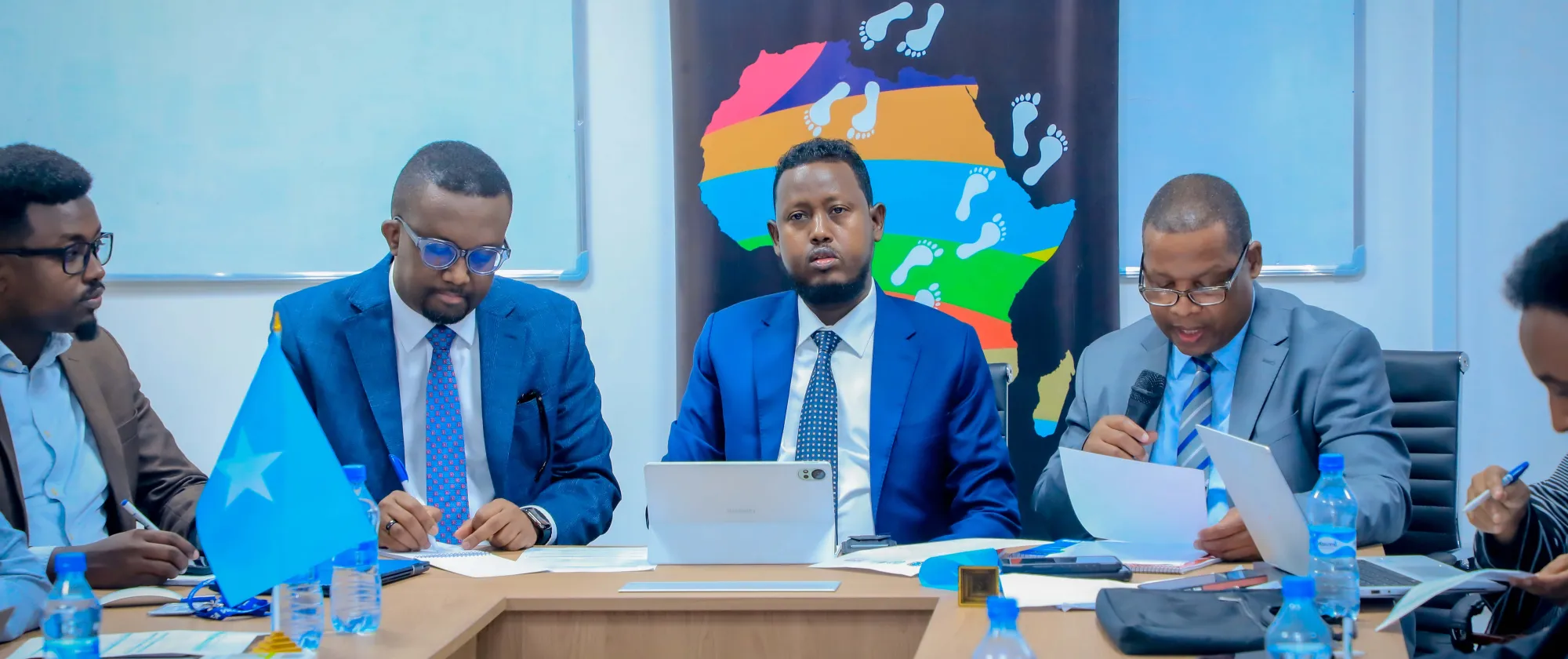
Somalia convened a two-day Tripartite Executive Roundtable on 22–23 July 2025 in Mogadishu to strengthen national capacity for the implementation and reporting of international labour standards (ILS), with a particular focus on labour migration governance. The meeting was organized by the Ministry of Labour and Social Affairs (MoLSA) in collaboration with the ILO through the Better Regional Migration Management (BRMM) Programme, bringing together 42 participants from federal and state institutions, employers, trade unions, private employment agencies, civil society, and development partners.
Somalia has made significant progress in aligning its labour governance framework with international standards, including the adoption of the 2024 Labour Code, validation of the National Labour Migration Policy, and ratification of key ILO conventions. However, the country faces persistent gaps in fulfilling its reporting obligations under Article 22 of the ILO Constitution, which limits access to technical assistance and participation in global labour policy processes. The roundtable was convened to address these challenges.
The programme featured presentations on the ILO framework for international labour standards, reporting requirements, supervisory mechanisms, and the relevance of labour migration conventions. Sessions examined the consequences of non-reporting and the importance of accurate, timely submissions. Participants discussed constraints hindering compliance, including limited technical capacity, insufficient data systems, weak inter-institutional coordination, and the lack of structured consultation with social partners.
Facilitators provided detailed guidance on preparing Article 22 reports, including responding to comments from the ILO Committee of Experts, distinguishing between detailed and simplified reporting formats, and aligning national information with ILO templates. Participants also explored how labour migration standards intersect with national frameworks, particularly in recruitment regulation, migrant worker protection, and bilateral cooperation.
A key component of the roundtable involved group work to draft initial inputs for several conventions. Four breakout groups focused on Conventions 97, 143, 182, 181, and 190, reviewing national legislation, current practices, gaps in implementation, and areas requiring clarification. This practical exercise helped participants gain hands-on experience in preparing structured reports and identifying the information needed from line ministries and social partners.
On the second day, participants presented their draft inputs and engaged in technical discussions to refine them. They reviewed reporting timelines, defined responsibilities, and emphasized the need for a coordinated approach across federal and state-level institutions. The session concluded with the development of a preliminary action plan outlining drafting periods, review processes, validation steps, and MoLSA’s endorsement procedures.
The roundtable also led to the establishment of a national Technical Committee on ILS Reporting, composed of representatives from MoLSA, the Federation of Somali Trade Unions (FESTU), and the Somali Chamber of Commerce and Industry (SCCI). The committee will coordinate reporting activities, ensure consistency across submissions, and follow up on supervisory body comments.
In closing, MoLSA reaffirmed its commitment to strengthening labour governance and improving compliance with international standards. The ILO pledged continued technical support, and the roundtable provided a structured foundation for improving reporting practices and advancing the implementation of labour migration-related conventions in Somalia.
Relevant projects

East and Horn of Africa
Better Regional Migration Management