

The Social Partnership Project
The Social Partnership Project holds soft launch to strengthen social dialogue and collective bargaining in Mongolia’s garment and hospitality sectors
The Social Partnership Project held a tripartite consultation meeting in Ulaanbaatar to launch its work on strengthening social dialogue and collective bargaining in Mongolia’s garment and hospitality sectors. The project aims to support stronger industrial relations, improve collective bargaining practices, and contribute to better workplace productivity, working conditions and sustainable enterprises.
25 June 2026
Ulaanbaatar (ILO News) – Workers and enterprises in Mongolia’s garment and hospitality sectors are expected to benefit from the Social Partnership Project, which aims to strengthen social dialogue, collective bargaining and industrial relations at national, sectoral and enterprise levels.
Officially titled “Improving Workplace Productivity and Working Conditions through Social Dialogue and Collective Bargaining in the Garment and Hospitality Sectors in Mongolia,” the project is implemented under the ILO–Japan Fund for Building Social Safety Nets in Asia and the Pacific. It will work with tripartite constituents to support more effective cooperation between government, employers’ and workers’ organizations.
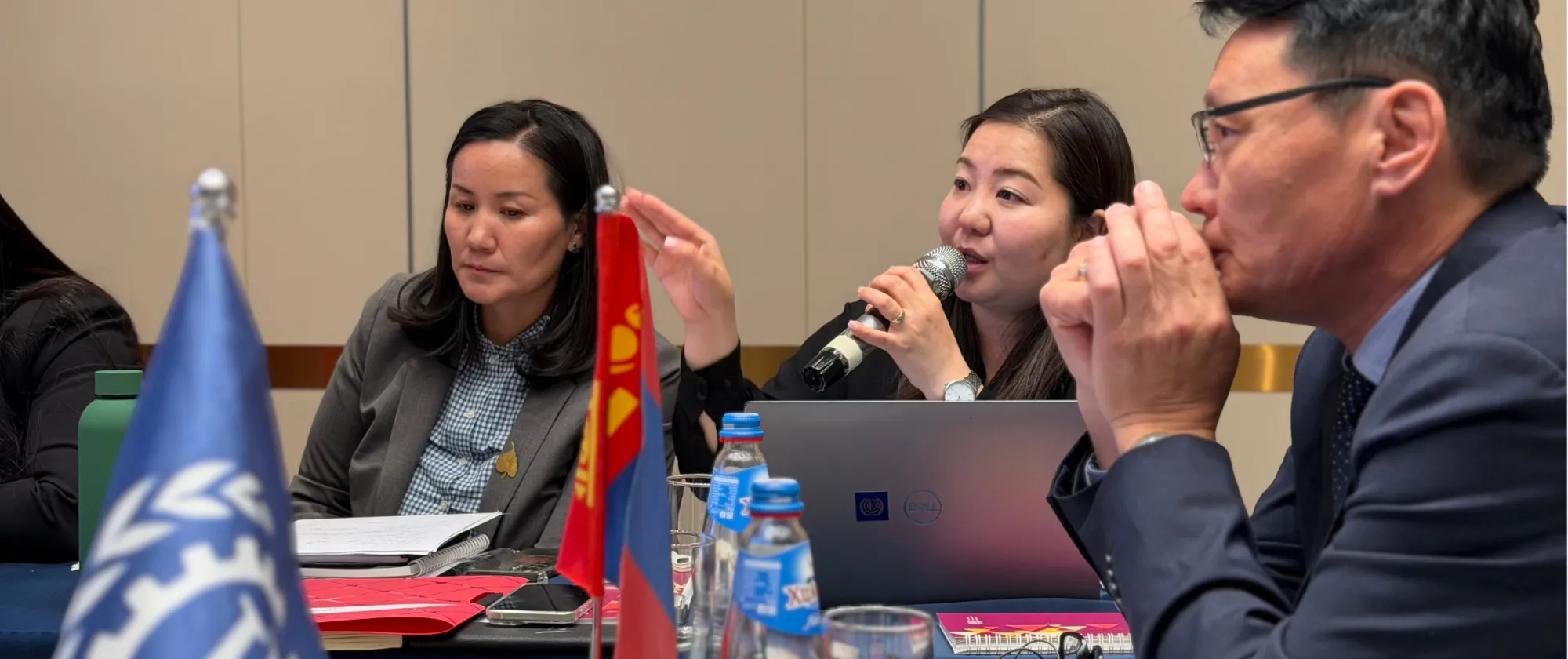
The Social Partnership Project was introduced during a tripartite consultation meeting held in Ulaanbaatar on 25 June 2026. The meeting brought together representatives of the Ministry of Family, Labour and Social Protection, the Confederation of Mongolian Trade Union, the Mongolian Employers’ Federation, the Mongolian National Chamber of Commerce and Industry, and the ILO Decent Work Technical Support Team.
The project responds to the need for stronger workplace cooperation and more effective collective bargaining practices in sectors that are important for employment, enterprise development and Mongolia’s wider economic diversification. By helping social partners work together more effectively, the project seeks to contribute to better workplace relations, improved productivity, stronger competitiveness and better working conditions.
A key focus of the project will be enhancing the capacity of employers’ and workers’ organizations, promoting effective collective bargaining practices, and identifying and piloting good practices that can be adapted to the Mongolian context. The project will also draw on ILO technical guidance to support the use of relevant global tools and methodologies.
The consultation also discussed support for the development of a registry and information system on collective agreements and labour dispute resolution. This work is expected to contribute to a stronger institutional framework for industrial relations and provide more accessible information for social partners and policymakers.
Social dialogue and collective bargaining help improve workplace relations and deliver balanced outcomes for both enterprises and workers when conducted based on mutual respect and trust. When effectively implemented, they can contribute directly to improved productivity, better working conditions, and more sustainable and competitive businesses,
Mr Chang-Hee Lee, Director of the ILO Country Office for China and Mongolia.
The Social Partnership Project forms part of a larger and comprehensive ILO programme to support social partners in Mongolia’s garment and hospitality sectors. Inputs from tripartite constituents during the consultation will guide the next steps of implementation and help ensure that project activities respond to the practical needs of enterprises, workers and Mongolia’s labour market.
Through the Social Partnership Project, the ILO will continue working with its tripartite constituents to promote decent work, strengthen industrial relations and support more productive, fair and sustainable workplaces in Mongolia.
Related content

Industrial relations
Improving workplace productivity and working conditions through social dialogue and collective bargaining in garment and hospitality...

Country portal
Mongolia