

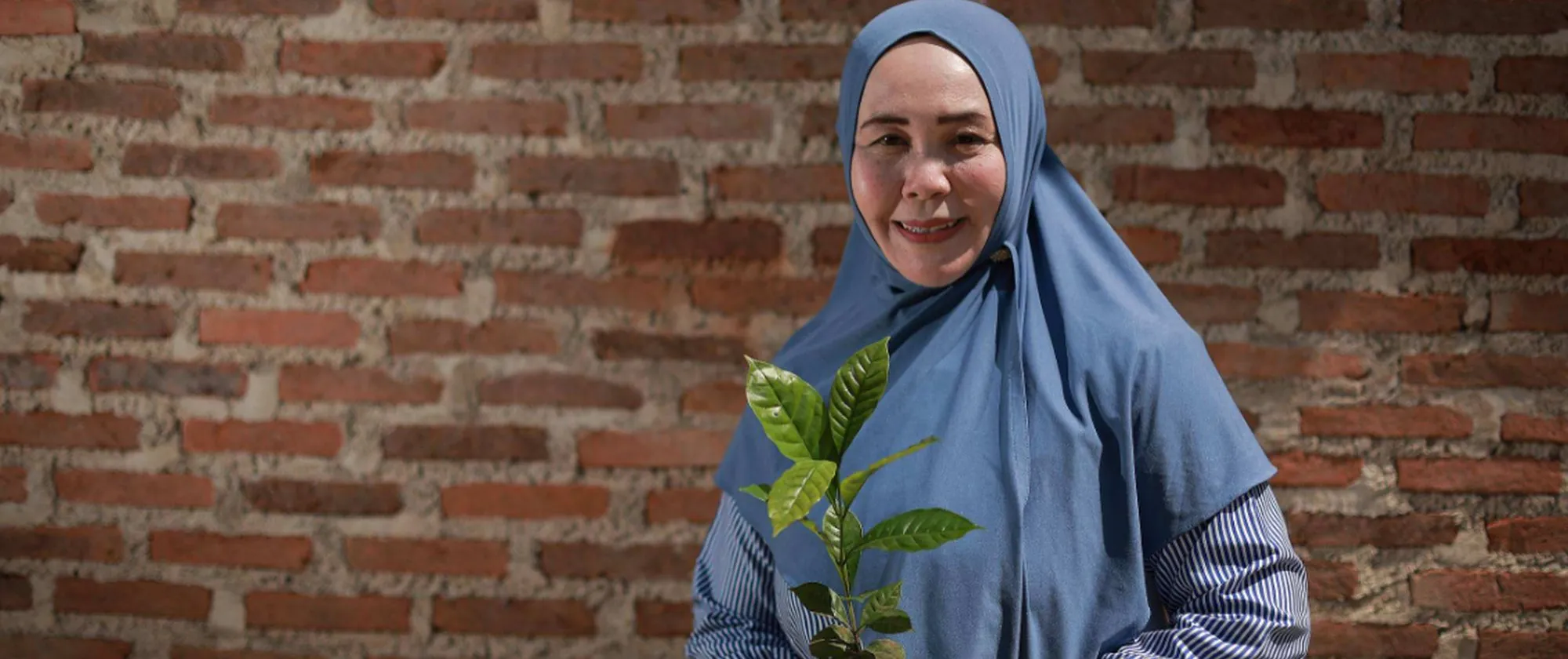
Our impact, their voices
Small changes help a woman farmer work safer in Lampung, Indonesia
With support from the ILO and Nestlé Indonesia, a women farmers’ group leader in Lampung, Indonesia is turning practical lessons into simple improvements that create a safer and better working environment for herself and fellow farmers.
6 October 2026
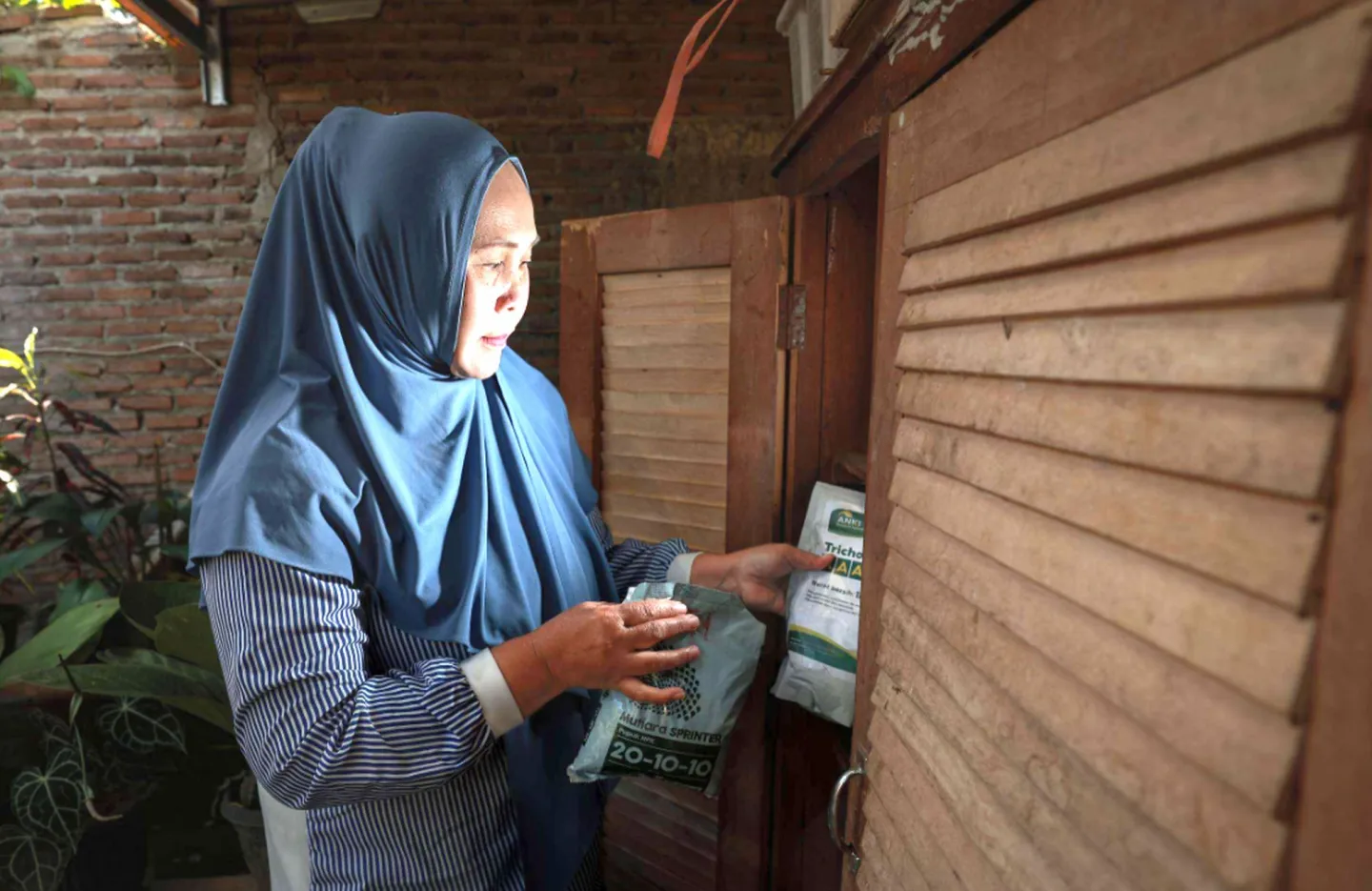
TANGGAMUS REGENCY, Lampung, Indonesia (ILO News) - Erni Widianingsih, 49, opens a cabinet in the storage area at the back of her home in Talang Jawa, Tanggamus Regency, Lampung, and easily reaches for a container of pesticides. Nearby, sharp farming tools are neatly arranged on designated shelves, safely separated from other household items.
“I used to spend a lot of time looking for things. Now, everything is easier to find and better organized, which makes my work more comfortable. Tools are easy to find, chemicals are stored safely and I no longer worry about putting others around me at risk,” said Erni, who was born and raised in a coffee-farming family.
Small changes for safer work
This simple change in how she organizes her tools and chemicals began after Kembang Kopi Women Farmers Group, which Erni leads, took part in an occupational safety and health (OSH) training programme supported by the International Labour Organization (ILO) and Nestlé Indonesia through the Vision Zero Fund (VZF) project. The training was held twice at her home, in December last year and January this year, involving the group’s 20 active members.
The training was organized through an OSH Farmers’ Field School and delivered by one of 10 local farmer-trainers who had completed the ILO’s Work Improvement in Neighbourhood Development (WIND) programme. WIND is a practical, participatory and action-oriented training approach designed to help farmers and rural workers improve safety, health and working conditions through simple, low-cost solutions using locally available resources.
Following the training, Erni and the other members used an OSH checklist to assess conditions in their homes and on their farms. The checklist covers key areas such as safe materials handling, housekeeping, hazard and risk control, health and welfare, and work organization. They were also asked to develop three action plans for improvements they could make within two weeks, three months and six months.
“At first, it felt complicated and difficult. Together with the other members, we went through everything one by one to see what could be applied based on our needs,” she recalled.
Erni decided to start with something practical: improving how materials, tools and chemicals were stored and organized around her home. Once she began to see the benefits, she looked for other changes she could make.
I used to spend a lot of time looking for things. Now, everything is easier to find and better organized, which makes my work more comfortable. Tools are easy to find, chemicals are stored safely and I no longer worry about putting others around me at risk.
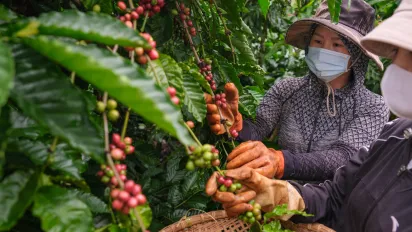
She brought the same approach to her 1.5-hectare coffee farm, where she built a shelter and a water station and provided a ladder for pruning and harvesting. The improvements benefit not only Erni but also the three workers who regularly help her tend the farm. During the harvest season, she can hire up to eight additional workers.
As the leader of Kembang Kopi, Erni also encourages the other members to follow through on the improvements they identified using the checklist. “I check on the progress of the members during our monthly meetings,” she said. “Most of them have made OSH improvements. Only a few have not been able to do so yet because they are busy taking care of their young children.”
Henky Fernando, the local farmer-trainer who facilitated the training, was encouraged by the progress made by Erni and the other members. As part of the agreed work plans, he continued to provide direct coaching and mentoring to help the farmers put their plans into practice.
“I am very happy to see the improvements they have made through our coaching and mentoring,” Henky said. “I really appreciate their commitment to making these changes. We will also identify champion farmers who can become examples and encourage other farmers to make similar improvements.”
Growing plans for the future
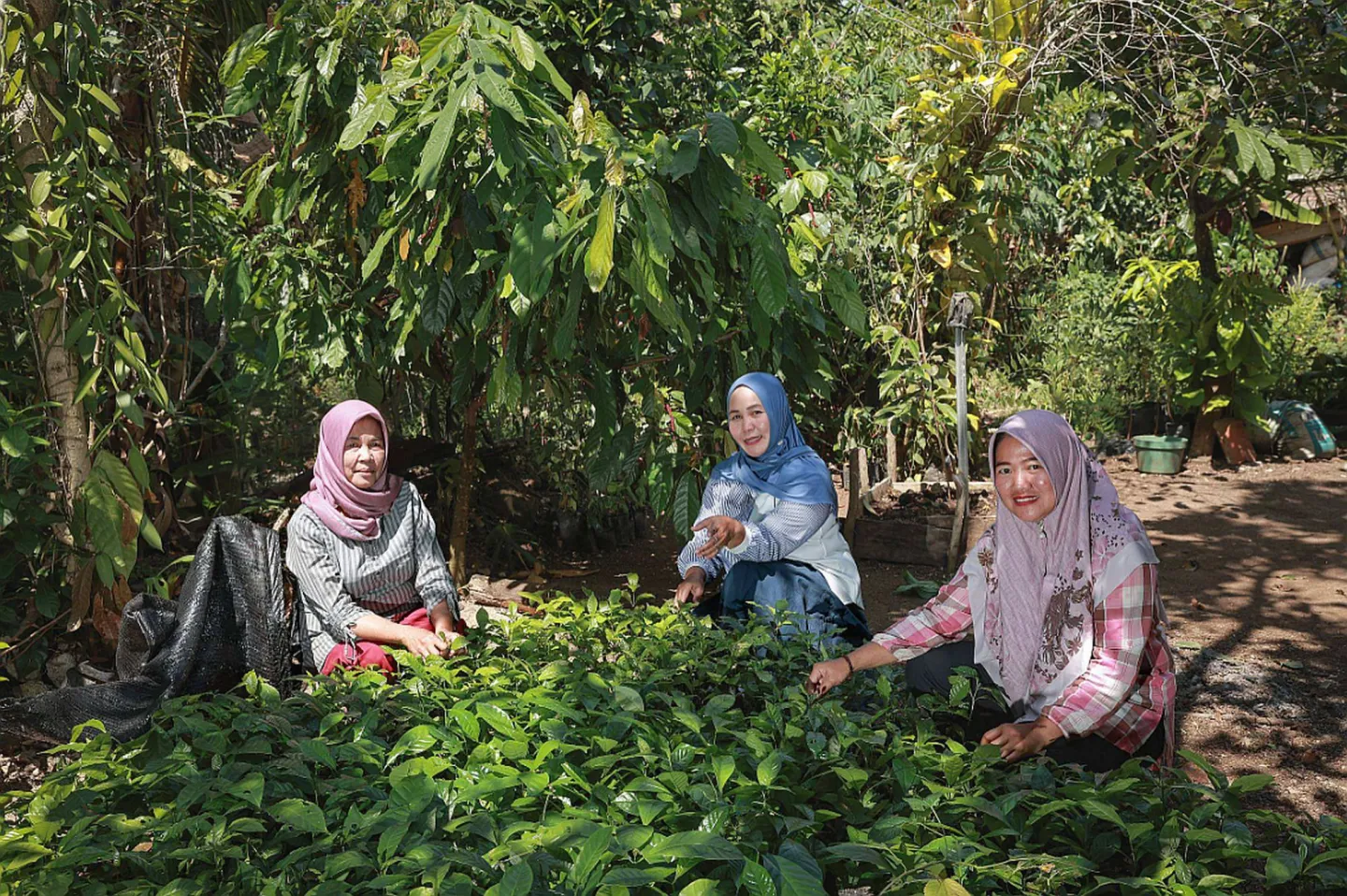
Erni is already thinking about how she can apply these lessons to her next goal: setting up her own coffee milling facility next year. “I will apply what I learned from the ILO training, such as providing enough space around the machine, building a roof over it to create a safe and comfortable working area and, of course, making sure there is an emergency stop button to shut down the machine,” she said.
Beyond their coffee farms, Erni and the other Kembang Kopi members are also working together to make the group more self-sufficient. They have started growing vegetables, with some of the produce sold and the rest used by members and their families.
“We hope to become more productive and earn additional income for ourselves,” Erni said.
For Erni and the women of Kembang Kopi, small changes have made a difference in their daily lives. Through each improvement, she and the women of Kembang Kopi are showing how practical changes can help make their work safer and support better livelihoods for their families.
I am very happy to see the improvements they have made through our coaching and mentoring. I really appreciate their commitment to making these changes.
Henky Fernando, the local farmer-trainer who facilitated the training
Related content
Vision Zero Fund
Improving OSH and social conditions for women and men in coffee farmer communities in Indonesia
Relevant projects
Vision Zero Fund
Improving OSH and social conditions for women and men in coffee farmer communities in Indonesia

Occupational Safety and Health
Improving OSH and social conditions for women and men in coffee farmer communities in Viet Nam – a Vision Zero Fund project
Occupational Safety and Health
Improving Safety and Health in the Coffee Supply Chain in Viet Nam - a Vision Zero Fund Project