

Green jobs
Small businesses embrace greener practices to grow and create new opportunities in Indonesia
From turning aloe vera into a low-waste business to giving traditional herbal drinks a modern appeal, small businesses in Indonesia are discovering how greener practices can help them use resources more responsibly, strengthen their businesses and open up new opportunities.
18 September 2026
YOGYAKARTA, Indonesia (ILO News) - It began with a simple idea: making better use of the land around his home. Together with the Kencana Asri Kadipaten farming community in Yogyakarta, Rahardyan Chandra began cultivating aloe vera that had long been neglected. With the support of his wife, he eventually turned the plant into a ready-to-drink beverage under the brand Gawe Sae.
What started as an effort to develop a business gradually became an opportunity to make better use of available resources while sharing the benefits with the surrounding community.
“At first, we only used the flesh. But as the business grew, we realized that almost everything could be processed and used,” Chandra said. “Now, our waste is practically zero. Even the used bottles can still be recycled through waste banks.”
The changes in Chandra’s business go beyond how he uses aloe vera. He has also improved the way he manages his business and finances. “We’ve become much more organized administratively. In the past, we only used simple delivery notes. Now we understand proper financial records,” he said. “We print standardized invoices, build networks and, thankfully, our market has expanded beyond the city.”
Greener practices, new opportunities
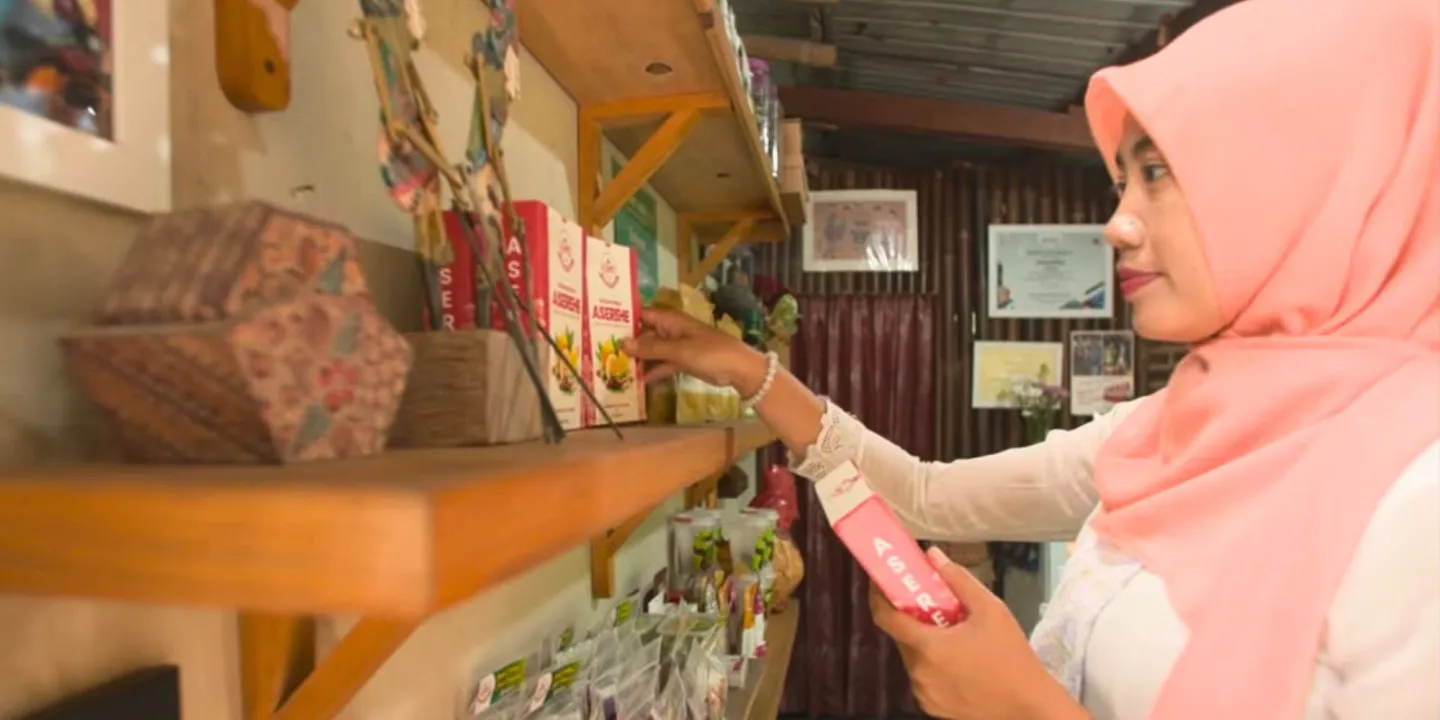
Dwi Kuntari has followed a similar path through her business, Jamu Deka. Driven by her love for Indonesia’s traditional herbal drink, jamu, Dwi wanted to introduce it to younger generations in a way that better suited modern lifestyles. Along the way, she began adopting greener business practices, changing not only her packaging but also the way she managed and developed the business.
Within just a few months, from September to December 2025, Dwi saw improvements in her business, including increased revenue. Jamu Deka has since started participating in export-related activities through business associations and government programmes. She also gained opportunities to take her business to Malaysia and Thailand in 2026.
A lot has changed. Our revenue increased from 2 per cent to 17 per cent. We also expanded our team, adding administrative staff, a social media team and production staff and the packaging has become more exclusive and carries higher value. Our financial records are also much more organized.
Dwi Kuntari
Her business has also created a new garden division, opening up additional economic activities ranging from compost production and seedling cultivation to educational tourism at its herbal garden.
Helping small businesses grow greener

Chandra and Dwi are among the micro, small and medium-sized enterprises (MSMEs) that have participated in green tourism training organized by the ILO in collaboration with Indonesia’s Ministry of Tourism. Through the Partnership for Action on Green Economy (PAGE), the ILO promotes green, low-carbon and circular economy approaches that can help businesses grow while using resources more responsibly and creating decent work.
By December 2025, the programme had produced 19 certified trainers and developed a comprehensive training module covering entrepreneurship, financial literacy and green tourism. Four pilot projects were initially implemented in Central Java, the Special Region of Yogyakarta, North Sumatra and West Nusa Tenggara, directly benefiting 172 tourism MSMEs. The programme was subsequently replicated in 12 provinces, reaching more than 950 MSMEs.
The financial recording we teach is very simple, but it’s exactly what banks look for. MSMEs often don’t realize that proper financial records are a key requirement when applying for business financing to grow their enterprises.
Hanif Andi Al Ansori, a green tourism trainer and mentor
An important part of the approach is helping small businesses understand that becoming greener also goes hand in hand with strengthening basic business management.
Hanif Andi Al Ansori, a green tourism trainer and mentor, highlighted financial management as one example. “The financial recording we teach is very simple, but it’s exactly what banks look for,” he said. “MSMEs often don’t realize that proper financial records are a key requirement when applying for business financing to grow their enterprises.”
Taking green practices into the community
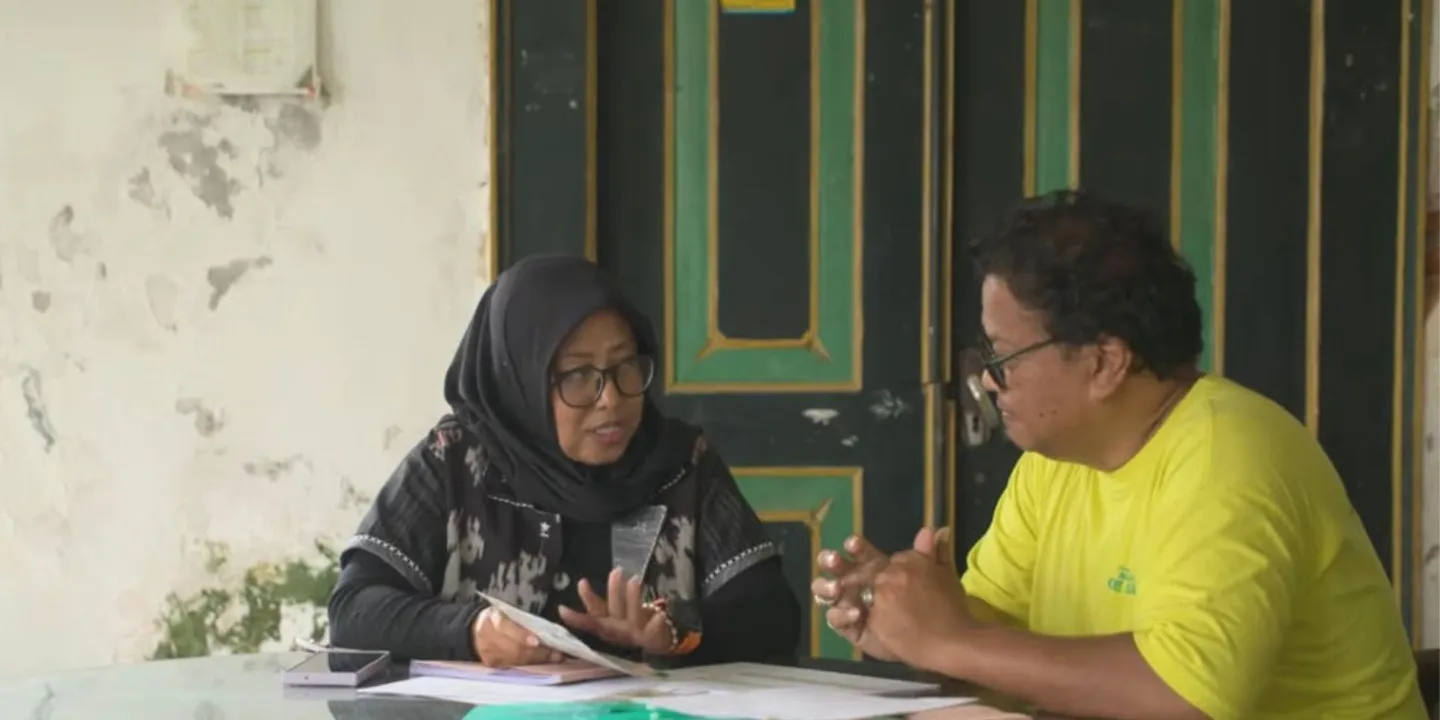
The changes are also reaching the community level. In Jagalan Tourism Village, located in the historic Kotagede area of Yogyakarta, green tourism practices are being introduced into the way visitors are welcomed and served.
Ismail, Manager of Jagalan Tourism Village, said one simple change involved moving away from bottled drinks. “When guests visit, we used to serve bottled drinks. Now we’ve switched to serving local beverages from Kotagede Jagalan, like guava juice and wedang secang, and we serve them in glasses instead,” he said.
Going forward, I hope more people will make use of unused land around their homes and hopefully become productive as well.
Rahardyan Chandra
The village also encourages visitors to avoid single-use plastic bottles by providing tumblers or asking them to bring their own. Such changes may be simple, but for small businesses and communities, they demonstrate how environmental considerations can become part of everyday business practices while creating opportunities for local products and enterprises.
For Chandra, the next step is to encourage more people to see the potential of resources they already have around them. “Going forward, I hope more people will make use of unused land around their homes and hopefully become productive as well,” he said.
Dwi, meanwhile, sees collaboration as central to taking her business further. “Our strategy is collaboration to accelerate business growth,” she said. “Hopefully next year the market will expand further, and we may even be able to export.”
For both entrepreneurs, going green has become more than reducing waste or changing packaging. It has also meant finding new value in existing resources, improving the way they manage their businesses and opening doors to new markets.
Their experiences show that for small businesses, greener practices can begin with practical changes by using what is already available, managing resources more carefully and gradually building a stronger business for the future.
Related content

UNEP, ILO, UNDP, UNIDO, UNITAR
Partnership for Action on Green Economy (PAGE) in Asia
A woman entrepreneur drives green growth and job creation in Indonesia
Relevant projects
UNEP, ILO, UNDP, UNIDO, UNITAR
Partnership for Action on Green Economy (PAGE) in Asia