

Skills partnerships for Africa’s labour migration and economic growth
African origin countries to leverage demographic dividends and skilled labour shortages in other nations, alongside the perspective of employers on skills partnerships in labour migration.
28 August 2024
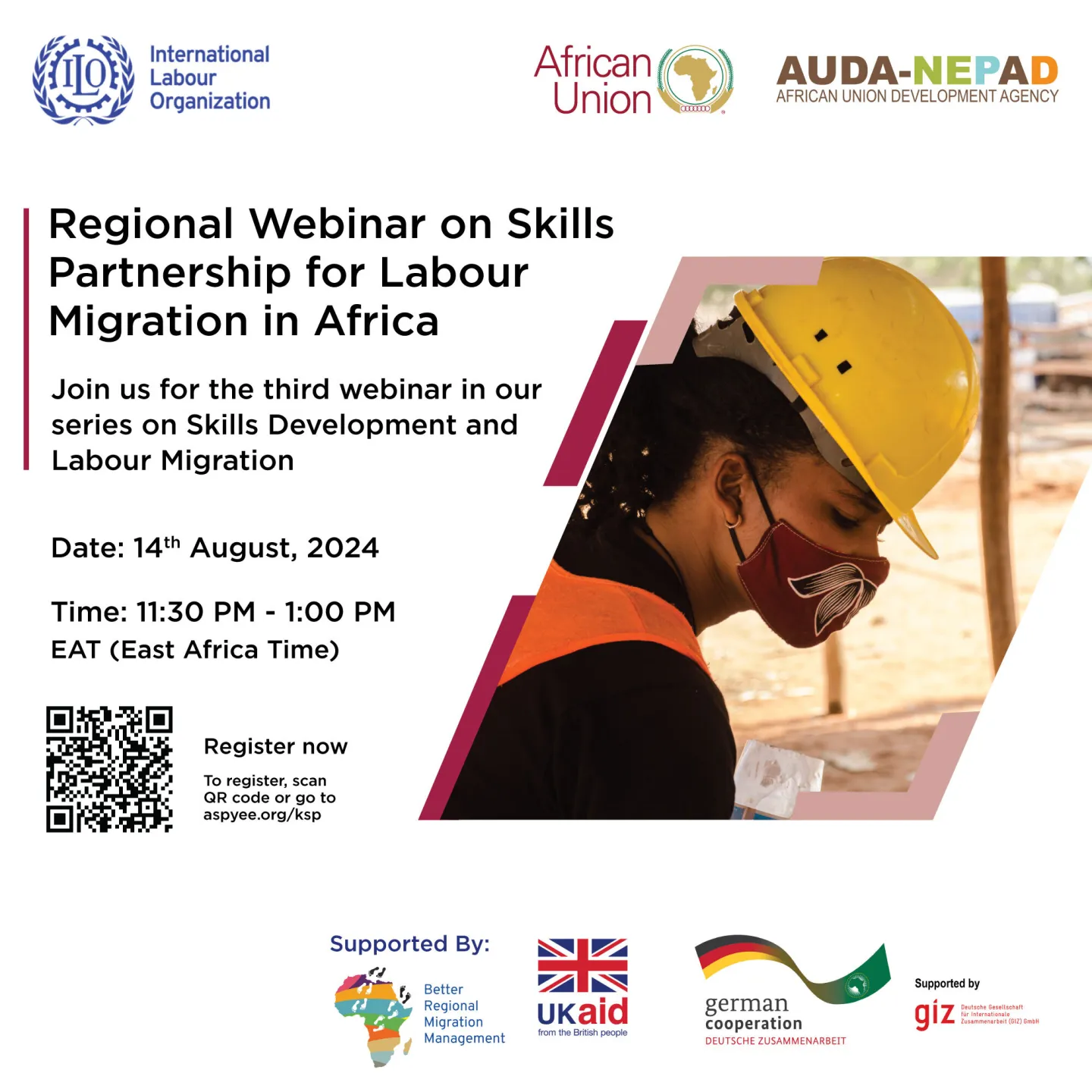
Addis Ababa, Ethiopia (ILO News) - The third and final webinar on skills was conducted on 14th August 2024, focused on strategies for African origin countries to leverage demographic dividends and skilled labour shortages in other nations, alongside the perspective of employers on skills partnerships in labour migration. It also explored evolving labour migration policy dynamics in countries like Germany as they attract talent from Africa. Key speakers included Mr. Bjorn Gruber from GIZ, Ms. Stephanie Winet from the International Employers Organization (IOE), and Dr. Saurabh Sinha from UNECA.
Mr. Gruber discussed Germany’s approach to skills development partnerships and labour migration, emphasizing the benefits of Africa’s youthful demographics versus the ageing workforce in the West. He outlined Germany’s liberal yet structured policy for skilled migration, which includes entry requirements like recognized qualifications, work experience, and a job offer. He highlighted Germany's institutional mechanisms to facilitate skilled migration, such as the Central Office for Foreign Education and a new ministerial role focused on bilateral migration agreements. Three pathways for migration to Germany were also outlined: qualifications with adaptation training, education or traineeship opportunities, and a demand-driven education system aligned with Germany’s labour market needs.
Ms. Winet shared the employers’ perspective, noting that Africa is both a source and a destination for talent. She described IOE’s role in engaging global businesses and governments to shape migration policies that facilitate skills mobility. She stressed the challenges in finding qualified talent, with 75% of global employers struggling to fill roles, including in Africa, due to a mismatch in skills. She highlighted the need for upskilling and skills mobility within Africa, as well as the results from IOE and OECD webinars on addressing skills gaps and employer challenges, including the importance of trust in training quality and productivity enhancements through skills partnerships.
Dr. Sinha provided insights on Africa’s demographic trends, with a fast-growing youth population, stressing the critical 20-year window to capitalize on the demographic dividend through investments in health, education, and economic policy. He emphasized the misallocation of skilled human resources as many Africans with tertiary education either remain unemployed, work outside their expertise, or emigrate. This trend, especially of migration to high-income countries, effectively subsidizes these nations at the expense of Africa. Dr. Sinha advocated for regular migration pathways and the integration of skills-based migration into national employment policies to maximize development benefits and manage labour mobility effectively.
Key takeaways from the webinar included the importance of private sector involvement in skills partnerships, shared investment in skills training, recognizing Africa as both a source and destination for talent, embedding skills-based mobility in Africa's economic integration, and improving the quality of training for Africa’s workforce. The event highlighted the growing relevance of skills recognition and inclusivity, with IOE providing opportunities for persons with disabilities. Furthermore, the Africa Skills Portal for Youth Employment and Entrepreneurship (ASPYEE) now includes a section on skills and labour migration, adding a key theme to Africa’s skills initiative and supporting migration management. The webinars contributed to an increase in ASPYEE platform subscriptions, reaching over 330 new subscribers.
Relevant projects

East and Horn of Africa
Better Regional Migration Management