


Our impact, their voices
Safer work takes root on Indonesia’s coffee farms in Lampung, Indonesia
Simple solutions, gradual changes and local support are helping coffee farmers in Lampung, Indonesia, work more safely through a programme supported by the ILO and Nestlé Indonesia.
9 October 2026
TANGGAMUS REGENCY, Lampung, Indonesia (ILO News) - Across the coffee-growing communities of Tanggamus, Lampung, small changes are beginning to shape safer ways of working. Farmers are learning to store sharp tools and chemicals more safely, use protective equipment and make practical improvements to their farms.
These changes were introduced through an occupational safety and health (OSH) training programme supported by the International Labour Organization (ILO) and Nestlé Indonesia through the Vision Zero Fund (VZF) project. To date, the programme has reached 161 coffee farmers in the regency.
The training was organized through an OSH Farmers’ Field School over a five-month period, from late December 2025 to mid-May 2026. It was delivered by 10 local farmer-trainers who had completed the ILO’s Work Improvement in Neighbourhood Development (WIND) programme in February 2025. WIND is a practical, participatory and action-oriented training approach designed to help farmers and rural workers improve their safety, health and working conditions through simple, low-cost solutions using locally available resources.
Through our collaboration with ICS farmer-trainers, who are trusted members of their communities, we can translate technical concepts into practical messages that farmers can easily understand and adopt.
Varotama Putra, one of the agronomists who supervised the ICS team in delivering the training and monitoring the adoption of safer practices at the farm level
The trainers are also members of Nestlé’s Internal Control System (ICS) Farmer Trainers team under a Joint Business Group (KUB). They were selected and assigned to deliver the training to coffee farmers in their local communities. Varotama Putra, one of the agronomists who supervised the ICS team in delivering the training and monitoring the adoption of safer practices at the farm level, emphasized that introducing OSH concepts to coffee-growing communities can be challenging because many occupational risks are often seen as an unavoidable part of everyday work.
“Through our collaboration with ICS farmer-trainers, who are trusted members of their communities, we can translate technical concepts into practical messages that farmers can easily understand and adopt. Combined with regular reminders from the ICS farmer-trainers, this helps build farmers’ awareness of workplace hazards and encourages them to adopt safer practices in coffee farming,” said Varotama.
As part of the programme, coffee farmers use an OSH checklist to assess conditions in their homes and on their farms. The checklist covers key areas such as safe materials handling, housekeeping, hazard and risk control, health and welfare, and work organization. Participants are also asked to develop action plans for improvements they can make within two weeks, three months and six months.

Supporting farmers to make changes step by step
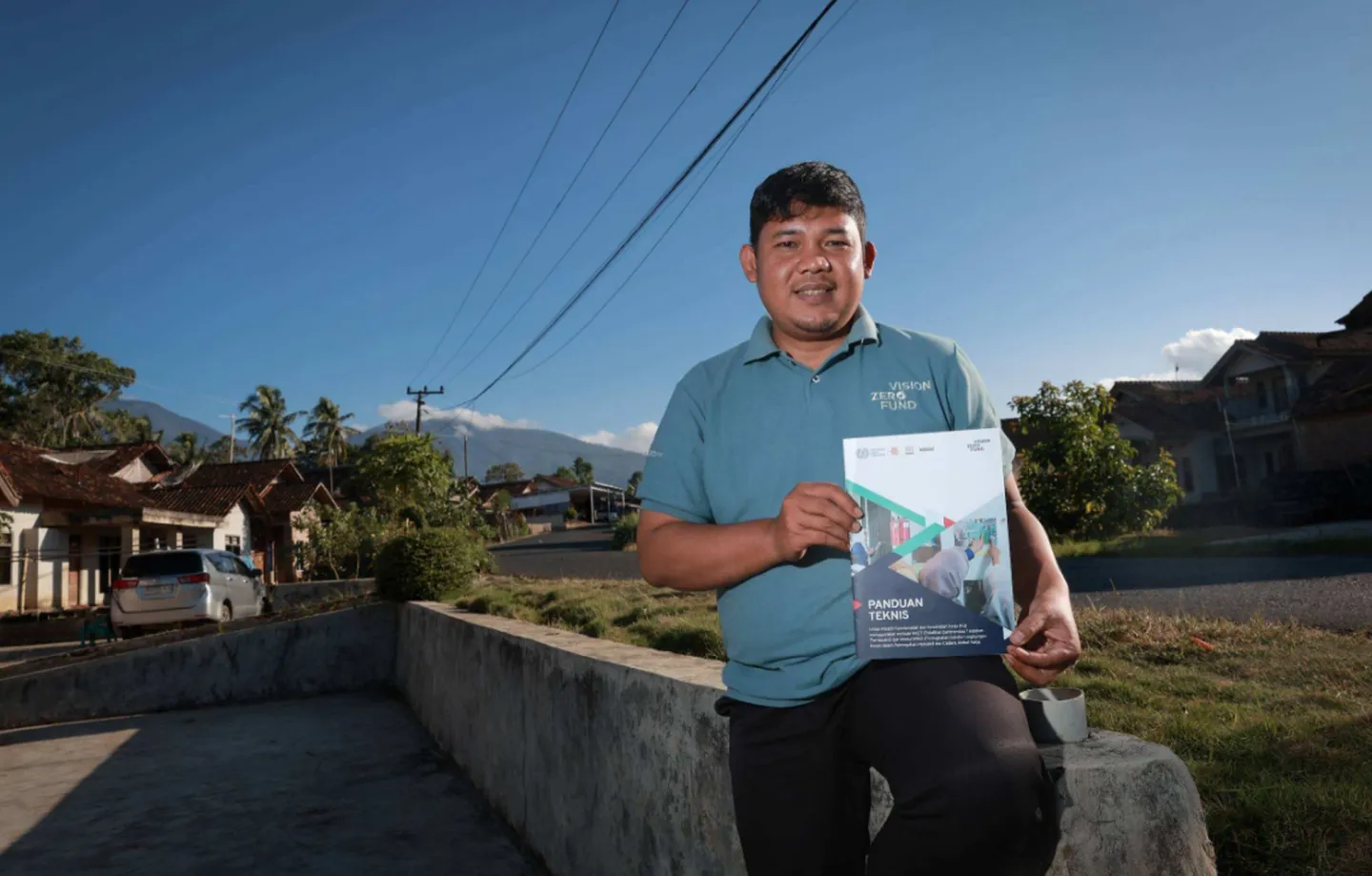
One of the local farmer-trainers is Henky Fernando, who facilitated OSH training for three farmers’ groups, reaching around 50 farmers. His role did not end when the training sessions were over. As part of the agreed action plans, Henky continued visiting the farmers and providing direct coaching and mentoring as they put what they had learned into practice. However, getting farmers interested in OSH has not always been easy.
Henky found that some farmers did not initially consider the way they stored sharp tools or chemicals such as pesticides to be a safety concern. Tools and chemicals could be stored together without proper labels, while personal protective equipment such as boots, hats and gloves was not always considered necessary. Some farmers preferred to wear sandals with no gloves while working on their farms.
What is important is that farmers can identify risks in their own working environment and find practical solutions that respond to their needs.
Kristina Kurths, Project Manager of the ILO Vision Zero Fund Indonesia
Rather than expecting everything to change at once, Henky uses a personal approach, encouraging farmers to make practical improvements step by step. Through regular visits, he follows up on their action plans and helps them find solutions that fit their needs and resources.
“Direct coaching and mentoring are key to helping farmers make improvements and experience the benefits themselves,” he said. “It is like flying a kite. We cannot push farmers to change immediately. The changes have to happen gradually.”
“What is important is that farmers can identify risks in their own working environment and find practical solutions that respond to their needs. These small, affordable improvements can make a real difference in making daily work safer and healthier,” said Kristina Kurths, Project Manager of the ILO Vision Zero Fund Indonesia.
One of the groups trained and coached by Henky is the Kembang Kopi Women Farmers Group in Talang Jawa Village, Tanggamus Regency. Led by coffee farmer Erni Widianingsih, the group has 18 members.
Henky has been encouraged by the changes he has seen among the women. Following two training sessions and subsequent mentoring, most of the members have made OSH improvements in their homes and on their farms. A few have not yet been able to complete their plans due to household and care responsibilities.
“I am very happy to see the improvements they have made,” Henky said. “Through direct coaching and mentoring, we can see what works, what still needs to be improved and how we can support them. I really appreciate their commitment to making these changes.”
Small improvements that make a difference
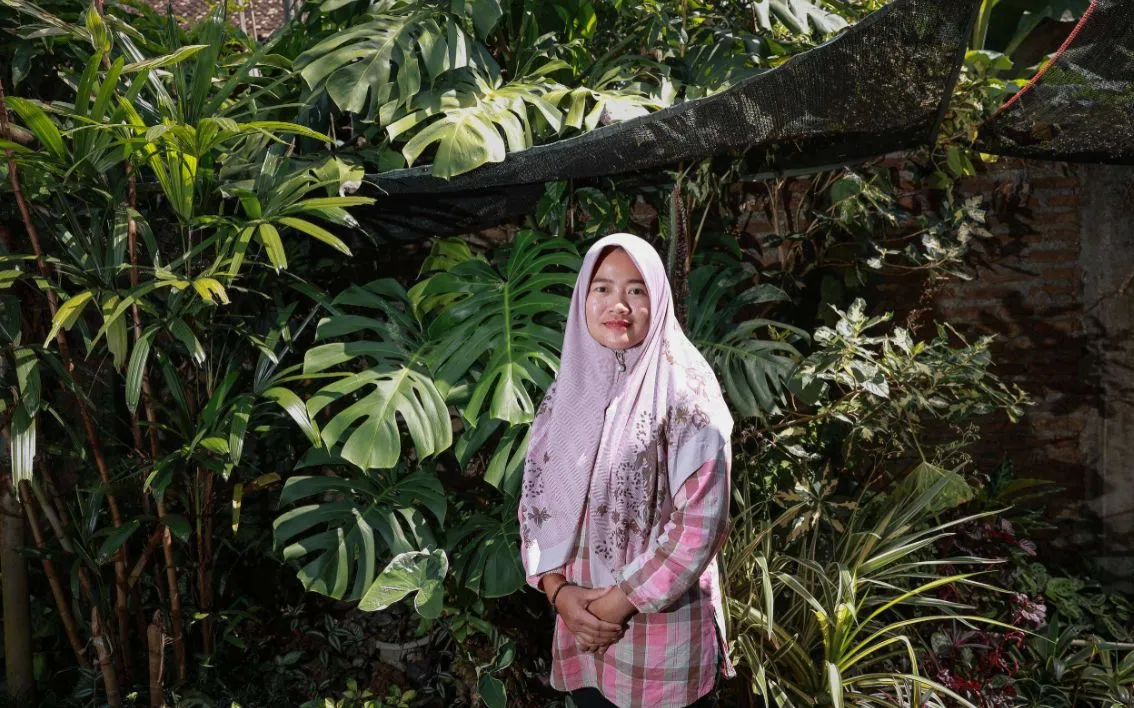
Among the Kembang Kopi members putting these lessons into practice is Iis Sartika, 35, who has made several changes with the support of her husband. After learning about the importance of safely storing sharp tools, the couple made a covered wooden box to keep machetes and other sharp farming tools out of reach, making their home safer for their two children as well.
They also looked at a simple tool they regularly use when drying coffee beans. Previously, its short handle meant that they had to repeatedly bend over while spreading and turning the beans. Her husband lengthened the handle to better match their heights, allowing them to work in a more comfortable position.
Before, when I used a shorter tool, my body would always feel sore after drying the coffee. Now that the tool is adjusted to my height, I don’t feel as tired or sore after working.
Iis Sartika, a female coffee farmer
The couple have made other simple changes on their 0.5-hectare coffee farm, which they tend themselves. They created a handwashing station using a covered bucket with a small opening to allow water to flow. They also improved their farm shelter, replacing a temporary structure covered with plastic with a more suitable place where they can rest comfortably during the working day.
For Iis, the changes did not seem so simple at first. “When I joined the training, I thought there were so many things to do and improve. I wondered whether it would be possible to implement them. I also wondered what OSH was because I had never heard about it before,” she recalled.
By going through the checklist gradually and choosing improvements that suited their needs, Iis and her husband found that making their farm safer did not always require complicated or costly changes.
Related content
Vision Zero Fund
Improving OSH and social conditions for women and men in coffee farmer communities in Indonesia
Relevant projects
Vision Zero Fund
Improving OSH and social conditions for women and men in coffee farmer communities in Indonesia

Occupational Safety and Health
Improving OSH and social conditions for women and men in coffee farmer communities in Viet Nam – a Vision Zero Fund project
Occupational Safety and Health
Improving Safety and Health in the Coffee Supply Chain in Viet Nam - a Vision Zero Fund Project