

Social Protection
Rwanda advances dialogue on extending social protection to informal workers
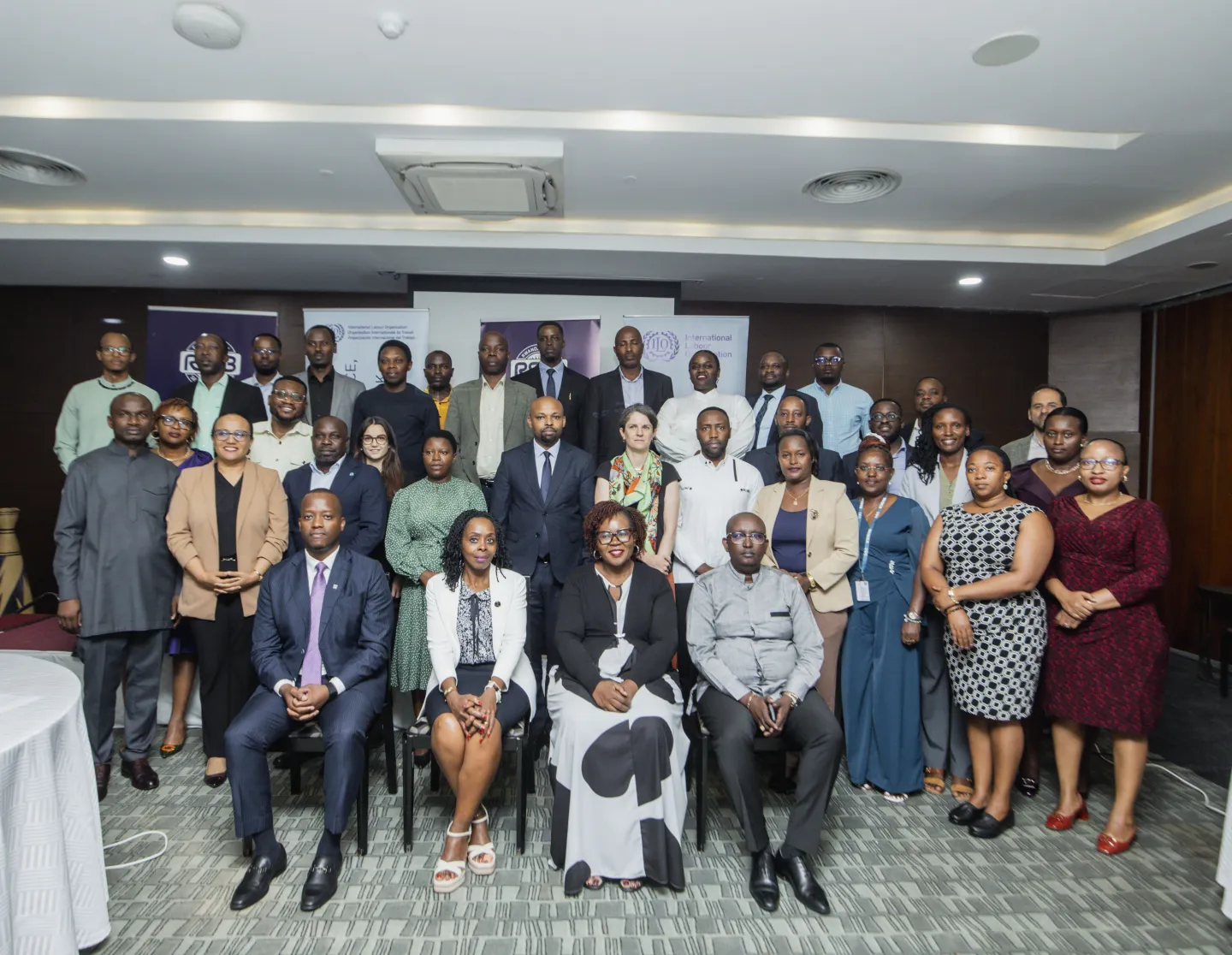
Under the theme “Building Strong Foundations, Social Protection that Works”, Government representatives, workers’ and employers’ organizations, United Nations Agencies and development partners gathered in Kigali for a high-level workshop on extending social protection coverage in Rwanda, with a focus on workers in the informal economy.
28 May 2026
Rwanda (ILO News) - Under the theme “Building Strong Foundations, Social Protection that Works”, Government representatives, workers’ and employers’ organizations, United Nations Agencies and development partners gathered in Kigali for a high-level workshop on extending social protection coverage in Rwanda, with a focus on workers in the informal economy. The workshop highlighted Rwanda’s ongoing efforts to continue the development of a comprehensive social protection systems and improve access to benefits for informal workers who remain largely excluded from social insurance coverage.
Organized within the framework of the ILO Flagship Programme on Building Social Protection Floors for All, the meeting brought together key stakeholders to discuss policy reforms, innovative administrative approaches, and sector-specific strategies to strengthen inclusive and sustainable social protection systems. The workshop also provided an opportunity to take stock of the project’s achievements and to disseminate key analyses and findings developed under the project as it reaches its conclusion. The support is part of the multi-donor programme in support of the second phase of the ILO Social Protection Flagship Programme funded by the Governments of Belgium and Luxembourg.
The high-level opening session underscored both the significant progress Rwanda has made in strengthening its social protection system and the challenges that remain in extending coverage to informal workers, who account for more than 90 per cent of total employment. Discussions highlighted the strong political commitment to expanding social protection and advancing formalization as mutually reinforcing objectives.
In her opening remarks, the Minister of Public Service and Labour reaffirmed Rwanda’s commitment to promoting inclusive economic and social transformation through the Global Accelerator on Jobs and Social Protection for Just Transitions. She emphasized that efforts to formalize employment must go hand in hand with measures to ensure that workers gain access to adequate social protection.
The Chargé d’Affaires a.i. of the Embassy of Luxembourg highlighted the importance of robust social protection systems not only as a tool for poverty reduction, but also as a means of reducing inequalities, fostering social cohesion, and supporting sustainable economic development.
The ILO Country Director emphasized that the project transformed policy commitments into tangible results by equipping institutions with practical tools and expanding pathways to social security for informal workers. Rwanda being a Global Accelerator Pathfinder Country creates new opportunities to scale these successful approaches and advance inclusive social and economic transformation.
The opening panel brought together representatives of the Rwanda Social Security Board, workers’ and employers’ organizations, and the ILO. Trade unions stressed their critical role in advocating for the extension of social protection coverage and in promoting workers’ rights through social dialogue and collective bargaining. Employers’ representatives emphasized the need to accelerate formalization, expand social protection to self-employed workers, and strengthen employers’ associations as key partners in extending coverage. The ILO representative highlighted various approaches to extending social protection coverage to self-employed workers, while emphasizing the need to address financing gaps and the limited contributory capacity of many vulnerable workers.
These perspectives aligned closely with the Rwanda Social Security Board’s strategy to broaden social insurance coverage to groups that are often situated at the margins of the formal economy, including informal workers in formal enterprises especially in the hospitality, construction and mining sectors, but also platform workers, agents, and domestic workers.
The two-day programme featured additional technical sessions on unemployment protection, and maternity protection for informal workers. Discussions also focused on identifying practical pathways to extend coverage in sectors such as agriculture, construction, trade, transport, and domestic work.
The meeting concluded with a shared commitment to continue strengthening policy dialogue and advancing practical solutions to ensure that all workers, including those in informal employment, can progressively access adequate and inclusive social protection.