

Digital Inclusion
Rwanda’s youth drive digital growth a strong first year for ILO’s Decent Jobs project
ILO project builds digital job pathways and skills for young Rwandans with support from Luxembourg
4 June 2025
In 2024, Rwanda took a bold step forward in its digital transformation journey, with young people at the centre. Through the International Labour Organization (ILO)’s project, "Boosting Decent Jobs and Enhancing Skills for Youth in Rwanda’s Digital Economy," funded by the Government of Luxembourg, strong foundations were laid to improve youth employability and create decent digital job opportunities across the country.
Launched in January 2024, the project delivered high-impact results in its first year, focusing on evidence-based planning, entrepreneurship training, institutional strengthening, and strategic partnerships.
Data-Driven Insights to Inform Action
A key milestone was the completion of the Digital Employment Diagnostic (DED)—a national study that revealed digital jobs exist well beyond the formal ICT sector. While ICT currently employs around 11,279 people (0.3% of the workforce), the study identified untapped digital opportunities in sectors like public administration, trade, transport, education, and business services.

Notably, the report highlighted Musanze and Rwamagana as emerging digital employment hubs, with Kamonyi identified as a rising center. These insights now guide how government and stakeholders target investments and support in Rwanda’s digital economy.
Building Skills and Entrepreneurial Capacity
Throughout 2024, the project trained 170 participants from government agencies and social partner organizations through five capacity-building workshops. These covered key topics such as skills development in sectors, platform workers’ rights, and tripartite dialogue on the gig economy.
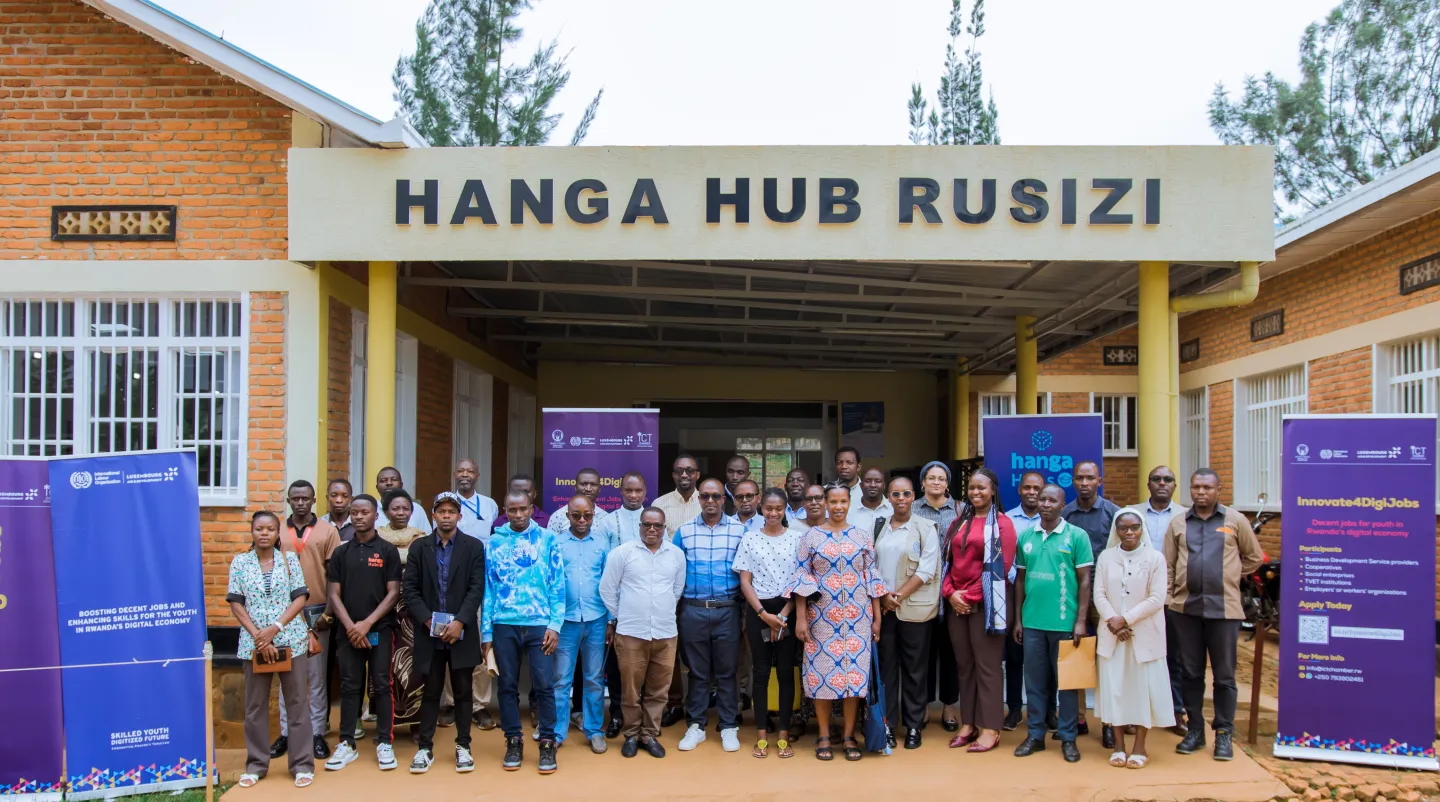
To support entrepreneurship, 32 trainers from Business Development Services (BDS), government institutions, and unions completed Training of Trainers workshops in ILO’s Start and Improve Your Business and Digitalize Your Business methodologies. These certified trainers will deliver practical business development support to hundreds of young entrepreneurs across Rwanda in 2025.
So far, three partners have committed to training a combined 725 entrepreneurs next year:
- Business Development Fund (BDF) – 425 entrepreneurs (Musanze, Muhanga, Rusizi, Ruhango)
- Hanga Hubs – 125 entrepreneurs (Muhanga, Rubavu, Rusizi)
- Imanzi Business Institute – 175 entrepreneurs (Rubavu, Musanze, Huye)
Global Spotlight: Kigali Hosts Decent Jobs for Youth Conference
Rwanda’s leadership in youth employment and digital innovation was showcased in Kigali at the Global Conference on Decent Jobs for Youth – "Young, Green, and Digital". The event, co-organized by the ILO, brought together over 200 in-person participants and 500 online attendees from around the world, creating a vibrant platform for dialogue and knowledge exchange.

Strengthening Institutions for Long-Term Impact
The project worked closely with the Ministry of Public Service and Labour (MIFOTRA) to strengthen seven Sector Skills Councils in key economic areas—tourism, agriculture, finance, manufacturing, infrastructure, and mining.
A dedicated workshop with 53 participants from government, private sector, and international organizations helped improve planning, coordination, and implementation strategies within these councils.
The project also advanced national social dialogue through a tripartite workshop on platform work and gig economy rights. With participation from trade unions, private sector federations, and government officials, the event helped inform Rwanda’s position in global debates on digital labour standards.
Innovation for Employment: Supporting Rwanda’s Next Big Ideas
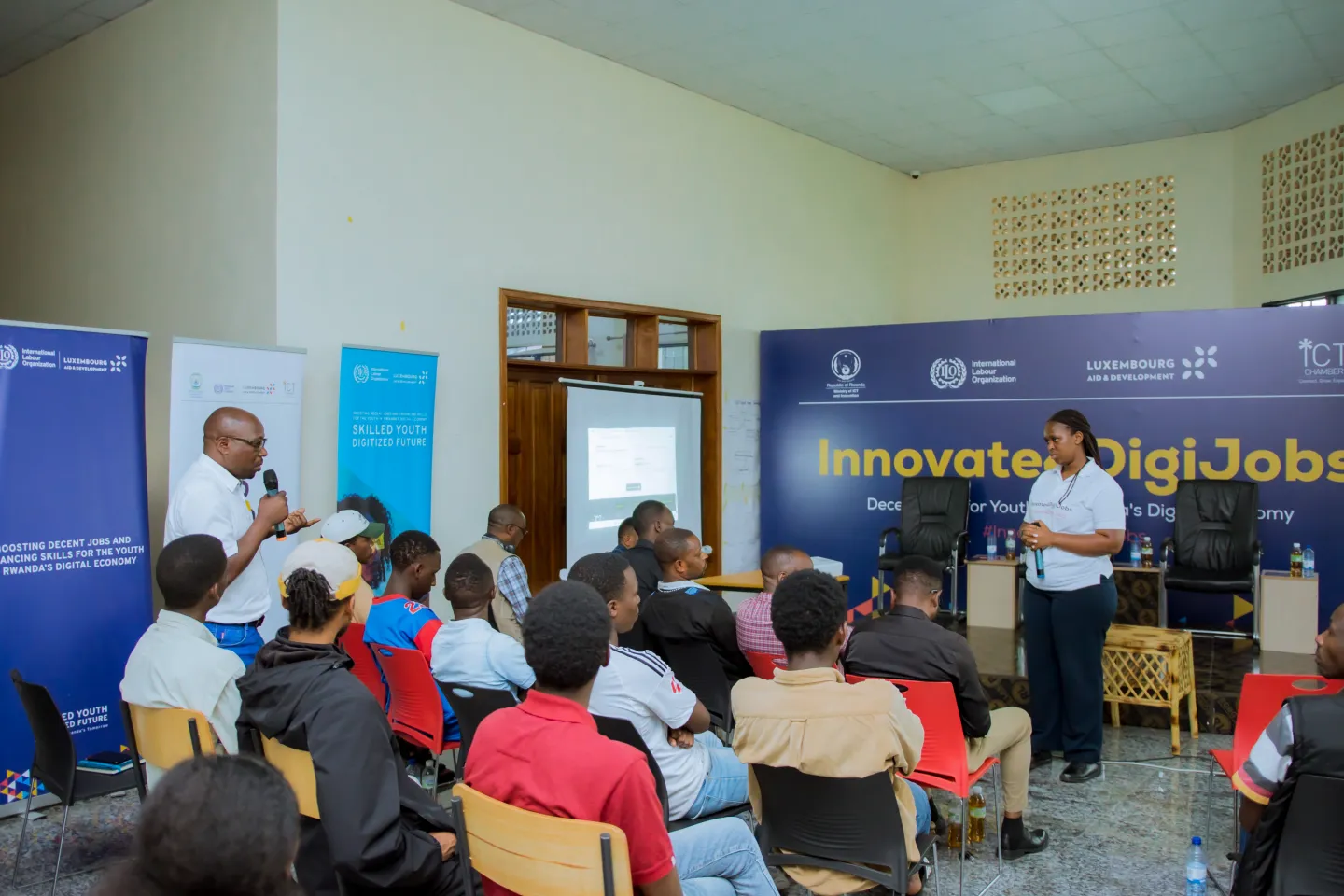
To further catalyse innovation, the project launched the ILO Innovation Challenge – Innovate4DigiJobs, which will award USD 200,000 in grants to 5–7 innovative solutions from BDS providers, TVET institutions, or social enterprises. These initiatives aim to tackle barriers to youth employment in the digital economy and will be implemented in 2025.
Strategic Partnerships and Sustainable Progress
From its outset, the project prioritized collaboration. It aligned closely with MIFOTRA, the Ministry of ICT and Innovation (MINICT), the Private Sector Federation, and Rwanda’s trade unions. All activities were designed to contribute to national goals, including the 1 million coders initiative and Rwanda’s broader digital transformation strategy.
With 85% of first-year milestones achieved, the project is firmly on track to expand its reach and deepen its impact in the coming year.
Looking Ahead
The achievements of 2024 demonstrate how integrated, multi-stakeholder action can create meaningful opportunities for youth in the digital economy. As the project enters its second year, it serves as a model for inclusive digital transformation, one that other countries may look to replicate in their efforts to connect youth with the future of work.
Related content

Digital Economy
Boosting Decent Jobs and Enhancing Skills for the Youth in Rwanda’s Digital Economy