

Recognition of prior learning in Ethiopia
“Recognizing prior learning of citizens helps advance the country’s ongoing development and prosperity.” H.E. Muferihat Kamil Ahmed, Minister of Labour and Skills
7 October 2024
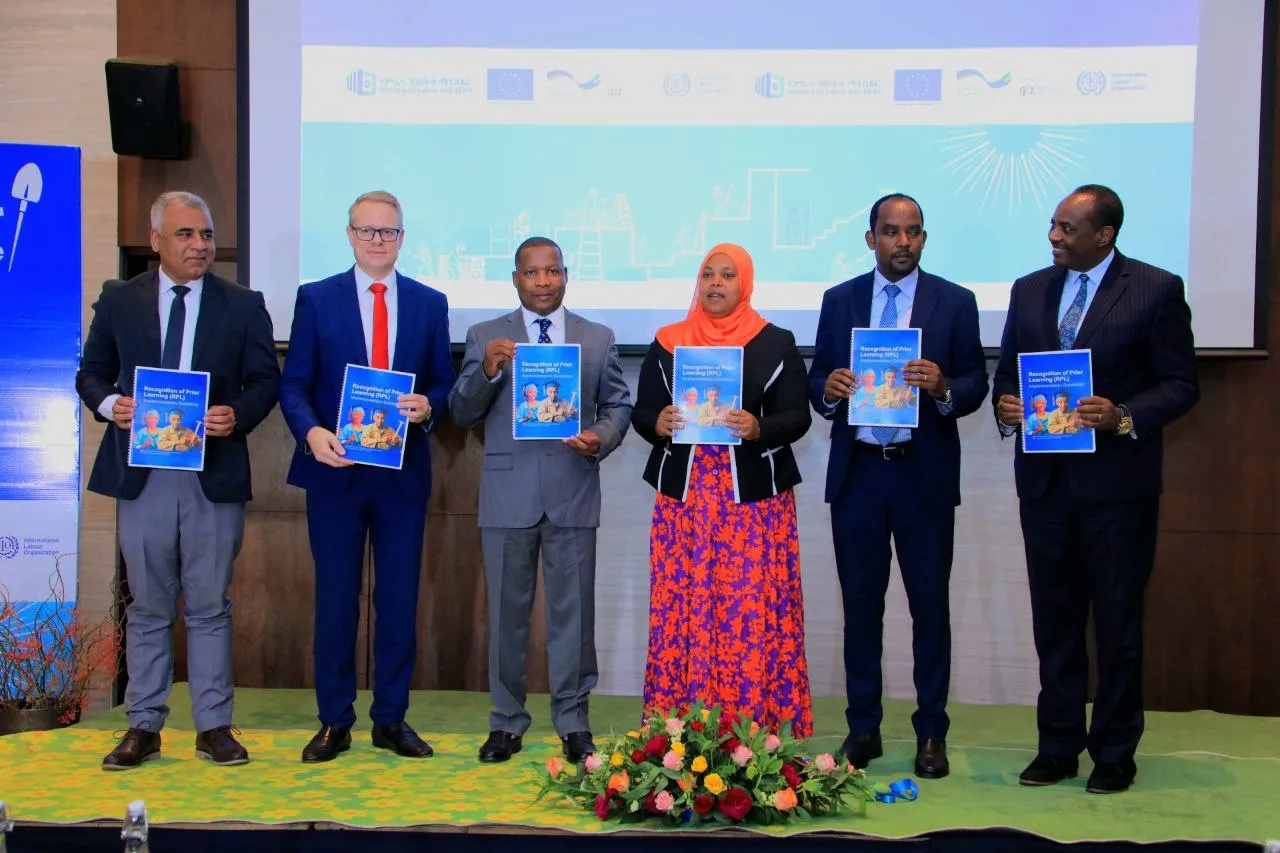
Addis Ababa, Ethiopia (ILO News) - The national Recognition of Prior Learning (RPL) guideline was officially launched on 30 September 2024, in the presence of the Minister of Labour and Skills, H.E. Muferihat Kamil Ahmed. In her opening remarks, the Minister emphasized the importance of recognizing prior learning as it highly contributes to the ongoing government’s development effort and vision in becoming a middle-income country by 2025. She further highlighted the importance of acknowledging and respecting skills and skilled manpower to ensure Ethiopia’s competitiveness in the global labour market and explained that the RPL program will formalize skill sets acquired informally to broaden the skill base of the country. As a keynote speaker, Mr. Ndaba Khumbula, ILO Country Director, ILO Country Office for Ethiopia, Djibouti, Sudan, South Sudan and Somalia, and ILO Special Representative to the AU and ECA reiterated ILO’s commitment to maintain the strong collaboration with the Ministry and social partners in strengthening the RPL system in Ethiopia and achieving lasting success.
“Recognizing prior learning of citizens helps advance the country’s ongoing development and prosperity.”
H.E. Muferihat Kamil Ahmed, Minister of Labour and Skills
The workshop, moderated by H.E. Teshale Berecha (PhD), State Minister for Technical and Vocational Education State, MoLS, brought together 138 (20 female) participants representing heads of regional TVET bureaus, regional COC agencies, Bureaus of Labour and Skills and developmental partners.
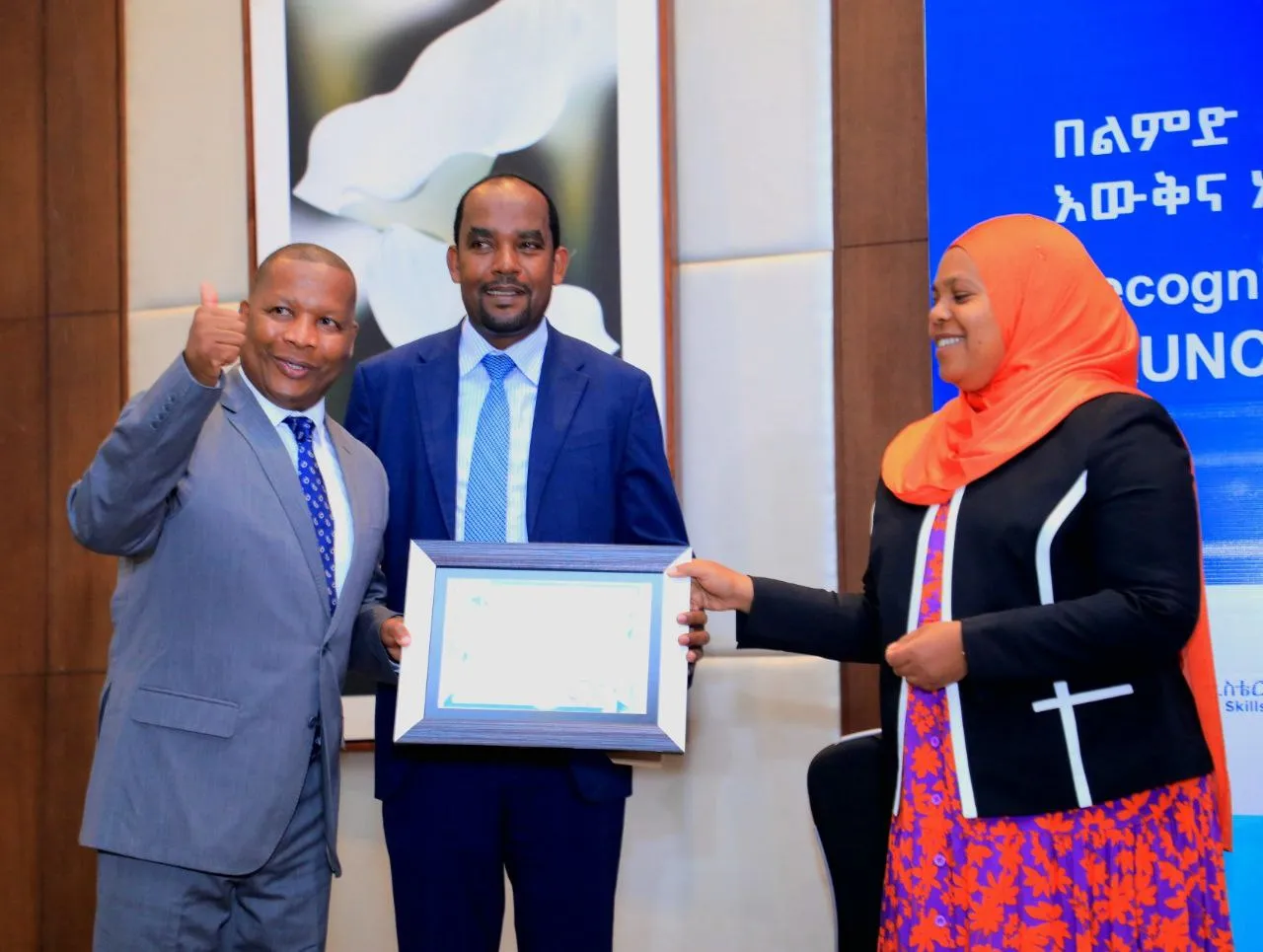
This RPL guideline is developed to better guide the country’s process in assessing the skills, knowledge and experiences of individuals who acquired learning through non-formal or informal means and are uncertified and intend to recognize and certify. During the workshop, the guideline was introduced and presented to a wider audience and experts were able to discuss on mechanisms to develop RPL assessments for the additional 72 sectors prioritized by the Government. In addition, the Ministry was able to recognize ILO and GIZ in its ongoing support to the Ministry and to certify assessed individuals in the construction sector in partnership with the private sector/construction companies.
As a follow up to the development of the national RPL guideline, the ILO and the Ministry of Labour and skills will develop assessment standards for domestic work, hairdressing for male and female including massaging, food processing and hotel service. In addition, it will also strengthen the capacity of RPL assessors and practitioners on the guideline as well as international standards in implementing RPL and subsequently support RPL assessments and certification of more than 200 potential and returned migrant workers in the selected sectors, in Addis Ababa and in partnership with Addis Ababa Competency of Certification Bureau