


Labour Migration in East and Horn of Africa; Case Study
Rebuilding Her Life After Migration Challenges
"Some days, I barely had enough to eat, and it affected my health. I began to lose weight, and there were days I felt too weak to continue,”
17 October 2024
Joyce Munai, often called Joy, is a 31-year-old mother from Nairobi, Kenya, raising three children on her own. Having completed her secondary school education, she took on a series of temporary and low-paying jobs in her city to provide for her family. Despite her best efforts, the income was barely enough to make ends meet. Driven by a desire to secure a stable future, she made the difficult decision to leave her home and seek employment abroad. Accordingly, she travelled to Kingdom of Saudi Arabia (KSA) in early 2022, to work as a domestic worker. Though it was hard to leave her children, she felt this opportunity might provide the financial support her family desperately needed.
In KSA Joyce encountered a reality far removed from the job she had envisioned. She was assigned to a household, where she was responsible for a range of demanding tasks. Her working conditions were challenging, with minimal rest and intense supervision. Her employers restricted her freedom of movement, isolating her from the outside world.
I was given work that went beyond what I expected, with long hours and little rest," she recounted. The combination of heavy responsibilities, limited freedom, and the physical toll of her workload began to impact her health, both mentally and physically.
One of the most difficult aspects of her experience was the limited access to food. Unlike what she had expected, her employers provided her with inadequate meals often.
Some days, I barely had enough to eat, and it affected my health. I began to lose weight, and there were days I felt too weak to continue,
Joy cried, recounting her difficult time. Additionally, the emotional strain of being separated from her children added to her distress. She missed them deeply and found it challenging to be so far away with limited opportunities to communicate. Though she had hoped to provide for them financially, the difficult working conditions in KSA made her question if she would be able to achieve this goal.
After enduring these conditions for one year and seven months, she finally reached a breaking point. She realised that her situation was not improving and that her health and well-being were deteriorating. Accordingly, she made the difficult decision to escape her employer’s household and seek assistance to return to Kenya. With the help of some local organizations and supportive individuals, Joy eventually found refuge and began the process of returning home. Although this was a difficult and risky decision, she felt that returning to her children and rebuilding her life in Kenya was the best choice she could make under the circumstances.
When Joyce arrived back in Kenya, she was relieved to be reunited with her family, but she faced a harsher reality. The money she used to send monthly while she was in KSA to create a secure financial future for her children through setting up a small business upon her return to Kenya was almost completely spent by her younger brother. Instead of a significant amount in savings, she was left with little to nothing.
Her money had been used without her permission, leaving her unable to fulfil her plans for a stable life. This situation was a harsh setback after enduring difficult working conditions and sacrificing time away from her children to provide for their future. With her savings gone, Joyce had to start over financially from scratch, bearing the emotional and financial strain of rebuilding her life without the foundation she had worked so hard to establish abroad.
Despite this hardship, she was determined not to give up. She began searching for ways to rebuild her financial security and provide for her children. Around this time, she learned about an entrepreneurship and financial literacy program specifically designed to support returning migrants. The program, organised by the Kenya Union of Domestic Hotels Educational Institutions Hospitals & Allied Workers (KUDHEIHA), in partnership with the International Labour Organization’s (ILO) Better Regional Migration Management (BRMM) Programme, funded by the UK Foreign Commonwealth and Development Office (FCDO), offered the ILO Start and Improve your Business training focusing on small business management, saving strategies, and financial planning. For Joy, this program represented a second chance to create a stable future for her family. “I saw this as an opportunity to rebuild my children's and my future, something that I couldn’t achieve even while working overseas,” she explained.
The entrepreneurship training provided Joy with a structured approach to managing her finances and establishing a business. She received comprehensive training on essential business skills such as budgeting, record-keeping, and basic marketing. These skills were entirely new to her, and she found them invaluable as she planned her next steps. The program also taught her about the importance of saving and the benefits of joining local savings groups, which could help her access small loans in the future. “I learned how to keep track of my earnings and how to make a plan for my business expenses,” she said, recognising how these new skills could help her avoid financial setbacks.
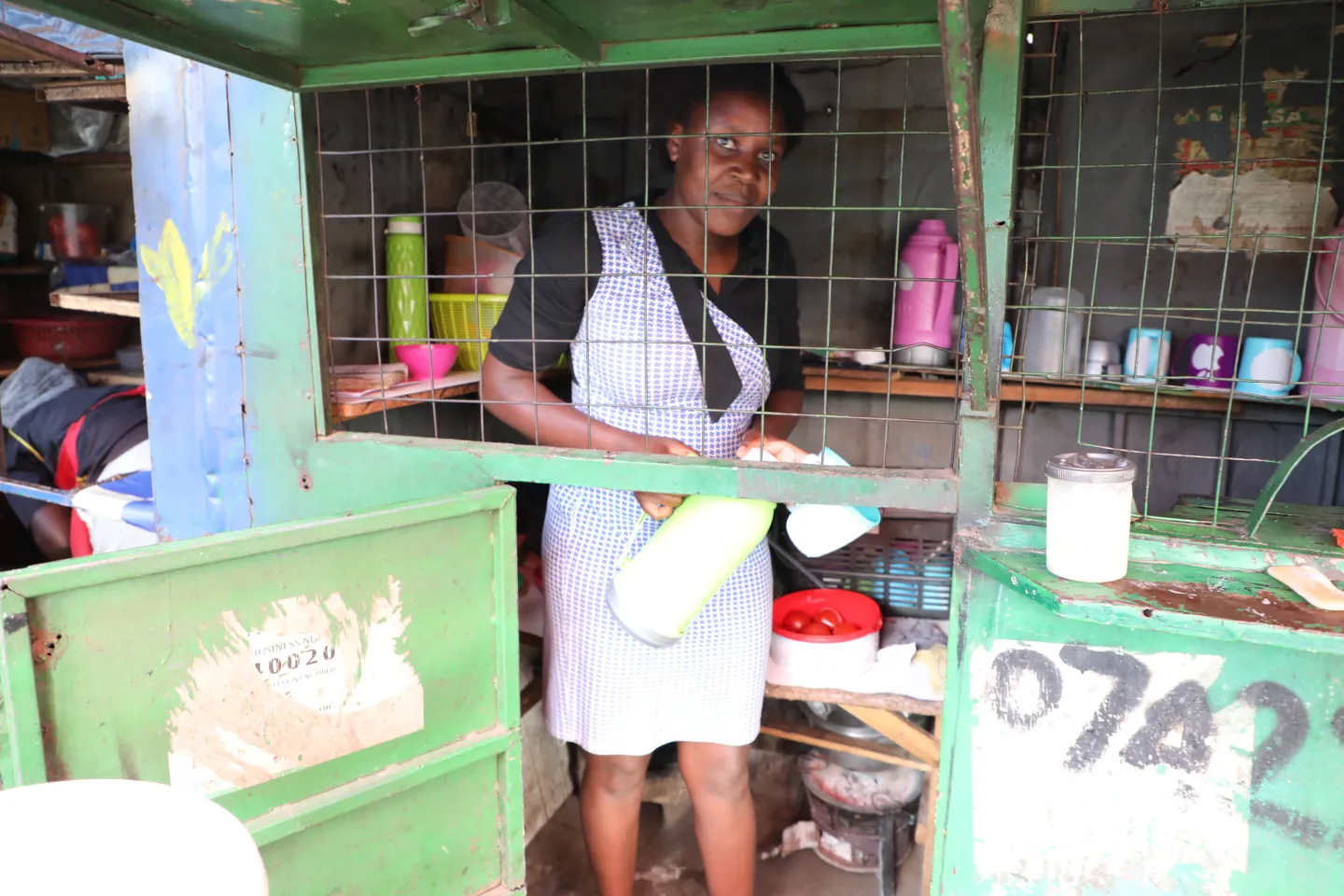
In addition to the training, Joy received a small cash transfer from the program as a transportation allowance, which provided her with the initial capital to start her own business. She decided to open a small food stall in her neighbourhood, selling chapati, tea, and other simple meals to local residents. Given her experience in cooking and the popularity of chapati in her community, she believed this was a viable business opportunity. With the cash transfer she received, she purchased basic supplies, including cooking utensils, ingredients, and a small table for her stall. She started her business with modest expectations, hoping to earn enough each day to cover her family’s basic needs.
The initial days of running her food stall were challenging as she adapted to the demands of business ownership. However, the SIYB training had prepared her for the realities of running a small business, and she approached her work with determination and commitment. I knew it wouldn’t be easy, but I was ready to work hard for my children and myself,” she said, showcasing resilience in her face. The training taught her the importance of customer service, and she focused on building good relationships with her customers by offering high-quality food at affordable prices.
Joyce’s food stall quickly gained popularity in her community, and she started to see a steady stream of customers each day. Her chapati and tea became well-known in the neighbourhood, and her daily earnings began to stabilize. With her newfound financial management skills, she kept good records of her income and expenses, ensuring that she could track her profits and reinvest in her business. She also set aside a small portion of her earnings each day as savings, following the advice she received during the training. Within a few months, her business had grown steadily, allowing her to cover her family’s expenses and begin saving for future investments.
Through her involvement in the training program, Joyce also joined a local savings group with other small business owners. This group provided her with a supportive community and an additional resource for financial assistance when needed. By contributing regularly to the savings group, she was able to build up a small emergency fund, which gave her peace of mind knowing she had a safety net for unexpected expenses.
Joining the savings group helped me feel more secure, Joyce explained. I know that if something happens, I have a way to support my family.”
Looking to the future, Joy has ambitious plans for expanding her business. She hopes to eventually save enough to open a small restaurant in the city centre, offering a wider variety of meals and creating a more permanent source of income. She envisions a stable business that will allow her to provide a comfortable life for her children and contribute positively to her neighbourhood.
I want to build something that my children can be proud of, she said, expressing her motivation to create a lasting legacy for her family.
Reflecting on her journey, Joy emphasised how the entrepreneurship training program had changed her approach to life and business. Before participating in the program, she lacked the confidence and knowledge needed to run a business effectively. However, the skills she gained gave her a sense of empowerment and self-reliance that allowed her to overcome her past challenges.
I can simply say that the training changed my life in the best possible way I can think of, she said. “It taught me that I have the ability to take control of my future and provide for my family.”
Relevant projects

East and Horn of Africa
Better Regional Migration Management