

Interview
Q&A on Critical Minerals and the Work of the ILO
This interview explores the International Labour Organization's (ILO) work at the intersection of labor rights and the fast-growing critical minerals sector. In this Q&A with Casper N. Edmonds and Camila Meireles, two leading ILO experts discuss how international labor standards are being applied across mineral supply chains for materials such as lithium, cobalt, and nickel.
23 March 2026
The conversation covers key challenges including informality, child labor, and unsafe working conditions in artisanal and small-scale mining, as well as the ILO's on-the-ground engagement in major producing countries such as the Democratic Republic of the Congo, Argentina, and Indonesia. It also examines how trade agreements and stronger enforcement mechanisms can help ensure that the global energy transition is built on a foundation of decent work, fair competition, and respect for workers' rights.
Q1. How does the ILO work to promote and uphold international labor standards within the critical minerals industry, and what are the biggest challenges in ensuring compliance globally?
The ILO works to ensure that the rapid expansion of critical minerals production, be it lithium, cobalt or nickel, is grounded in international labour standards and the Decent Work Agenda. As global demand accelerates, mineral development must advance decent work, rather than create new vulnerabilities. This involves supporting governments and employers and workers in applying relevant international labour standards across critical mineral supply chains, including those on occupational safety and health in mines (C176), labour inspection (C81), Indigenous Peoples’ rights (C169), violence and harassment (C190), and the transition from the informal to the formal economy (R204). Through policy advice, technical cooperation and tripartite processes, the ILO helps reinforce regulatory frameworks, strengthen enforcement systems and embed labour considerations into national critical minerals strategies and supply chain governance. This creates a global level playing field for all in the critical minerals industry.
At the same time, compliance remains a significant challenge. Critical mineral supply chains are complex and transnational, often involving artisanal and small-scale mining where informality is widespread. Risks such as child labour, forced labour, unsafe working conditions, discrimination, and weak enforcement mechanisms persist in certain contexts. In many producing countries, rapid sectoral expansion can outpace institutional capacity and available skills. Addressing these gaps requires stronger labour inspection systems, formalization pathways, effective consultation mechanisms, improved company-level due diligence, and coordinated international cooperation. The scale and pace of growth make it essential that governance frameworks evolve in parallel with investment.
Q2. What specific labor rights issues have been identified in the artisanal and small-scale mining sectors and how is the ILO addressing these?
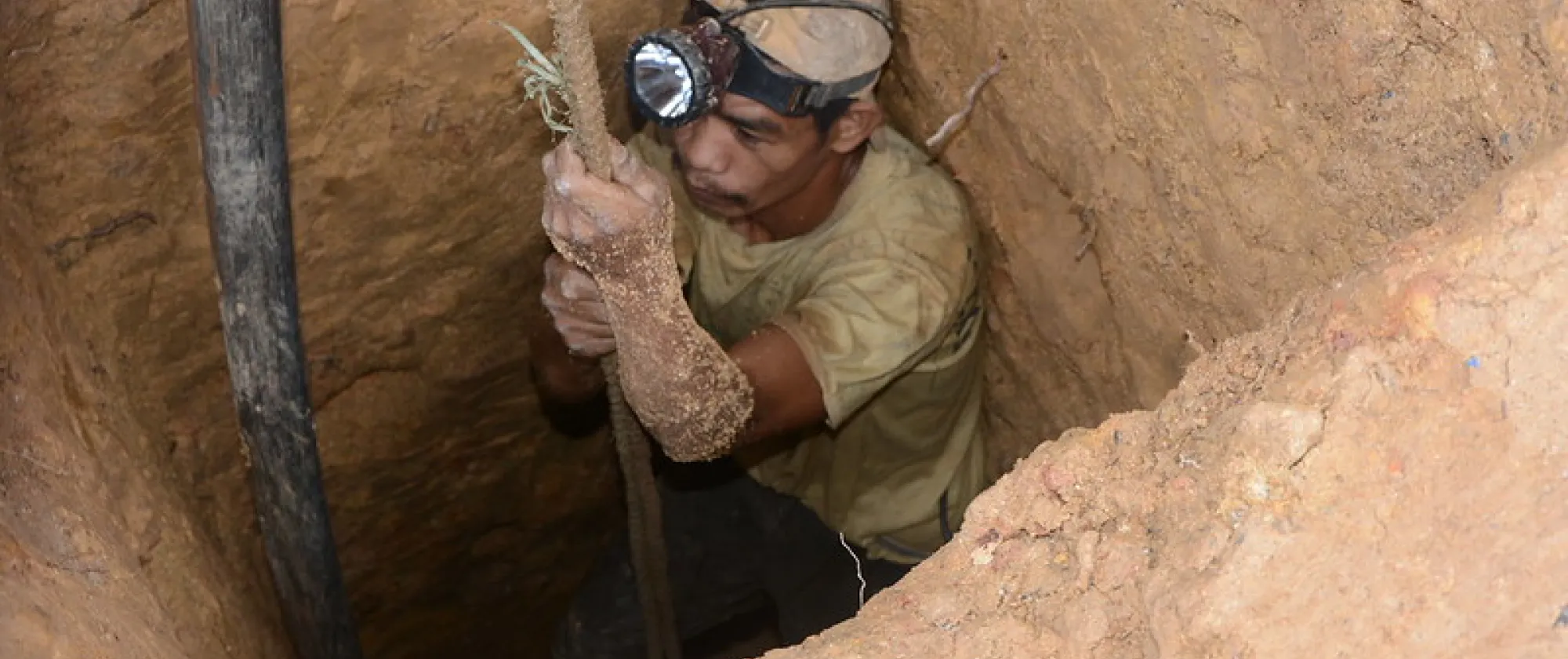
In artisanal and small-scale mining, which forms part of several critical mineral supply chains, persistent labour rights challenges remain. These include child labour, hazardous working conditions, exposure to toxic substances, unsafe pit structures, and limited access to social protection. Informality is widespread, leaving many workers outside the protection of labour legislation and inspection systems. There are also risks of forced labour linked to exploitative recruitment practices in remote areas, as well as discrimination and structural barriers affecting women and Indigenous Peoples. Women are often concentrated in the lowest-paid and least secure activities and may face heightened risks of violence and harassment.
The ILO addresses these challenges through standards-based guidance and country-level engagement. In cobalt-producing regions of the Democratic Republic of the Congo, for example, the ILO has supported efforts to strengthen understanding of child labour risks, build institutional capacity, and improve monitoring and remediation mechanisms within supply chains. More broadly, the ILO promotes formalization in line with Recommendation No. 204, strengthens occupational safety and health systems, and supports dialogue processes that ensure artisanal miners and affected communities are included in policy discussions. The objective is to help transform high-risk, informal activities into safer and more sustainable livelihoods within critical mineral supply chains.
Q3. Can you explain how the ILO collaborates with governments, employers, and workers to enhance labor governance and create safer working conditions in the mining sector?
Collaboration is central to how the ILO advances labour governance in the mining and critical minerals sector. Through its tripartite mandate, the ILO provides a structured platform where governments, employers and workers jointly shape policy responses to the social and labour implications of mineral development. At the policy level, this involves aligning national regulatory frameworks with international labour standards, reinforcing labour inspection systems, and embedding consultation mechanisms into national critical minerals strategies. The aim is to ensure that occupational safety and health, other fundamental principles and rights at work, and inclusive employment policies are integrated into sectoral plans and investments from the outset.
Strategically, the ILO focuses on strengthening the institutions that underpin compliance and accountability. This includes supporting implementation of the Safety and Health in Mines Convention (No. 176), improving coordination between labour and mining authorities, and promoting consultation with Indigenous Peoples and affected communities in line with international standards. By reinforcing governance systems and institutionalized dialogue, the objective is to build a mining sector that is productive, safe and governed by the rule of law.
Q4. The ILO is supporting countries that are central to the global critical minerals supply, including the DRC, Indonesia, and Argentina. Could you share concrete examples of what the ILO is doing at country level to strengthen labor governance, protect workers, and ensure that critical mineral development upholds international labor standards?
In countries central to global critical mineral supply chains, the ILO works to strengthen labour governance frameworks and ensure that mineral development aligns with international labour standards. In Argentina, the ILO has analysed employment trends in the lithium sector to inform evidence-based policymaking and support inclusive workforce strategies. Across contexts, the focus is on reinforcing enforcement systems and social protection institutions so they can respond effectively to rapid sectoral growth.
In Indonesia and across the Asia-Pacific region, particularly in nickel supply chains, the ILO is working to identify decent work gaps and policy priorities to guide governments and industry toward more sustainable labour practices. This includes strengthening occupational safety and health systems, supporting formalization efforts in artisanal mining, promoting responsible business practices, and encouraging structured dialogue between governments, employers and workers. A new initiative further aims to reinforce governance frameworks and advance inclusive formalization across critical mineral supply chains.
Q5. How does the ILO engage with various stakeholders, including international mining companies, to promote responsible mining practices, and what outcomes have been achieved so far?
The ILO engages governments, employers’ and workers’ organizations across the critical minerals industry and supply chains to promote mining practices grounded in international labour standards. Its comparative advantage lies in its tripartite structure, which provides a neutral platform for dialogue and consensus-building. This includes supporting governments in strengthening enforcement systems, enabling employers to align operations with international standards, and reinforcing workers’ organizations so they can effectively represent their members. By grounding engagement in standards and formal consultation mechanisms, the ILO helps integrate labour considerations into broader supply chain governance discussions.
This engagement has contributed to more structured cooperation between public authorities and private actors in certain contexts and supported efforts to improve occupational safety and health systems, due diligence processes and remediation mechanisms. While progress varies across countries, the emphasis remains on institutionalizing compliance through stronger governance frameworks and inclusive dialogue, rather than relying solely on voluntary commitments. As labor provisions are increasingly incorporated into trade agreements, how can this help promote better labor practices in critical minerals supply chains? Rising demand for critical minerals can create jobs, but not always decent ones. Where do you see the biggest opportunities to use this moment to improve working conditions, expand formal employment, and strengthen skills development across mineral supply chains?
As labour provisions become more prominent in trade agreements, they create an opportunity to reinforce international labour standards within critical mineral supply chains. When labour commitments are clearly articulated and linked to monitoring mechanisms, they can help level the playing field by discouraging cost-cutting practices based on poor working conditions or weak enforcement. Greater alignment between trade frameworks and international labour standards can incentivize governments and enterprises to strengthen labour governance systems and improve transparency.
At the same time, rising demand for critical minerals presents a strategic opportunity to improve job quality. There are significant possibilities to expand formal employment, invest in skills development and strengthen occupational safety and health systems across mining and processing activities. If labour standards, workforce policies and industrial strategies are aligned early, the growth of critical minerals can support more inclusive labour markets and sustainable economic development.
Q6. As demand for critical minerals like lithium and cobalt grows, how can stronger enforcement of international labor standards help promote fair competition and support transparent and reliable supply chains?
Effective enforcement of international labour standards plays an important role in promoting fair competition within critical mineral supply chains. Where standards related to occupational safety and health, child labour, forced labour, non-discrimination and labour inspection are applied consistently, they help reduce incentives for cost advantages based on weak labour protections. Predictable and transparent enforcement frameworks provide greater clarity for enterprises operating across jurisdictions and contribute to more stable business environments. In this way, labour standards support a more level and rules-based operating context for critical mineral production.
Robust enforcement also supports more reliable and resilient supply chains. Safe workplaces reduce accidents and production disruptions, while transparent governance systems mitigate legal and reputational risks. In contexts where artisanal and small-scale mining plays a role, formalization and improved inspection systems can enhance both labour protections and traceability. Embedding and enforcing international labour standards ultimately contributes to supply chains that are economically viable, stable and grounded in respect for human dignity.
Related content
Sector portal
Mining