

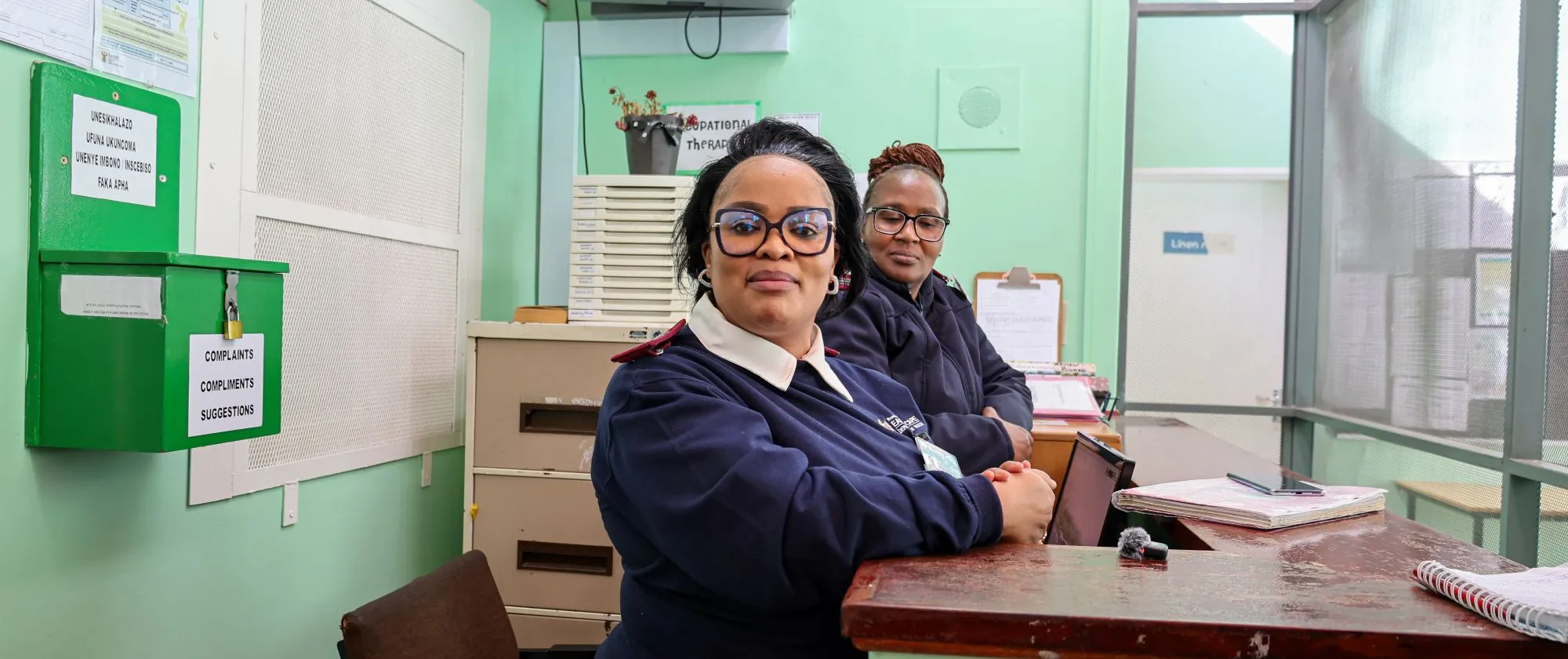
Putting health workers first, as HealthWISE delivers safer, healthier workplaces
ILO and Department of Employment and Labour validate HealthWISE impact in the Eastern Cape. Through partnership and practical workplace solutions, HealthWISE is improving occupational safety and health for health workers across the Eastern Cape.
4 August 2026
South Africa, East London (ILO News) – The International Labour Organization (ILO), in partnership with South Africa's Department of Employment and Labour (DEL), convened stakeholders in East London to validate the findings of the impact assessment demonstrating tangible, measurable improvements in occupational safety and health (OSH) and working conditions for health workers across ten public health facilities in the Eastern Cape.
The validation workshop marks an important milestone in a four-year collaboration between the ILO, DEL, the Eastern Cape Department of Health (ECDoH), organised labour and health facilities to strengthen workplace safety through the implementation of the ILO/WHO HealthWISE methodology an internationally recognised participatory approach that empowers health workers and managers to identify workplace risks and implement practical, low-cost solutions.
Implemented since 2022, the HealthWISE programme has reached facilities employing more than 10,700 health workers, representing approximately one quarter of the Eastern Cape's public health workforce. The participating hospitals and forensic pathology services have developed and implemented facility-level action plans that have delivered measurable results: documented reductions in needle-stick injuries, declines in occupationally acquired TB and blood-borne exposures, fewer healthcare-associated infections, strengthened occupational health services, and safer working environments. The transformed Balfour Clinic stands out as a flagship of these gains.
The validation workshop brought together representatives from the Eastern Cape Department of Health, organised labour, participating health facilities, the Department of Employment and Labour and the ILO to review the draft Impact Assessment Report, validate its findings, and agree on recommendations that will guide future action.
As the Eastern Cape Department of Health, we remain committed to building on these achievements and working with our partners to ensure that every health worker has access to a safe, healthy and supportive working environment.
Nwabisa Mavuso,Eastern Cape Department of Health Deputy Director General
Providing an overview of the programme, Bulelwa Huna, Senior Specialist: Occupational Health and Hygiene at the Department of Employment and Labour, reflected on the HealthWISE journey, noting that the initiative began with a Training-of-Trainers workshop held in East London in 2022. Since then, the programme has brought together government, organised labour and health facilities to implement practical occupational safety and health improvements that are creating safer and healthier workplaces for health workers across the Eastern Cape.
The assessment confirms that sustained social dialogue and collaboration among government, employers and workers have been central to the programme's success. Through HealthWISE Technical Working Group structures coordinated by the Department of Employment and Labour, stakeholders have jointly identified workplace risks, monitored progress and promoted practical improvements tailored to the realities of each health facility.
The validation process provides participating institutions with an opportunity to strengthen the evidence base by confirming facility-specific findings, sharing additional good practices and refining recommendations before publication of the final report. This collaborative approach ensures that the final assessment reflects the experiences of those directly involved in implementing workplace improvements while enhancing ownership of the recommendations.
Organised labour made an important contribution to the validation by championing the protection of health workers through stronger occupational safety and health measures, meaningful social dialogue and worker participation. Representatives also emphasised the need to strengthen Employee Assistance Programmes (EAPs) and psychosocial support to promote the wellbeing and resilience of the health workforce.
Caring for the carer, must remain at the centre of healthcare transformation.
Mulalo Morudi of COSATU
The workshop also agreed on a roadmap for finalising and disseminating the Impact Assessment Report, which is expected to provide valuable evidence to inform policy, strengthen occupational safety and health systems, and support the potential expansion of the HealthWISE methodology to additional health facilities across South Africa.

As the programme moves into its next phase, the validated findings will help guide future investments in occupational safety and health, reinforcing the principle that protecting health workers is essential to building stronger, more resilient health systems and advancing decent work for all.
The validation workshop concluded with stakeholders reaffirming the Provincial Government’s commitment to advancing safer and healthier workplaces for health workers through continued collaboration and social dialogue. The validated findings will now inform the finalisation of the Impact Assessment Report, which is expected to be officially launched by the Eastern Cape MEC for Health, in her capacity as the Province's Executive Authority, reaffirming the Provincial Government's commitment to strengthening occupational safety and health and scaling up good practices across the health sector.
Looking ahead, ECDoH has committed to integrating HealthWISE into the Multilateral Structure and the Provincial OHS Committee and is considering a scale-up to other facilities in the province. The report will also be tabled at the national structure responsible for OSH in the health sector, positioning the Eastern Cape experience to inform national practice."