

Digital Inclusion
Preparing Rwanda’s teachers for the future of work
Rwanda is developing a Digital Skills Competency Framework for TVET teachers to strengthen teaching, respond to changing labour market needs and better prepare young people for increasingly digital and technology-enabled workplaces.
2 July 2026
KIGALI, Rwanda (ILO News)– Rwanda’s digital transformation will be shaped not only by the technologies introduced into classrooms and workplaces, but also by the teachers who help young people use those technologies with confidence, relevance and purpose. For the Technical and Vocational Education and Training (TVET) sector, this makes teacher readiness a critical part of workforce readiness.
As industries become more digital and the nature of work continues to evolve, the skills expected of young people are changing rapidly. Smart machines, data-enabled services, online platforms, automation, digital content and artificial intelligence (AI) are increasingly influencing how people learn, produce, communicate and work.
Preparing young people for this changing labour market therefore requires teachers who can do more than operate digital tools. They need to understand how technology is transforming occupations and be able to translate that change into relevant teaching and learning. This is why Rwanda is placing the digital competence of TVET teachers at the centre of its skills agenda.
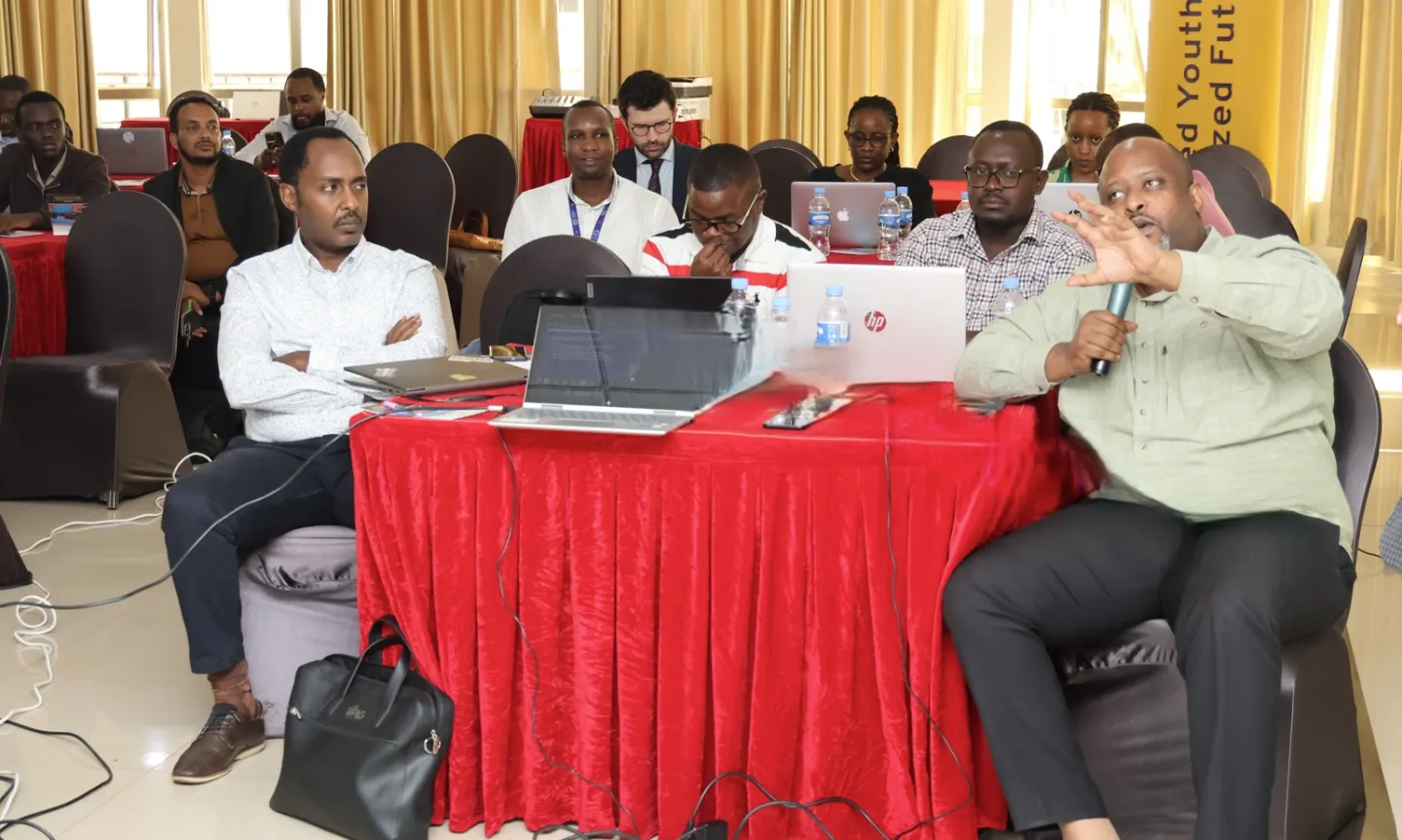
On 2 July 2026, the Rwanda TVET Board (RTB), the International Labour Organization (ILO) and LuxDev convened a validation workshop in Kigali to review the draft Digital Skills Competency Framework for TVET Teachers in Rwanda.
The workshop brought together representatives from government institutions, education and training bodies, teacher development institutions, TVET teachers, the private sector, development partners and technical agencies. Participants reviewed the proposed Framework and identified areas for refinement ahead of its finalization.
For TVET teachers, digital competence increasingly extends beyond basic computer literacy. Teachers need to be able to integrate digital tools into lesson delivery, facilitate blended learning, develop and adapt digital content, conduct digital assessments, interpret learner data, promote online safety and introduce learners to emerging technologies relevant to their trades.
This is particularly important in TVET because of its close relationship with the labour market. Whether in construction, manufacturing, agriculture, hospitality, health, ICT or other occupational areas, technology is changing the tools used, the tasks performed and, increasingly, the competencies employers expect. The proposed Framework aims to establish a shared understanding of the digital competencies TVET teachers require and how those competencies can progressively develop throughout their careers.

It is intended to support teacher self-assessment and continuous professional development while also providing a reference for certification, institutional planning and national monitoring of teacher digital readiness. In this way, the Framework can help Rwanda move from isolated digital training initiatives towards a more structured and standards-based approach to developing teachers’ digital capabilities.
The proposed Framework is anchored in Rwanda’s National Digital Skills Framework (NDSF), connecting teacher development with the country’s broader digital transformation and digital skills priorities. It adapts national digital competencies to the specific responsibilities and working environments of TVET teachers and trainers.
The draft covers areas including the operation of digital devices and software, online teaching and collaboration, digital content creation and trade-specific software, digital assessment and feedback, data literacy and learning analytics, online safety and security, emerging technologies and digital entrepreneurship. It also proposes progressive proficiency levels, enabling teachers to understand their existing capabilities and identify areas for further professional development.
The approach recognizes that digital transformation in education cannot be achieved simply by providing equipment or introducing new technologies. Technology has to translate into better teaching and more relevant learning. Teachers are the critical link in making that happen.
For the ILO, strengthening teachers’ digital capabilities is closely connected to a broader challenge: ensuring that skills development systems keep pace with transformations in the world of work.
Digitalisation, automation and AI are changing occupations and creating new skills requirements. Young people entering the labour market will need technical skills, but they will also need adaptability, problem-solving abilities, digital confidence and the capacity to continue learning as technologies evolve. TVET systems have an important role in making that transition possible.
Teachers who understand emerging technologies and their application in different occupations are better positioned to connect classroom learning with workplace realities. They can also help young people understand how to use technology productively, safely and responsibly. Strengthening teacher competence is therefore not an end in itself. It is an investment in the employability and adaptability of the young people those teachers prepare for work.
Development of the Framework reflects a partnership built around complementary strengths. Under the leadership of the Rwanda TVET Board, LuxDev and the ILO are contributing technical expertise to support a process that responds both to Rwanda’s education priorities and to changing labour market needs. LuxDev brings its engagement in Rwanda’s TVET sector and its support for digital skills for quality TVET, including investments in institutional strengthening and teacher development.
The ILO contributes its expertise in skills development, employability, decent work and labour market relevance, helping connect digital teacher development with the wider objective of preparing young people for productive employment and rapidly changing workplaces. Together, the partnership helps connect national policy, institutional capacity, teaching practice and labour market demand.
The July validation workshop provided an opportunity for stakeholders to examine the proposed competency areas, proficiency levels, indicators and implementation considerations. Participants discussed how the Framework could support teacher development, its alignment with national priorities and the practical steps required for piloting and institutional uptake.
Feedback gathered through the validation process will inform the refinement and finalization of the Framework. It will also contribute to the development of an operationalization action plan, monitoring and evaluation tools, and initial piloting arrangements. The next challenge will be turning the Framework into practice. Its success will depend not only on the quality of the final document but on how effectively it is embedded within the institutions responsible for TVET delivery and teacher development.
The Ministry of Education, Rwanda TVET Board, Rwanda Polytechnic, Rwanda TVET Trainer Institute (RTTI), National Examination and School Inspection Authority (NESA), Rwanda Information Society Authority (RISA), TVET institutions, development partners and the private sector all have roles to play in translating the Framework into stronger teaching and learning. The objective is therefore not simply to produce another policy or technical document. It is to establish a practical national reference that institutions and teachers can use to progressively strengthen digital competence across Rwanda’s TVET system.
Teachers remain at the heart of Rwanda’s skills development ambitions. They translate policy into practice, connect theory with hands-on learning and help young people develop the technical and practical competencies required by employers. As technology transforms the world of work, that role becomes even more important. By clearly defining the digital competencies expected of TVET teachers, the Digital Skills Competency Framework for TVET Teachers in Rwanda can help strengthen teaching, improve the relevance of learning and prepare young people more effectively for digital and technology-enabled workplaces. The validation workshop therefore represented more than another step towards completing a technical framework.
It marked an important step towards ensuring that as Rwanda prepares its young people for the future of work, it also prepares the teachers who will help them get there.
Related content

Digital Economy
Boosting Decent Jobs and Enhancing Skills for the Youth in Rwanda’s Digital Economy
Relevant projects
Digital Economy
Boosting Decent Jobs and Enhancing Skills for the Youth in Rwanda’s Digital Economy