

Creating Change, One Story at a Time
Polio slowed my walk, not my will: Breaking limits, one phone at a time
Polio didn’t stop Arafath. Trained under the ISEC project, he turned his passion for electronics into a career, transforming his disability into a strength and a job into a mission to support his family and inspire others.
5 July 2025
Cox's Bazar, Bangladesh (ILO News) - My name is Md. Arafath. I’m 21 years old, and I live in Eidgaon, Cox’s Bazar. I wasn’t born with a disability. But when I was just a little boy, polio took away my ability to walk freely. Since then, every step - every movement - has been a struggle. But my mind? It never stopped racing.
I grew up in a small house with five other family members. My father worked tirelessly to support us, but his income alone was never enough. I saw his tired eyes. I wanted to help, I needed to help, but the world around me didn’t believe I could.
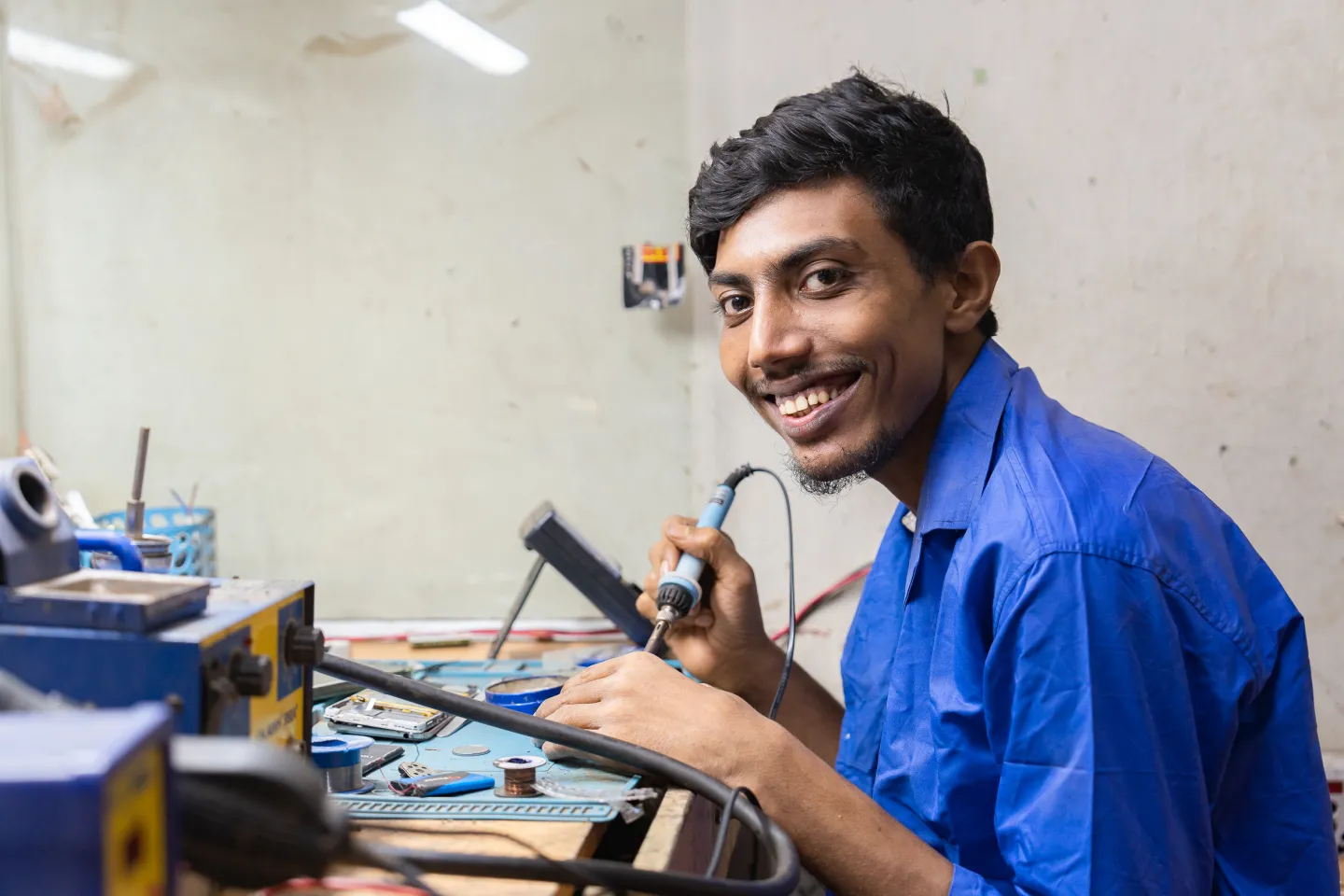
When I had to drop out after Grade 10 because we couldn’t afford school fees, it crushed me. But even worse were the stares… the whispers… the things people said. “He’s useless.” “He’ll always depend on others.” I heard them all. And I carried those words like wounds. But deep down, a fire burned: "I won’t be a burden."
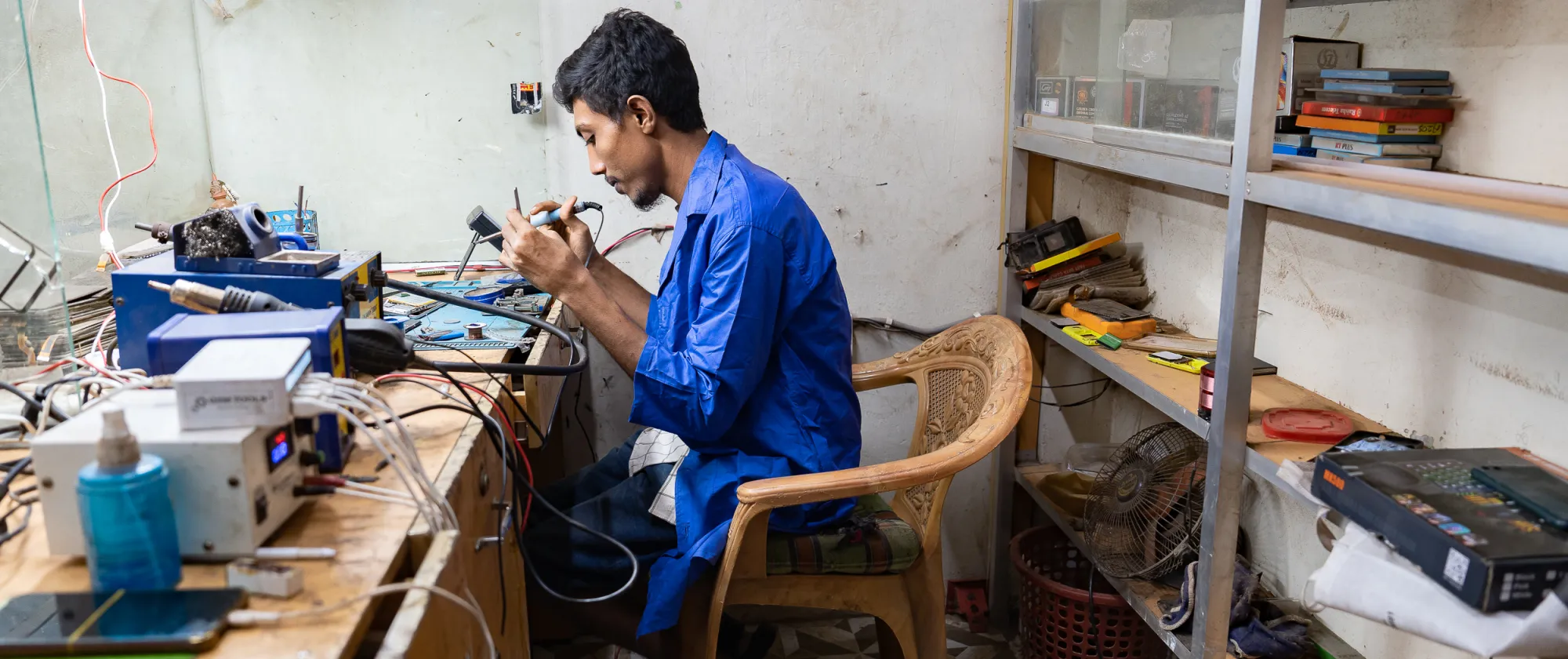
Then, hope walked in. A BRAC representative told me, "Arafath, learn a skill. Be independent." He also told me about the vocational training opportunities available under the ISEC project, a partnership between ILO and BRAC. Since I’ve always been interested in electronics, I decided to join the mobile phone servicing course. I was always curious, always fixing things with whatever tools I could find.
At first, my parents were hesitant. How would I travel to the Master Craftsperson’s (MCP) shop with my leg braces? What if I fell? What if I failed? But my determination convinced them, and slowly, they said yes.
From Burden to Breadwinner
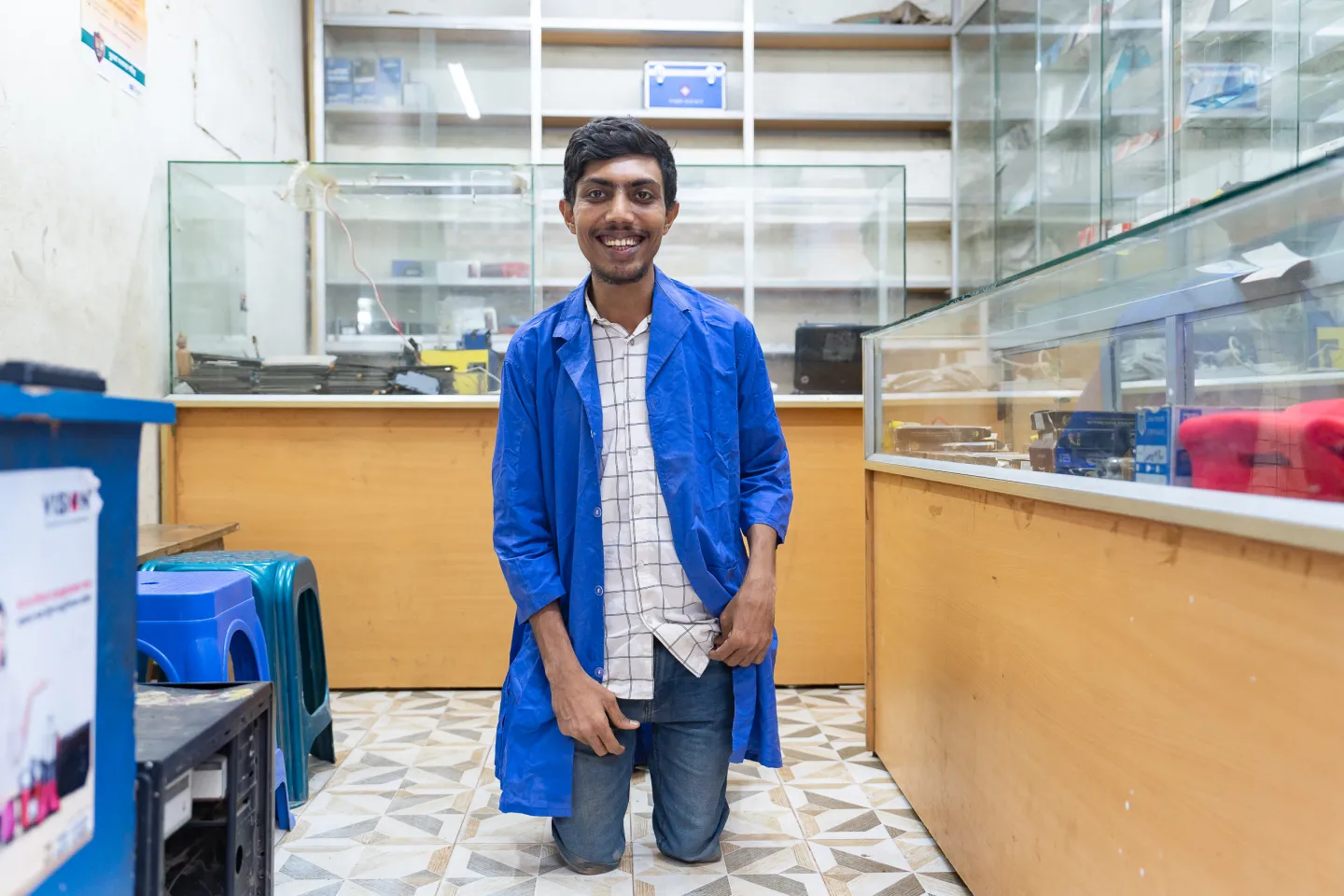
I never missed a single class. I showed up, rain or shine, no excuses. Screens, batteries, circuits - I learned fast. My hands found their purpose. After completing the training, the same shop owner where I trained offered me a job. My first salary was 6,000 taka. I remember holding that money, hands shaking. Not because it was a lot, but because it was mine. I had earned it. Me, the boy they said would never stand on his own.
Now, I make 10,000 taka a month. I pay for my younger brothers’ school fees. I help with groceries. I save a little every month for my dream, to open my own shop, where I’ll hire others like me.

Because we deserve to work, we deserve to live with dignity. We don’t want pity, we want an opportunity.
We just need someone to say: ‘Go. Show us what you’ve got.
People in my neighbourhood look at me differently now. Some even ask me how they or their children can join the same training. The same neighbours who once pitied me now see me as someone with purpose.
I want to tell every young person with a disability: You are not broken. You don’t need fixing. The system does. And we will fix it - one skill, one opportunity, one life at a time.
Arafat
Related content
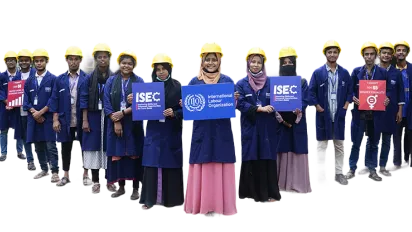
Leaving no one behind - ISEC Project
Improving Skills and Economic Opportunities for the Women and Youth in Cox’s Bazar, Bangladesh
Relevant projects

Project: Employability of women workers
Promoting Gender Responsive Enterprise Development and TVET Systems (ProGRESS)