

Child labour
Out of school, in the fields: A heavy harvest in the Philippines
As the Philippines strengthens action against child labour, coordinated initiatives are helping vulnerable children transition from hazardous work to education while supporting their families.
30 June 2026
SURIGAO DEL SUR, Philippines (ILO News) - The day does not begin with the sound of a school bell for 15-year-old Danilo Molejon, Jr. Instead, it begins at seven in the morning with the weight of a bolo and the daunting prospect of the hagbas or a backbreaking labour of clearing land under the sun in Hinatuan.
While his peers carry backpacks filled with books, Danilo’s shoulders are conditioned to the kargada or the heavy loads of produce he must transport to help his family survive. As they hold their books and turn pages to read and learn, Danilo grips a bolo that has left him with cuts and bruises.
Danilo is the second among five children. In a household where the primary concern is the next meal, his childhood was an early sacrifice. His father works as a labourer in the fields, and his mother takes on laundry to make ends meet, but it is not enough. To ensure his younger siblings can stay in school, and his eldest sister can pursue her dream of becoming a teacher, Danilo stepped into the furrows.
"I do not go to school and work on the farm so we can afford to buy rice. I harvest crops in the fields," Danilo says. He spends his days planting squash and cucumbers. His hands calloused from the paglampas or clearing the fields, which he identified as the most dangerous part of his work.
"It's hard. I'm so tired. Carrying those heavy loads every day is exhausting. They're just so heavy," he explains, describing the exhaustion that settles into his bones long before the sun sets.
His story reflects the hidden crisis of child labour in agriculture, where children trade their futures for the immediate survival of their families. However, Danilo’s narrative is shifting from a tragedy of lost potential to a story of reclaimed hope.
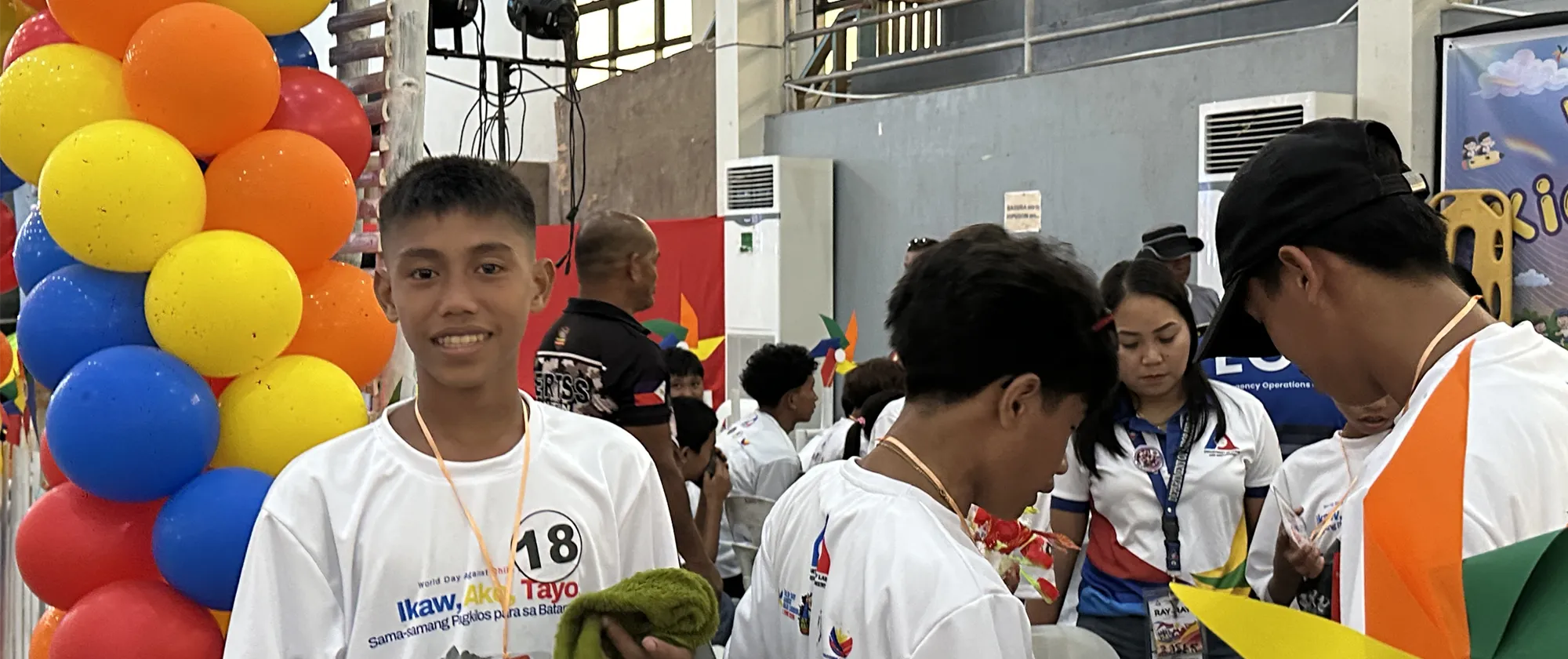
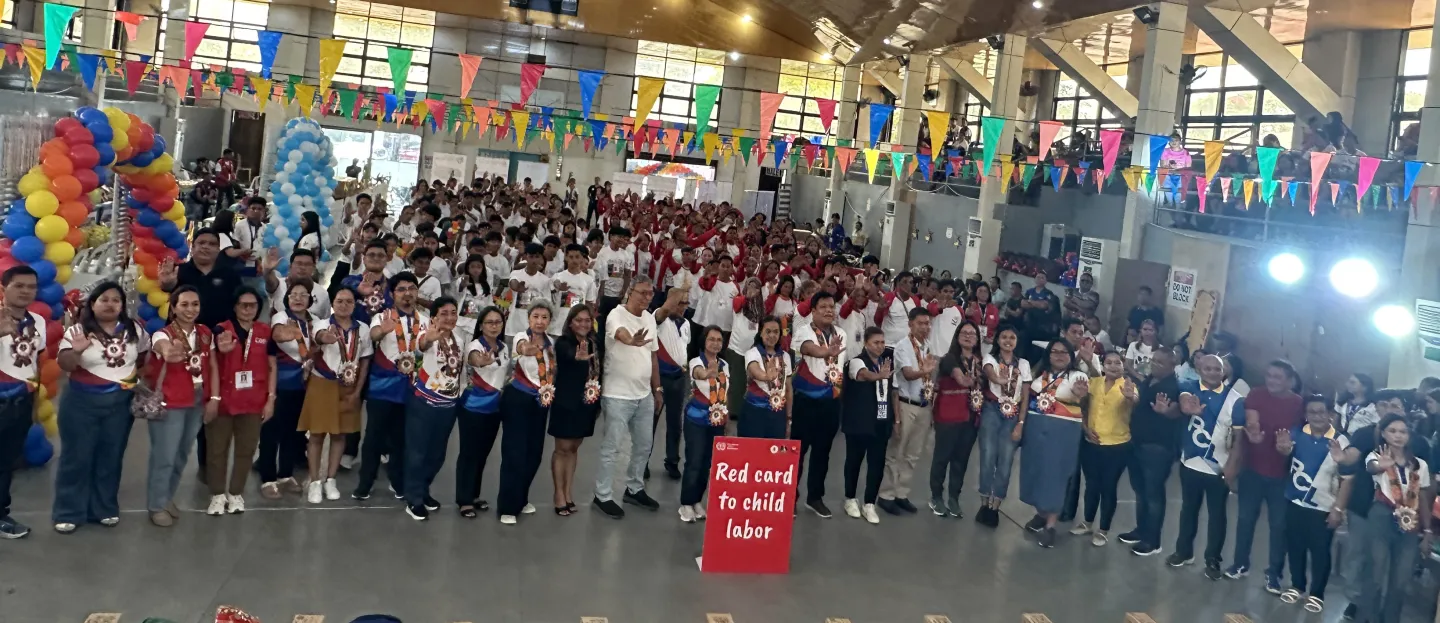
Danilo was recently one of the profiled children during an information and service caravan to mark the World Day against Child Labour in Hinatuan, Surigao del Sur.

The town serves as a vital pilot area for the Strategic Helpdesks for Information, Education, Livelihood, and Other Developmental Interventions (SHIELD) against child labour.
This initiative represents a massive convergence of partners and agencies under the National Council Against Child Labor (NCACL), led by the Department of Labor and Employment (DOLE).
Supporting these efforts is the ILO and the Government of Canada partnership on Strengthening Freedom of Association and Action Against Child Labour in the Philippines, which is helping increase the capacity of the NCACL and its members to prevent and end child labour.
In 2024, the number of working children aged 5 to 17 was estimated at 861,000, continuing a steady decline from 1.09 million in 2023 and 1.48 million in 2022.
“Child labour violates children’s rights. It is unacceptable. Despite the challenges, we are making progress and we must keep going. Behind those numbers are children and their parents whose lives are changing for the better,” highlights Khalid Hassan, Director of the ILO Country Office for the Philippines.
Through the partnership, local initiatives have also reached communities like Danilo's town, where government agencies and partners are working together to protect children and support families with safer, more sustainable livelihoods.
The campaign aims to pull children like Danilo out of child labour and provide them with a path back to dignity. For Danilo, this support came in the form of immediate financial and livelihood support, school supplies, rice and groceries that eased the burden on his parents, and more importantly, a roadmap for his return to education.
Despite the years he has spent in the fields, Danilo’s desire to learn remains undimmed. He will soon enroll in the Alternative Learning System (ALS) that will allow him to continue his studies despite the time he has lost.
When asked why he wants to return to the classroom, his answer is simple yet profound, "I want to go to school and keep learning every day. I don’t have to stop studying" he says, expressing his dream to continue his schooling.
His motivation is not just personal. It is rooted in a deep sense of family, not just to change his own life but to lift them out of poverty. "I want to help my parents," he says. Every day, he looks up to his sister, now in her first year of college studying to become a teacher, as living proof that education can turn hope into reality. The hazards of the hagbas are being replaced by the hope of education.
Danilo prepares to trade his bolo for a pen. Through coordinated efforts, the mabug-at or heavy loads children like him carry are being lifted.
Relevant projects

Rights at work
Strengthening freedom of association and action against child labour in the Philippines