

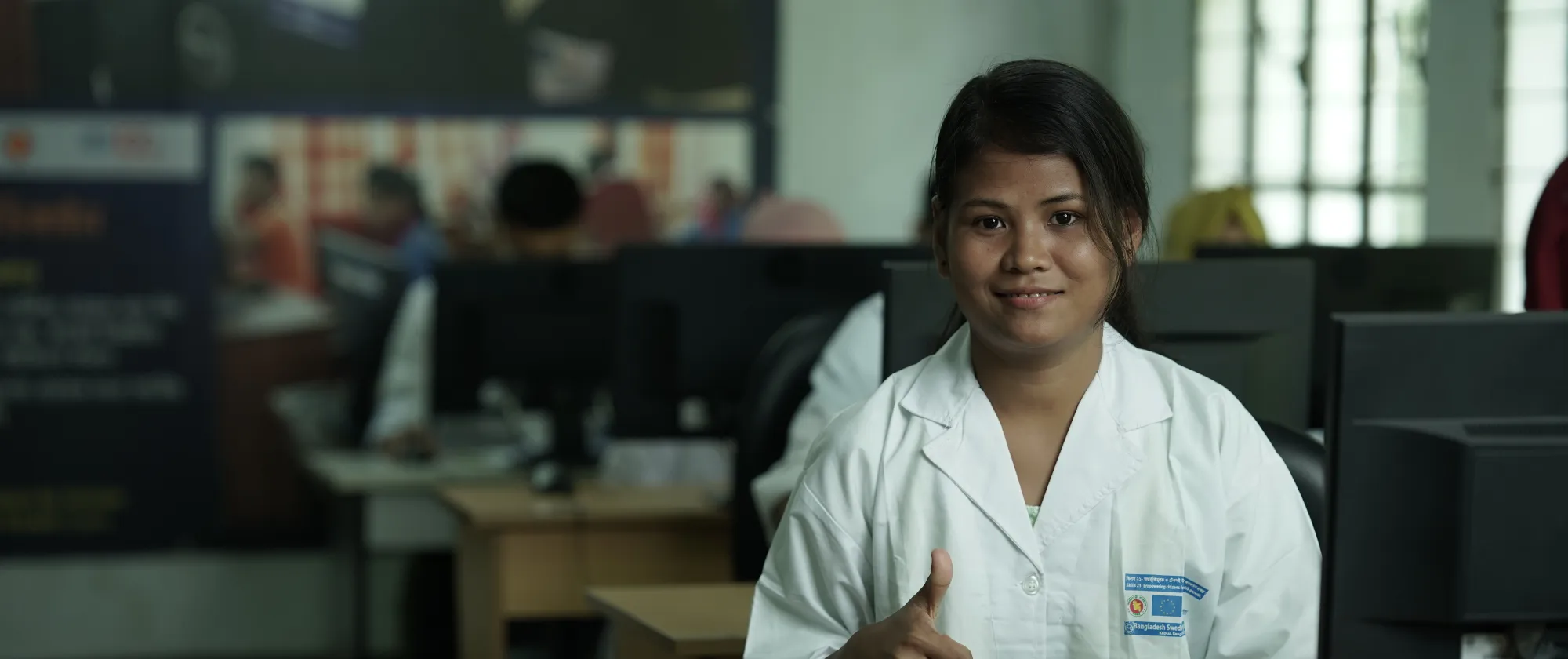
World Youth Skills Day
No time to wait: Bangladesh must upskill its youth today
This Op-Ed by Pedro Jr Bellen, Officer-In-Charge in ILO Bangladesh was published by The Business Standard, one of the leading English newspapers in Bangladesh on 15 July 2025 to mark the World Youth Skills Day.
15 July 2025
Tayaba Khanam Ira, a graduate from the Architecture Department of Khulna Mohila Polytechnic Institute, struggled to find employment after completing her studies. In 2021, she took a short course in IT and began working as a freelancer. While this gave her a foothold in the job market, she now faces new challenges—upgrading her digital skills and navigating an evolving career landscape.
Rozen Patro, a young man from an ethnic minority community, completed his training in Electrical Installation and Maintenance from Sylhet Technical School and College. He now works at Pran Group, but dreams of becoming a floor manager. The question is: how can he upgrade his skills and acquire support to make that leap?
Bangladesh stands at a critical crossroads—one of tremendous potential and significant risk. Every year, nearly two million young people enter the labour market. The urgent question isn’t whether we need to invest in skills development, but how quickly we can deliver it—and how effectively we can connect training to employment.
We must also ask: how can we equip those who are already in the workforce with the skills to adapt to emerging technologies and remain competitive?
Too often, our response to these challenges is buried in long-term strategies and five-year plans. But our young people can’t afford to wait. We need practical, immediate actions—solutions that help youth, workers, and entrepreneurs build skills for the jobs of today, not just the distant future.
We don’t need every skill programme to be a two-year diploma. Short, market-driven focused courses—three months or less —can prepare learners for real-world jobs in areas like machine operation, basic coding, food processing, sales, caregiving, and solar energy. These fast-track trainings can make people job-ready in a matter of weeks, not years.
Imagine where we’ll be a year from now. By mid-2026, who will be earning the most? It won’t be just programmers or tech professionals. To stay competitive, Bangladeshi youth should adopt a “co-pilot mindset”—viewing AI as a partner in work, not a replacement. This does not require advanced programming knowledge but basic AI fluency and tool mastery. It won’t matter whether you’re just starting out or already running a business. What will matter is your ability to adapt and apply AI tools effectively.
Those equipped with AI (Artificial Intelligence) skills—such as prompt engineering, software development, video editing, graphic design, no-code AI automation, content creation, and digital marketing—will be among the top earners.
Bangladesh is currently the world’s second-largest provider of online labour (Oxford Internet Institute, 2022) market, but global competition is intensifying. Today’s international clients expect freelancers—whether virtual assistants, designers, or content creators—to be adept at using AI tools.
It’s not too late. If you’re tech-savvy, managing a business, or looking to future-proof your career, now is the time to learn these in-demand skills. The window of opportunity is open—but it won’t stay that way forever.
Over the past 15 years, the Government of Bangladesh has built a robust technical and vocational education and training (TVET) system. Initiatives like skills-based training under the NTVQF, Recognition of Prior Learning (RPL), apprenticeships, and entrepreneurship programmes have helped thousands of individuals gain employment and become self-reliant. These systems, backed by capable institutions, offer a solid foundation. Now is the time to integrate AI and digital literacy into that foundation.
We must seize this moment to fully unleash the potential of Bangladesh’s human capital—for both domestic and international labour markets. That means supporting not only new entrants to the job market, but also reskilling and upskilling existing workers.
Many workers hesitate to pursue training because they fear income loss. But this is where employers and the government can make a difference. By implementing workplace-based learning such as Apprenticeship following the existing labour law. This approach could be especially life-changing for women, youth from low-income families, and returnee migrants.
At the same time, many youth remain unaware of which skills are in demand. Investing in career counselling and employment support—both in educational institutions and through digital platforms—can guide students toward smart, informed choices and reduce the mismatch between skills and jobs.
Millions of workers in the informal economy already have valuable hands-on experience yet lack formal recognition. A national initiative to certify their skills—through assessments or demonstrations—can help them access better-paying jobs or launch their own businesses.
Time is not on our side. As the global job market rapidly evolves and automation accelerates, Bangladesh’s youth must be ready to adapt—or risk being left behind.
We don’t have to wait for massive reforms or big budgets. The solutions—short courses, digital training, micro-grants, and basic career guidance—are already within our reach. What we need now is bold initiative, faster delivery, and coordinated action.
Let’s stop framing skills development as tomorrow’s challenge. Let’s make it today’s top priority.
Related content

Project: Employability of women workers
Promoting Gender Responsive Enterprise Development and TVET Systems (ProGRESS)
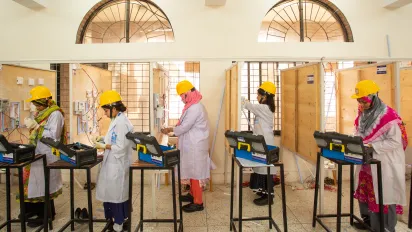
Project
Skills 21 – Empowering citizens for inclusive and sustainable growth
Relevant projects
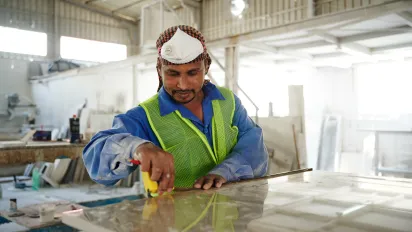
Project: Skills development and labour migration
Supporting a Talent Partnership with Bangladesh
Project: Employability of women workers
Promoting Gender Responsive Enterprise Development and TVET Systems (ProGRESS)