

Labour migration
Decent work and fair recruitment key to climate-resilient labour migration in ASEAN
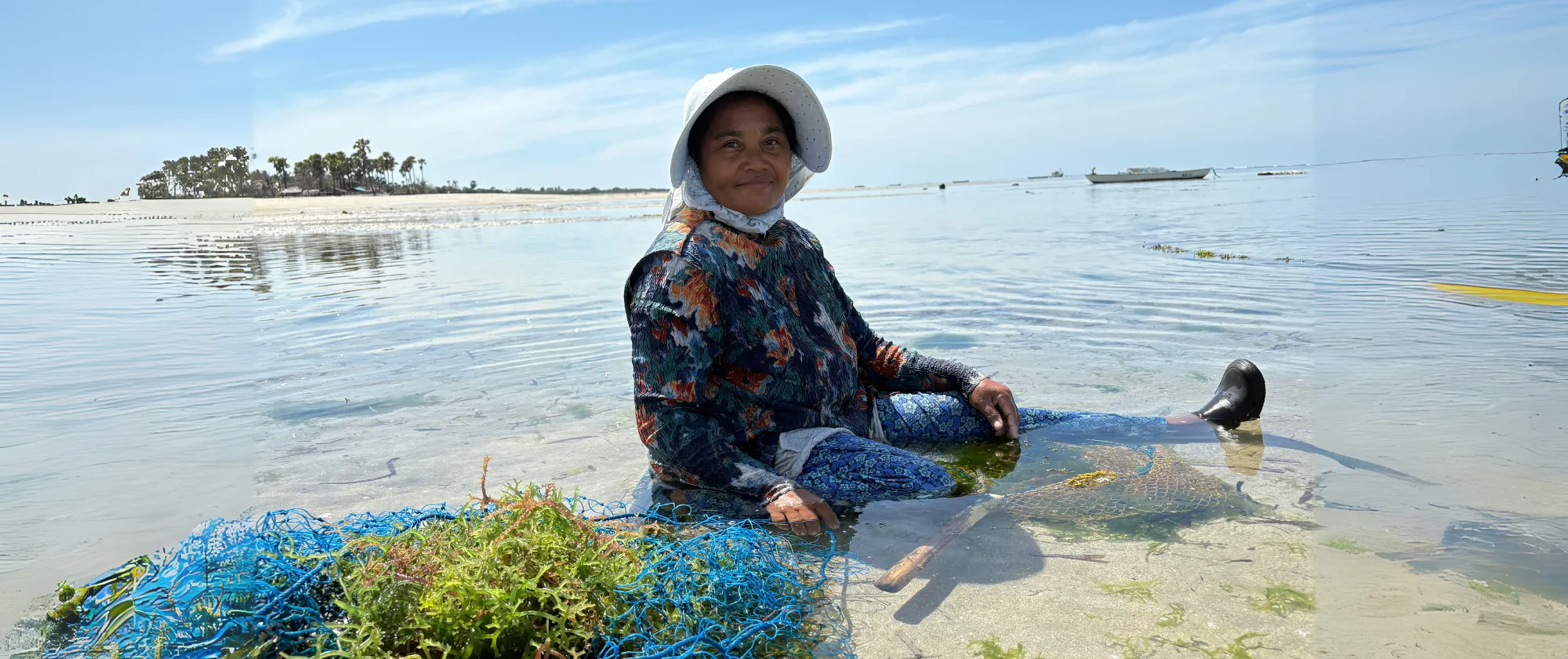
Climate change is disrupting livelihoods and forcing more people to move within and across ASEAN. According to a new ILO brief, protecting migrant workers through decent work and fair recruitment is essential to build resilience and safeguard rights.
21 August 2025
Bangkok (ILO News) – A new policy brief by the International Labour Organization (ILO) reveals that climate change is already having profoundly disruptive impacts on people and their livelihoods across the Association of Southeast Asian Nations (ASEAN) region. The crisis is intensifying factors that drive human mobility and exacerbating vulnerabilities for millions of workers, particularly migrants.
The brief, entitled "Climate change, environmental degradation and labour mobility in the ASEAN region", highlights that while most climate-related movement occurs within a person’s country of origin or residence, cross-border movement is also affected. Climate impacts such as the destruction of farms, homes and roads, exemplified by Typhoon Yagi in Myanmar, force families to seek alternative livelihoods, often abroad. Repeated and severe climate hazards erode community resilience, leading to, sometimes involuntary, migrations when staying becomes increasingly untenable for a dignified life. Loss of livelihoods, food insecurity, and poverty, exacerbated by climate change, are significant drivers of migration, particularly for those dependent on natural resources like agriculture.
In destination, migrant workers, many in low-paid and informal sectors, face heightened risks. They are disproportionately concentrated in climate-vulnerable industries such as agriculture, fisheries, construction, and manufacturing. These workers often lack access to social protection, healthcare, and occupational safety and health services, making them less able to cope with climate impacts. Data from the region suggests that rising temperatures and heat stress alone could result in the loss of 3.7 per cent of working hours across the region by 2030, equivalent to 13 million full-time jobs.
Climate change may render entire regions unproductive and make workplaces too hot for work, thereby leading to climate-induced migration, the proliferation of informal work and unemployment.
LE Thi Tuyet Mai, former Ambassador, Permanent Representative of Viet Nam to the United Nations Office at Geneva.*
The ILO stresses that while labour migration can be a valuable adaptation strategy, offering livelihood diversification and skills development, this is only true if labour migration is rights-based and optional for each migrant. Climate change, however, often compels migration, exposing workers to greater vulnerability, including forced labour and exploitation.
"Decent work is imperative if labour migration is going to enhance livelihoods, protect the rights of workers and foster resilience in context of climate change. This starts with fair recruitment, which is vital to enable decent work and ensure that people can migrate in dignity and are not exploited,” said Nilim Baruah, Labour Migration Specialist, ILO Regional Office for Asia and the Pacific.
The brief calls for urgent action to ensure a "just transition" to environmentally sustainable economies. This includes prioritizing decent work, fair recruitment, and inclusive social protection for all workers, especially migrants. Governments must enhance policy coherence, integrating climate change into migration and labour policies and vice-versa, and ensure social dialogue between governments, workers' organizations, and employers' organizations to build climate resilience and adaptation.
*ASEAN Joint Statement, delivered by H.E. Ms LE Thi Tuyet Mai, Ambassador, Permanent Representative of Viet Nam to the United Nations Office at Geneva, during a panel discussion on the future of the right to work in connection with climate change actions, responses and impacts in the context of sustainable and inclusive economies at the 51st regular session of the Human Rights Council on 27 September 2022.Related content
ILO brief
Climate change, environmental degradation and labour mobility in the ASEAN region