

Financial literacy
New business skills, new hope: Returning Timorese migrants transform their lives
The ILO equips returning migrants in Timor‑Leste with business and financial skills to create opportunities, support families and contribute to reducing unemployment.
7 April 2026
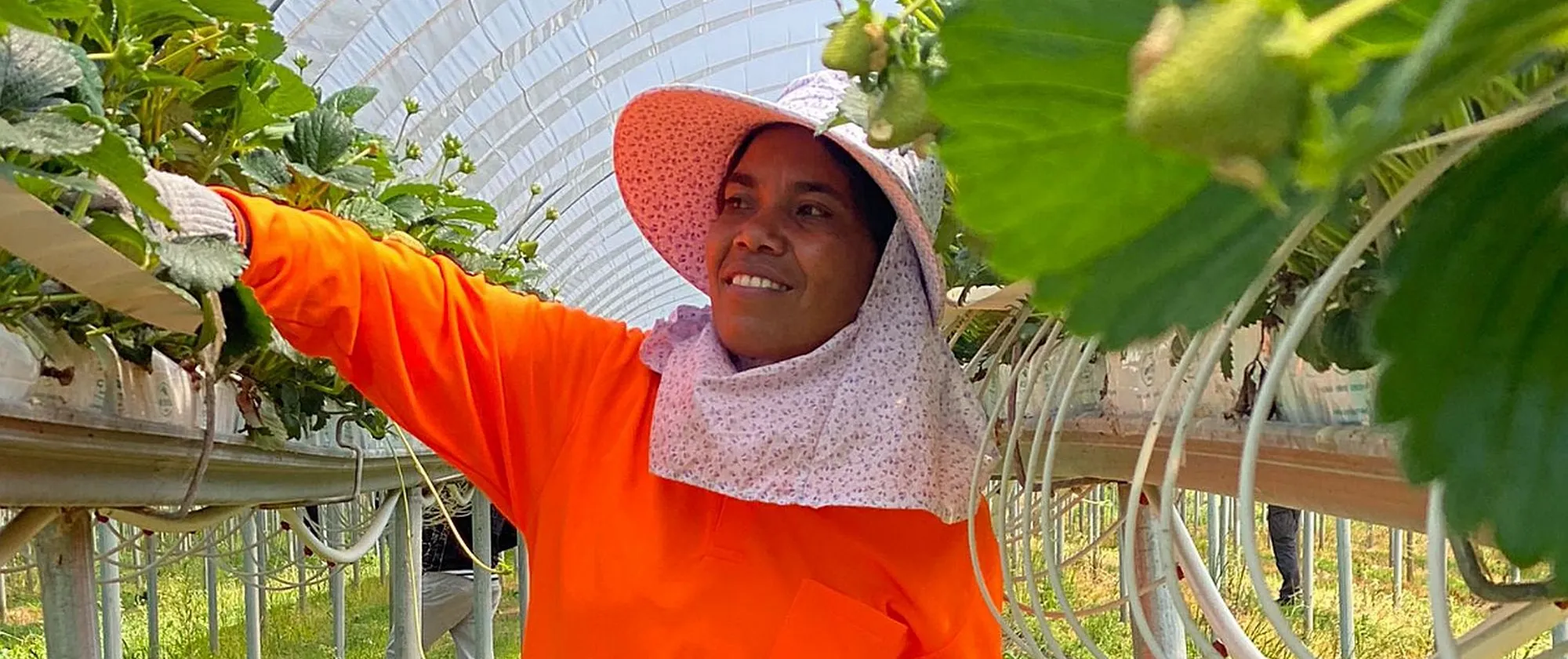
DILI, Timor-Leste (ILO News) - Fander Corono Ventura, a former migrant worker from Covalima Municipality in Timor‑Leste, recalled the challenges he faced upon returning home from Australia after his contract ended. For 3 years, he worked as a butcher in the food processing sector “I had no clue what to do at home with the experience I gained abroad,” he said.
Madalena de Araujo Guterres shared a similar uncertainty. After spending a year working in hospitality in Australia’s Northern Territory, she returned in June last year with savings and the ambition to open her own tailoring business. Yet she soon realized that ambition alone was not enough. “I did not have proper knowledge to run the business,” she admitted.
This training gave me the knowledge to run the business properly, to manage finances and plan ahead.
Madalena de Araujo Guterres, a former migrant worker
Research by Flinders University in 2024 paints a sobering picture: fewer than half of returning Timorese migrant workers were able to maintain a sense of wellbeing after reintegration. Jobs are scarce and the skills they built abroad often go unused. Although nearly all Timorese workers in Australia are employed in agriculture, only one in five find agricultural work upon returning home.
When Fander and Madalena learned about the business education and financial literacy training offered through the ILO’s Agroforestry Skills Programme, they seized the opportunity. Funded by the European Union (EU), the Programme promotes green and sustainable economic diversification and resilience in Timor‑Leste through private sector development and technical and vocational education training (TVET) to support youth integration into the labour market.
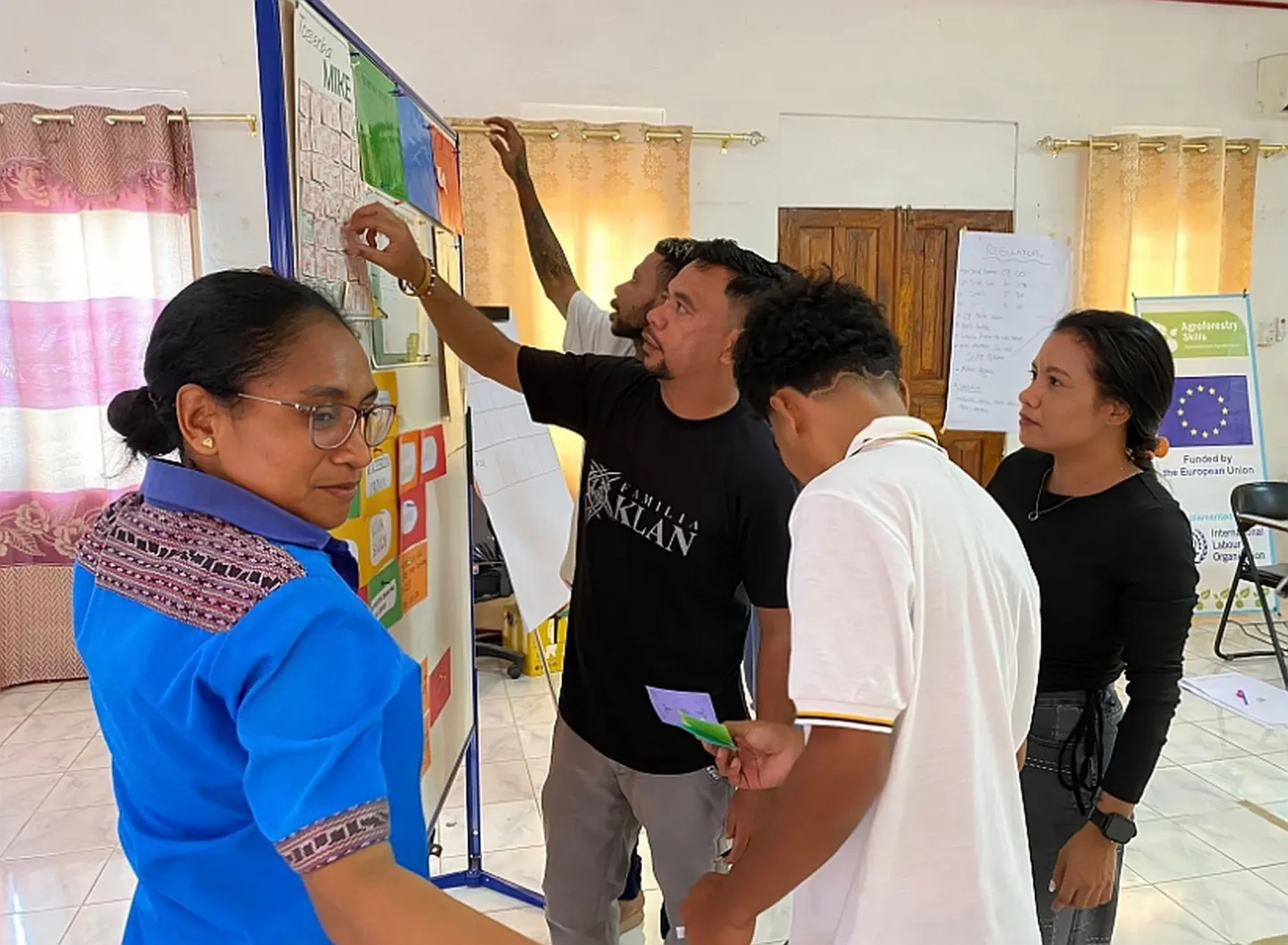
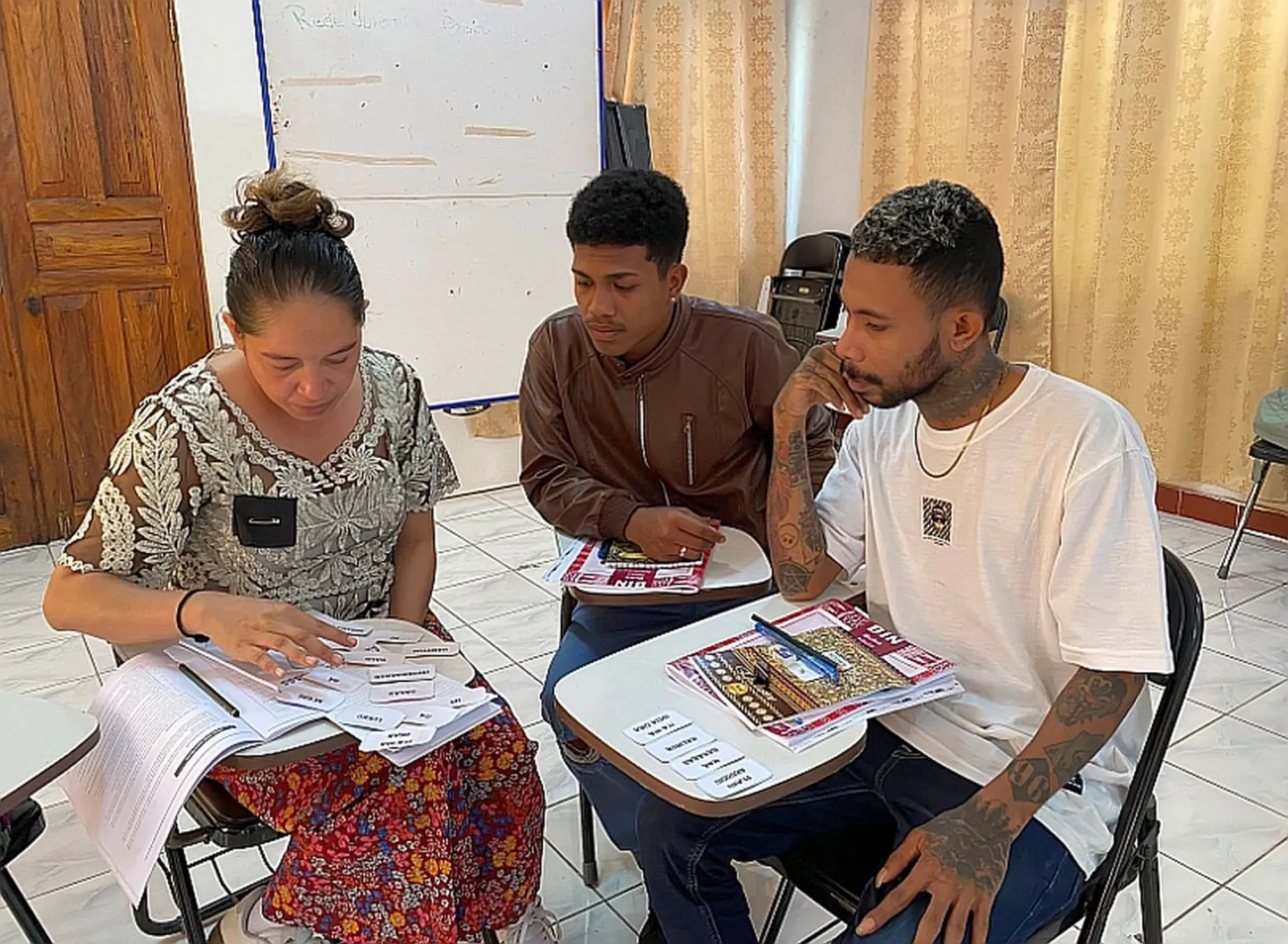
The training series ran from November 2025 to March 2026, benefiting 100 returning migrant workers, including Fander and Madalena. Delivered by the Institute for Support of Business Development (IADE), the programme drew on the ILO’s globally recognized Generate Your Business (GYB) and Start and Improve Your Business (SIYB) modules. Each training lasted seven days.
Participants worked through lessons on generating business ideas and plans, understanding markets and finances, and gaining practical knowledge and confidence to build their own enterprises, particularly in agri‑business. By the end of the programme, they had developed skills in assessing entrepreneurial readiness, analysing demand, pricing products for profit, managing supply chains and keeping financial records.
By applying the skills and experience they gained overseas, combined with targeted training in business development, they can create new economic opportunities, support their families, and employ others to help reduce unemployment.
Carlito Cabral, Director‑General of the Secretariat of State for Vocational Training and Employment (SEFOPE)
For Fander, the training provided not only new business and financial skills but also renewed hope. “Now, after the training, I am able to start thinking and generating ideas for opening a business, especially in agriculture. My father has a farm in the municipality, and I am interested in the coconut and cacao value chain,” he shared.
Madalena, who has now mastered essential money management skills such as budgeting, saving, borrowing and risk management, is ready to strengthen her tailoring business. “This training gave me the knowledge to run the business properly, to manage finances and plan ahead. Now I have a vision of how to build and expand my business,” she said with determination.
Carlito Cabral, Director‑General of the Secretariat of State for Vocational Training and Employment (SEFOPE), emphasized that reducing unemployment in Timor‑Leste requires collective action from government, national and international partners and returning workers themselves. “By applying the skills and experience they gained overseas, combined with targeted training in business development, they can create new economic opportunities, support their families, and employ others to help reduce unemployment,” he noted.
Paulino Ramirez of the EU Delegation to Timor‑Leste highlighted the broader impact: “With this training and support, returning migrants can make the best use of their experience, knowledge, and initial savings to create opportunities not only for themselves but also for their families.”
Now, after the training, I am able to start thinking and generating ideas for opening a business, especially in agriculture.
Fander Corono Ventura, a former migrant worker from Covalima Municipality
Related content
EU Programme
Agroforestry skills for employment and resilience in Timor-Leste
Relevant projects
EU Programme
Agroforestry skills for employment and resilience in Timor-Leste